
 Business License
Quick Charge Speed: What OEM Buyers Need to Know About Fast Battery Chargers
A 2024 field study of 1,200 e-bike batteries found that packs shipped with unregulated "fast chargers" failed 40% faster than packs charged at 0.3C. The chargers worked. The batteries died early. And the brand owners absorbed the warranty cost.
Quick charge speed is one of the most misunderstood specs in battery charger procurement. Buyers want fast charging because end users demand it. Engineers know that faster charging strains cells, generates heat, and shortens cycle life. The right answer is rarely "charge as fast as possible". It is "charge as fast as your cells, thermal envelope, and warranty budget allow."
This guide explains how OEM brand owners and procurement engineers should specify quick charge speed for LiFePO4, lithium-ion, and lead-acid packs. You will learn how C-rates translate to real charge time, where the safety limits sit, what certifications matter, and what to verify before you approve a fast charger design.
Want to skip the theory and get a charge curve matched to your pack? Request a free sample and our engineering team will return a proposed profile within 24 hours.
What quick charge speed actually means
Quick charge speed describes how fast a charger replenishes a battery relative to its capacity. The standard unit is the charging C-rate. A 1C charge rate delivers a current equal to the battery's amp-hour rating. For a 20Ah pack, 1C equals 20A.
The math is simple, but the implications matter:
| C-rate | Current for 20Ah pack | Approximate full charge time |
|---|---|---|
| 0.2C | 4A | ~5.5–6 hours |
| 0.3C | 6A | ~3.5–4 hours |
| 0.5C | 10A | ~2–2.5 hours |
| 1C | 20A | ~1–1.5 hours |
| 2C | 40A | ~35–50 minutes |
These estimates include the CC-CV taper phase. During the first stage, the charger holds current constant while voltage rises. Once the pack reaches its full-charge cutoff, the charger switches to constant voltage and current tapers. The higher the C-rate, the more time the pack spends in the heat-generating constant-current phase.
For OEM buyers, the C-rate is a design choice, not a fixed property. A scooter brand targeting delivery fleets may prioritize 1C charging to minimize vehicle downtime. An e-bike brand targeting commuter consumers may prefer 0.3C to maximize pack longevity. Both can be correct, but only if the charger is matched to the cell chemistry and thermal management.
If you are comparing chargers, always ask for the charge curve at your target C-rate. A catalog label that says "fast charger" means nothing without a plotted current and voltage over time. Battery University offers a clear explanation of how C-rate affects battery performance.
The hidden cost of high quick charge speed
Faster charging always trades something. The three currencies are heat, cycle life, and cost.
Heat is the primary enemy. When current flows into a cell, internal resistance converts some energy to heat. At 0.2C, that heat is modest and easily dissipated. At 1C or 2C, the cell temperature can rise 10°C–25°C above ambient. Sustained high temperatures accelerate electrolyte breakdown and electrode degradation.
Cycle life drops non-linearly. Most LiFePO4 cells are rated for 2,000–5,000 cycles at 0.2C–0.3C charging. Push the same cells at 1C continuously and cycle life can drop 30–50%. For a fleet operator counting on five years of service, that translates to replacement costs far higher than the charger savings.
Hardware costs rise. A fast battery charger needs larger magnetics, heavier cabling, more aggressive thermal design, and often active cooling. At 2C battery charging speed, a charger can cost 2–3x more than a 0.3C charger at equivalent quality. If the battery pack does not also support fast charging, the extra speed is wasted money.
Here is a simplified total-cost-of-ownership comparison for a 20Ah LiFePO4 pack over five years:
| Charge rate | Charger cost | Estimated cycle life | Battery replacements | Total 5-year cost |
|---|---|---|---|---|
| 0.3C | Baseline | 4,000 cycles | 0 | Baseline |
| 1C | +40% | 2,500 cycles | 1 | +60% |
| 2C | +120% | 1,500 cycles | 2 | +140% |
The numbers shift with cell chemistry and application, but the pattern holds: faster charging extracts its price from the battery. This is why specifying quick charge speed starts with the cell datasheet, not the charger catalog.
How to specify the right quick charge speed
When our engineering team reviews a fast charger request, we ask four questions. Every answer affects the final C-rate recommendation.
1. What does your cell vendor recommend?
Cell manufacturers publish maximum charge C-rates and recommended C-rates. The recommended rate preserves cycle life. The maximum rate is the safety ceiling. A good charger design respects both.
For example, a common 18650 Li-ion cell might specify:
Recommended charge: 0.5C (1,500mA for a 3,000mAh cell)
Maximum charge: 1C (3,000mA)
Charge temperature range: 0°C–45°C
Designing at the maximum rate means shorter life. Designing at the recommended rate means happier cells and fewer warranty claims. The cell vendor's recommended profile should be treated as the starting point, not the upper limit.
2. What charge time does your end user actually need?
Faster is not always better. A commuter e-bike plugged in overnight does not need 1C charging. A rental scooter swapped between riders does. Map the use case before choosing the C-rate.
| Application | Typical charge time target | Typical C-rate |
|---|---|---|
| Consumer e-bike (overnight) | 6–8 hours | 0.2C–0.3C |
| Premium e-bike (faster top-up) | 3–4 hours | 0.5C |
| Rental / shared scooter | 1–2 hours | 0.8C–1C |
| Electric forklift / industrial | 1–2 hours (opportunity charging) | 1C–2C |
| Portable electronics | 1–2 hours | 0.5C–1C |
If your product is used intermittently and charged overnight, aggressive fast charging adds cost and risk without improving the user experience.
3. What is your thermal envelope?
Fast chargers need a thermal path. Will the charger live in a ventilated indoor space, inside a sealed scooter deck, or mounted on an outdoor wall? Ambient temperature, airflow, and enclosure design all limit how fast you can safely charge.
A charger rated for 1C at 25°C may need to derate to 0.6C at 45°C. If your product operates in hot climates, the charger must be sized for the worst-case ambient, not the lab condition.
4. What is your warranty tolerance?
If your product warranty covers the battery for 24 months, charging at 1C may push failure rates above your reserve budget. Charging at 0.3C may keep failures below 2%. The charger choice is a financial decision, not just an engineering one.
Mini-story: When fast charging backfired
In early 2023, a European e-scooter brand we'll call VoltLine launched a "30-minute fast charge" feature. The marketing team loved it. The procurement team sourced 2C chargers at a competitive price. The first 5,000 units shipped before summer.
By October, warranty returns spiked. Battery packs were swelling after six months. VoltLine's engineering team traced the issue to the chargers: they hit 2C in cool lab conditions but pushed cells past thermal limits during real-world summer use. The brand recalled 3,200 units and replaced the chargers with 0.8C designs.
The replacement chargers charged in 75 minutes instead of 30. End users barely noticed. VoltLine's warranty costs dropped 60%. The lesson: quick charge speed only works when the whole system (cell, charger, thermal path, and use environment) is designed for it.
Quick charge speed by battery chemistry
Not all chemistries respond to fast charging the same way. Your battery chemistry should drive the charger specification.
LiFePO4 (LFP): Highly tolerant of fast charging when temperature is controlled. Common production rates are 0.3C–1C. The flat voltage profile and stable chemistry make LiFePO4 a favorite for e-mobility and energy storage. However, high C-rates still reduce cycle life, and voltage accuracy remains critical. Our LiFePO4 battery chargers are built with chemistry-matched CC-CV profiles for exactly this reason.
Lithium-ion (NMC/NCA): More energy-dense but more sensitive to heat. Recommended charge rates are typically 0.3C–0.5C, with some high-power cells rated to 1C or higher. Fast charging NMC cells without temperature management accelerates degradation and increases safety risk. Our lithium-ion battery chargers include NTC monitoring and temperature compensation as standard.
Lead-acid (SLA/AGM): Slow chemistry. Fast charging above 0.2C–0.3C causes gassing, water loss, and plate damage. "Fast charging" a lead-acid battery usually means 0.3C with careful voltage limiting and temperature compensation.
Choosing the right chemistry for your application is step one. Choosing the right charge speed for that chemistry is step two. For a deeper comparison, see our guide on Li-ion vs LiFePO4 chargers.
Thermal management and fast charger safety
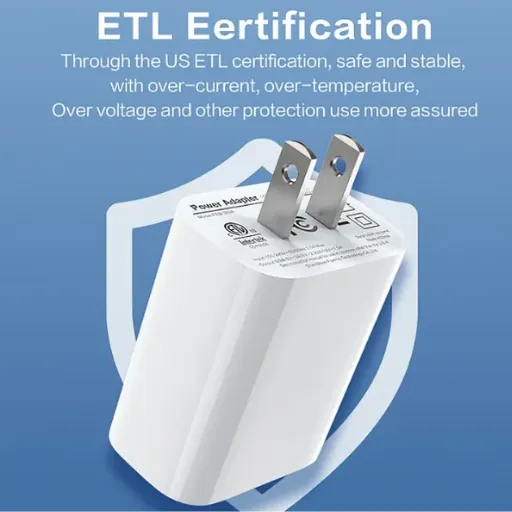
A fast charger without thermal management is a liability. Production-grade quick chargers should include fast charger safety features such as:
Over-temperature protection (OTP): shuts down or throttles current if the charger or pack exceeds safe temperature
NTC thermistor input: reads battery pack temperature and adjusts voltage/current in real time
Temperature-compensated charging: reduces charge voltage when cells are hot, increases slightly when cold
Active cooling: fan or heatsink design sized for the worst-case ambient temperature
Current foldback: automatically reduces current if thermal limits approach
For outdoor applications like e-bikes and scooters, temperature compensation is non-negotiable. A charger calibrated at 25°C can overcharge a hot summer pack by 0.1V–0.2V per cell if it does not compensate. Over a full season, that overcharging cuts cycle life significantly.
The charger should also protect against:
Over-voltage protection (OVP)
Over-current protection (OCP)
Short-circuit protection (SCP)
Reverse-polarity protection
3KVAC isolation between AC input and DC output
These protections are baseline requirements for UL, CE, UKCA, and SAA certification. If a fast charger supplier treats them as optional upgrades, find another supplier.
Certification and compliance for fast chargers
Fast chargers face the same regulatory stack as standard chargers, but failure modes are more severe. A thermal runaway at 2C is harder to contain than at 0.2C. Regulators know this, and your certification documentation must reflect it.
Key standards to verify:
UL 62368-1 or UL 60950-1 for U.S. safety
EN 62368-1 / CE marking for the EU
UKCA marking for the UK
SAA / RCM for Australia
CCC for China
DOE Level VI for U.S. energy efficiency
ErP Tier V for EU energy efficiency
For fast chargers specifically, ask your supplier for:
Thermal test reports showing maximum surface temperature at full load
Efficiency curves at 25%, 50%, 75%, and 100% load
EMC test reports (fast chargers can generate more conducted EMI)
A documented derating curve for high ambient temperatures
Do not assume a standard charger test report covers a fast charger variant. Higher current changes thermal, EMI, and efficiency behavior. The model number on the report must match the model number on the unit, letter for letter.
You can learn more about U.S. efficiency requirements in our DOE Level VI compliance guide. The DOE standard is codified in 10 CFR Part 430.
Mini-story: Finding the fast-charge sweet spot
In 2024, a U.S. e-bike brand we'll call Rideworks wanted to cut charge time from 6 hours to 3 hours without shortening its 24-month battery warranty. Their cell vendor recommended a maximum charge rate of 0.5C but warned that continuous 0.5C charging in summer would reduce cycle life.
Rideworks worked with our engineering team to specify a variable-rate charger. The charger delivers 0.5C when the pack is below 35°C, then tapers to 0.3C above 35°C. In practice, most overnight charges complete in 3.5 hours. On hot summer days, charge time extends to 4.5 hours, but cell stress stays within warranty-safe limits.
The result: charge time dropped 45%, warranty return rates stayed flat, and the brand marketed "rapid charging" with confidence. The charger cost 15% more than a fixed-rate design, but the warranty savings covered the difference in the first production run.
Common myths about quick charge speed
Myths about fast charging create bad procurement decisions. Here are the four we hear most often.
Myth 1: Any charger can be made faster by increasing current.
Reality: Faster charging requires larger components, better thermal design, and often a different control IC. Slapping a bigger transformer on the same circuit risks overheating and EMI failure.
Myth 2: Fast charging is always bad for batteries.
Reality: Cells designed for fast charging handle it well when temperature and voltage are controlled. The problem is using a fast charger on cells that were not designed for it.
Myth 3: End users always want the fastest possible charge.
Reality: Surveys show reliability and battery longevity rank higher than charge speed for most consumer e-bike buyers. Fleet operators care more about speed. Know your customer.
Myth 4: A higher-wattage charger always charges faster.
Reality: Wattage matters, but only if the battery can accept it. A 500W charger on a pack limited to 200W charging simply costs more without adding speed.
How Anenerge designs quick charge speed solutions
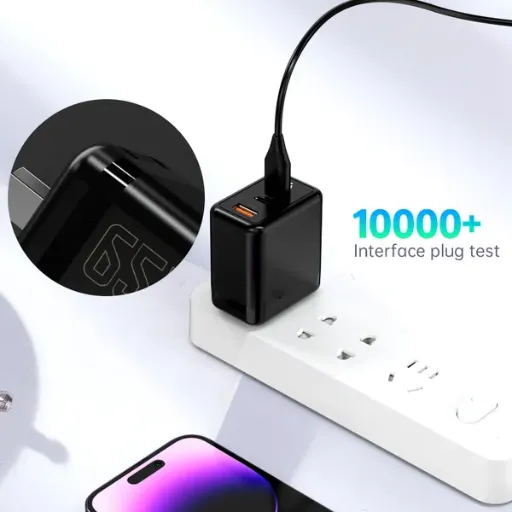
As a quick charger OEM partner, we do not sell "fast chargers" as a category. We design chargers around the cell, the application, and the warranty target.
Our process:
Review your cell vendor's charge specification and recommended C-rate
Model thermal behavior for your enclosure and ambient conditions
Propose a charge curve with current, voltage, temperature limits, and taper profile
Build an engineering sample with the right magnetics, thermal design, and protection stack
Validate the sample against your pack and your QA criteria
Produce with 100% functional test and high-voltage isolation test on every unit
We support quick charge speed across LiFePO4, lithium-ion, and lead-acid chemistries, with outputs from 12V to 84V and currents up to 20A. Every design can be matched to your target certifications, connector, label, and packaging.
If you need a fast charger that does not quietly destroy your battery packs, the specification conversation matters more than the catalog part number.
Ready to test the difference? Get an OEM quote and we'll propose a charge profile tuned to your cell spec.
Mini-story: The fleet operator who measured total cost
A Southeast Asian scooter rental fleet we'll call SwiftFleet switched from 0.5C to 1C chargers in 2023 to increase vehicle utilization. Daily revenue per scooter rose 12% because vehicles spent less time plugged in. But after 14 months, battery replacement costs climbed 80%.
SwiftFleet's operations team ran the numbers. The extra revenue from faster turns was erased by battery replacements and increased technician time. They switched back to 0.5C chargers for most locations, reserving 1C chargers only for high-turn stations with climate-controlled storage. Total cost fell 22%, and vehicle availability stayed above 90%.
Their procurement takeaway: quick charge speed is an operational variable, not a product feature. The right speed depends on how the product is used, not how fast it can theoretically charge.
Conclusion
Quick charge speed can be a competitive advantage or a warranty disaster. The difference is specification discipline.
Before you approve a fast charger design, verify:
The C-rate matches your cell vendor's recommendation, not just your marketing target
Thermal management and temperature compensation are designed for real-world conditions
Safety protections (OTP, OVP, OCP, SCP) are included as baseline
Certification reports cover the exact charger model and current rating
Your warranty budget can absorb the cycle-life impact of the chosen charge speed
The best quick charge speed is the fastest speed your entire system (cell, charger, thermal path, and use case) can sustain reliably.
Want to see how a chemistry-matched fast charger performs with your pack? Send us your cell specification, target charge time, and enclosure details. Our engineering team will return a proposed charge curve and sample timeline within 24 hours.
Recently Posted
-
Why Is My Phone Charging Slowly? Causes and Fixes
June 22, 2026At 7:45 a.m., Maya plugged her phone into the charger she grabbed from the hotel nightstand. By 8:30, the battery had climbed from Read More
 -
Fast Charging vs Normal Charging: OEM Engineering Guide
June 22, 2026Last year, a European e-bike brand shipped 5,000 units with a 4A fast charger as a premium upgrade. Six months later, their warran Read More
 -
How to Make Charging Faster: A Technical Guide for OEM Brand Owners
June 22, 2026When Elena, product manager at a Rotterdam e-bike brand, launched her 48V commuter line in spring 2026, she thought 6 hours on a s Read More
 -
Does Fast Charging Damage Battery? What OEM Buyers Need to Know
June 22, 2026Yes, fast charging can damage batteries when current exceeds the cell's thermal and electrochemical limits. The damage shows u Read More

Contact Us
Recommended Products
-
 65W USB-C GaN Wall Charger PD Fast Charging Adapter EU US Plug for Laptop Smartphone and TravelUS$ 6MOQ: 100 Pieces
 -
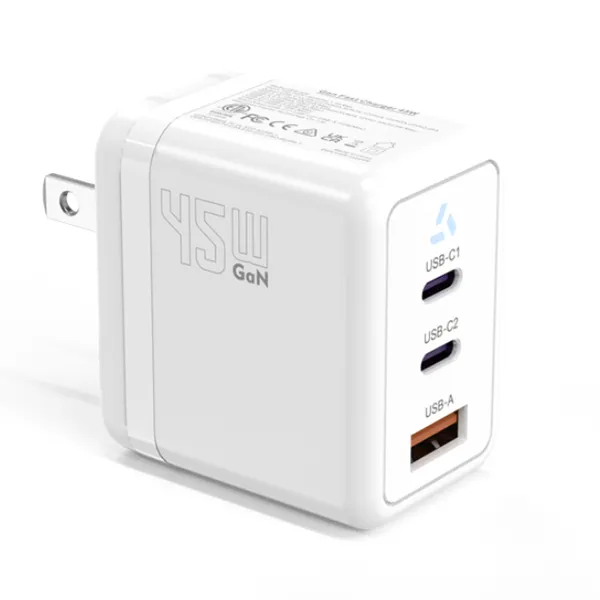
45W GaN USB-C Fast Charger JP Plug PD Wall Charging Adapter for IPhone MacBook and TabletsUS$ 8MOQ: 100 Pieces
-
QC3.0 30W USB Fast Charger With 18W Quick Charge Wall Adapter for Android and Mobile DevicesUS$ 4MOQ: 100 Pieces
-
Compact 18W Quick Charge 3.0 USB Charger 30W Fast Charging Adapter EU US Plug for TravelUS$ 2MOQ: 100 Pieces
-
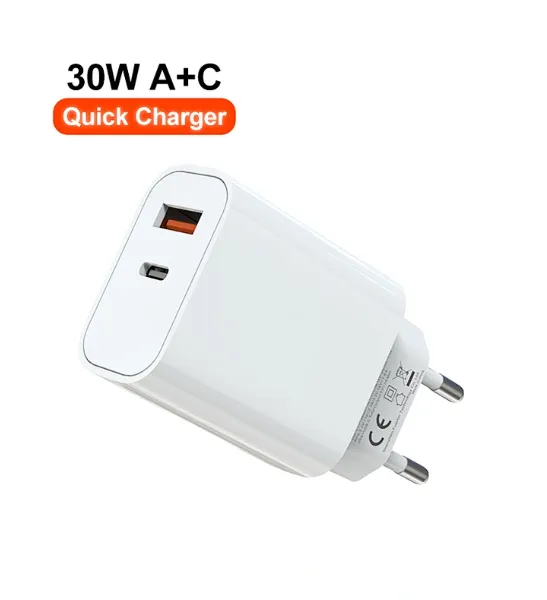
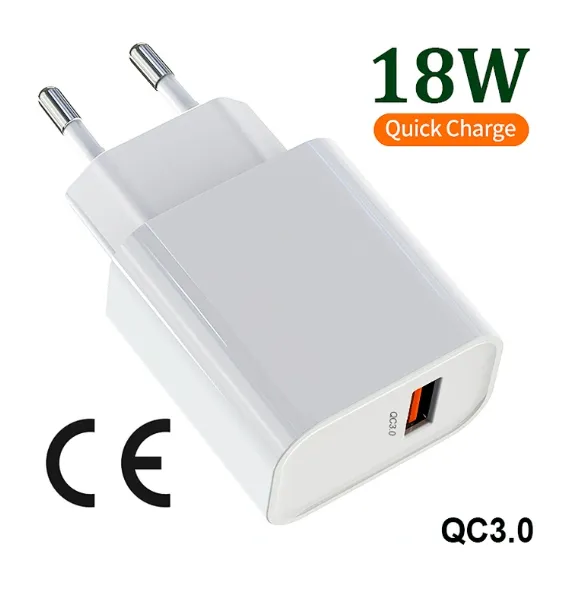
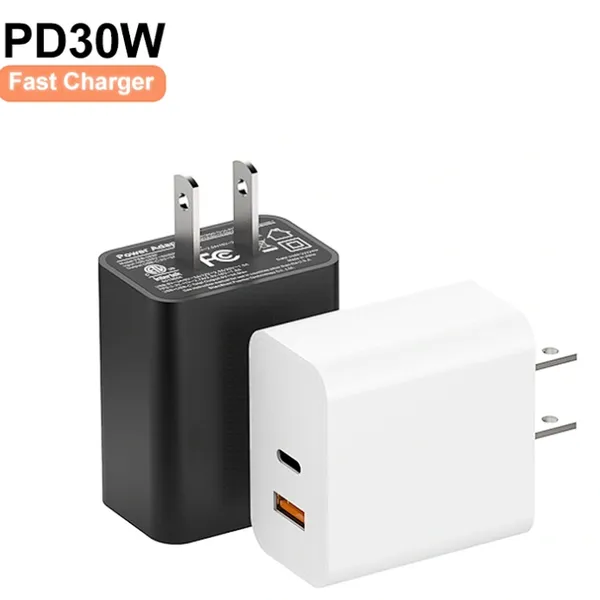
30W USB-C and USB-A PD Fast Charger Compact Wall Adapter for IPhone Samsung and IPadUS$ 3MOQ: 100 Pieces
-
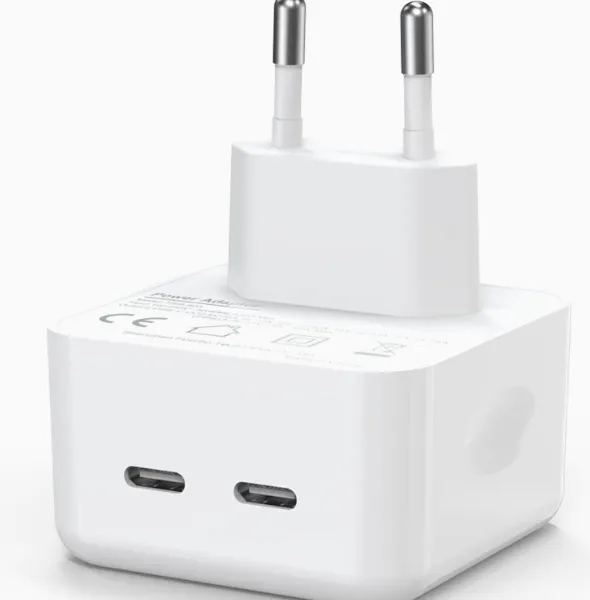
35W Dual USB-C PD Charger Fast Charging Adapter for IPhone Samsung IPad and USB-C DevicesUS$ 3MOQ: 100 Pieces
-
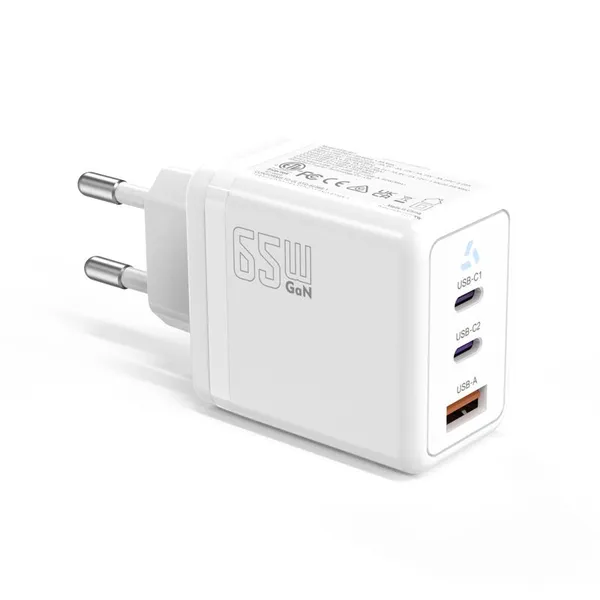
65W USB-C GaN Charger EU Plug Fast Charging Adapter 65W USB-C PD Fast Charge Wall Charger Power Adapter for Macbook ProUS$ 5MOQ: 100 Pieces
-
65W GaN USB-C Fast Charger PD Wall Charging Adapter for Laptop IPhone and Mobile DevicesUS$ 5MOQ: 100 Pieces
-
100W GaN USB-C Fast Charger With PD 3.0 for Laptop, MacBook, IPhone & Multi-Device ChargingUS$ 12MOQ: 100 Pieces
-
45W GaN USB-C Fast Charger EU AU PD Fast Wall Charging Adapter for IPhone Tablets With CE REACH PassedUS$ 8MOQ: 100 Pieces
-
QC3.0 65W GaN USB C Super Fast Charger With UKCA 3 Ports PD 3.0 GaN Charger for Iphone Macbook SamsungUS$ 10MOQ: 100 Pieces
-
30W USB-C and USB-A GaN QC3.0 Fast Charging Adapter PD Fast Charger Compact Wall Adapter for IPhone Samsung and IPadUS$ 3MOQ: 100 Pieces
-
45W GaN USB-C Fast Charger With Dual Type-C and USB-A Ports PD Wall Charging AdapterUS$ 8MOQ: 100 Pieces
-
Dual USB C Ports QC3.0 30W Fast Charger With EU UK AU US USB-C PD Wall Chargeer 30W PD Power AdapterUS$ 3MOQ: 100 Pieces
-
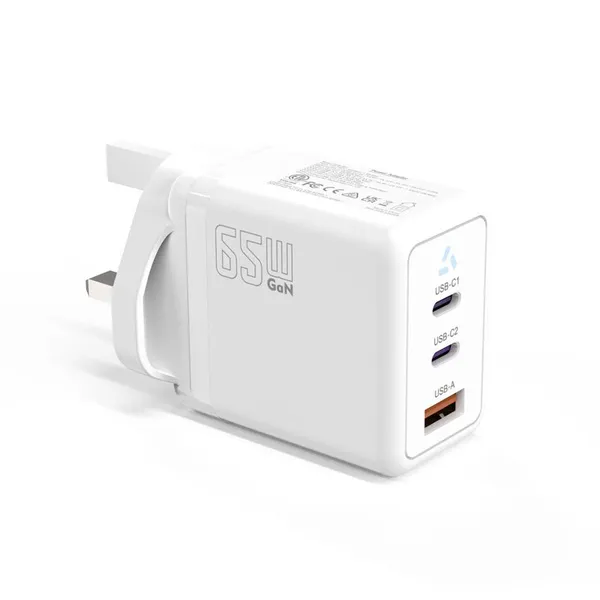
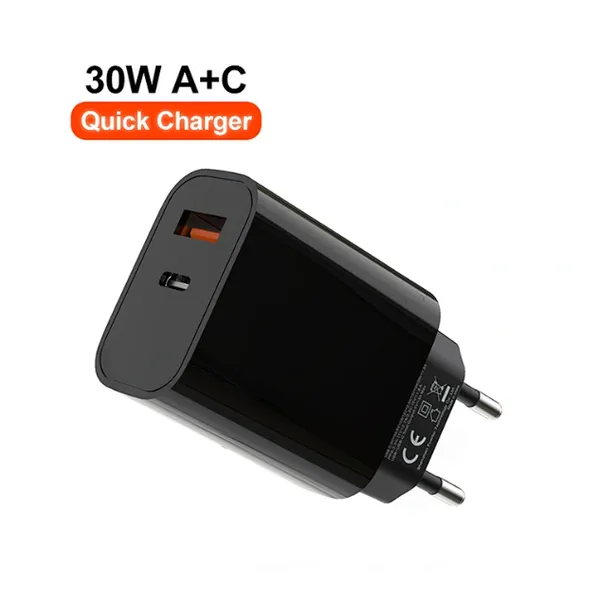
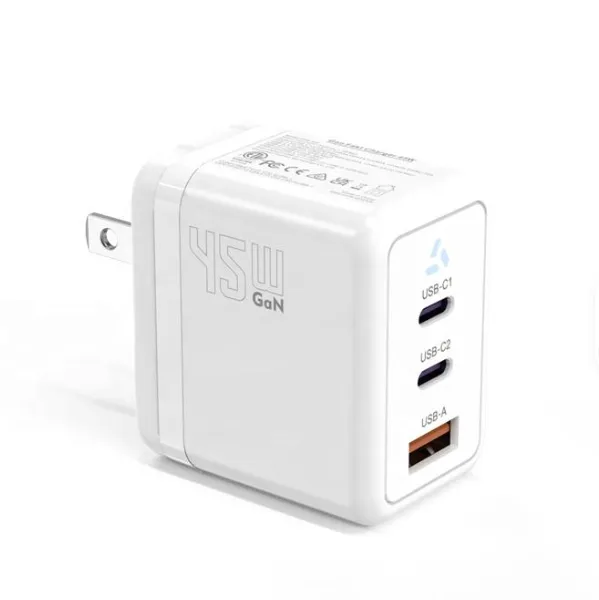
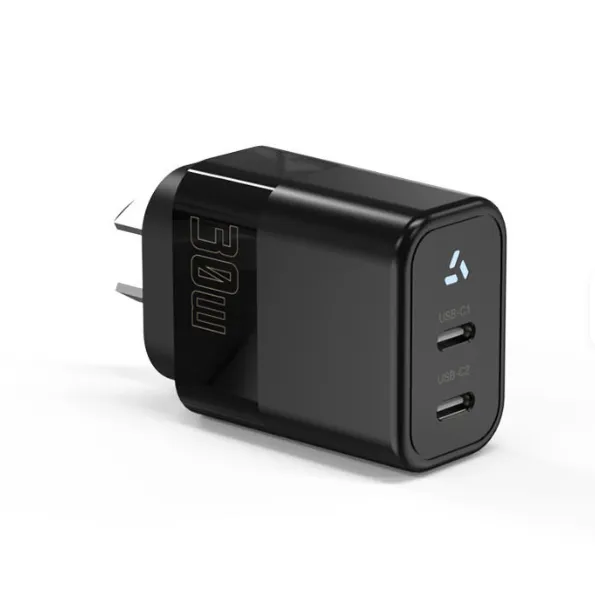
Compact 65W GaN USB-C Wall Charger With Dual USB-C Ports and USB-A Fast Charging Adapter With CE UKCA ETL SAAUS$ 10MOQ: 100 Pieces
-
QC3.0 Fast Charging Adapter PD30W USB-C USB-A GaN PD Fast Charger PD 3.0 GaN Charger Compact Wall Adapter for IPhone Samsung and IPadUS$ 3MOQ: 100 Pieces
-
12V 5A 60W US EU AC DC Adapter LED Driver LED SMPS AC to DC Switching Power SupplyUS$ 5 - 7MOQ: 50 Pieces
-
CE FCC CUL SAA KC PSE 24Vdc 48W Switching Power Supply AdaptersUS$ 5 - 7MOQ: 50 Pieces
-
CE GS UKCA SAA CUL Qualified Waterproof Switching Power Supply Ip68 PSE UL SAA GS 12V 2AUS$ 3 - 6MOQ: 50 Pieces
-
12V 1A Factory OEM Waterproof AC Adapter for Laser Light Table Lamp ac dc Adaptor With TUV CE GS for EU MarketUS$ 5 - 7MOQ: 50 Pieces