
 Business License
What Is Quick Charge 3.0? A Buyer’s Guide for OEM Product Teams
Your customer plugs in a dead phone at 08:00. By 08:15, the battery is at 50%. That is the promise of fast charging, and for consumer electronics brands, it is increasingly the price of entry.
If you are sourcing chargers or USB power adapters for smartphones, tablets, portable routers, security handhelds, or IoT gateways, you have probably seen "Quick Charge 3.0" on supplier spec sheets. The label is everywhere, but the details matter. This guide explains what Quick Charge 3.0 actually does, how it differs from other fast-charging standards, and what OEM buyers should verify before approving a supplier.
You will learn the voltage range, the INOV negotiation protocol, backward-compatibility rules, cable and connector requirements, and how to avoid the most common sourcing mistakes. We will also show how the right adapter partner builds Quick Charge 3.0 into a product line without creating customs or certification surprises.
What Quick Charge 3.0 Actually Is
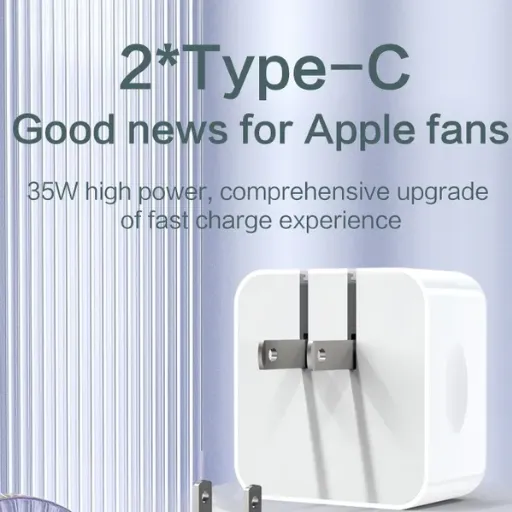
Quick Charge 3.0 is a proprietary fast-charging protocol developed by Qualcomm. It allows a compatible device to request higher voltage and current from a charger than standard USB 5V/1A or 5V/2.1A supplies, so the battery charges faster without overheating. Qualcomm's official Quick Charge documentation lists the full voltage and power specifications for licensees.
The core idea is simple: instead of always receiving 5V, a Quick Charge 3.0 device and charger negotiate the optimum voltage in real time. The protocol supports a range from 3.6V up to 20V in 200mV increments. That fine-grained control is the main advance over Quick Charge 2.0, which used fixed steps: 5V, 9V, 12V, and 20V.
The practical result is less heat and less energy wasted inside the phone. A typical Quick Charge 3.0 adapter delivers around 18W: common combinations include 9V/2A, 12V/1.5A, and, on larger devices, 20V variants. Qualcomm advertises charging up to 4× faster than conventional 5W USB charging, though real-world speed depends on battery size, cable quality, and device thermal limits.
Quick Charge 3.0 vs Quick Charge 2.0
| Feature | Quick Charge 2.0 | Quick Charge 3.0 |
|---|---|---|
| Voltage steps | Fixed (5V, 9V, 12V, 20V) | 3.6V–20V in 200mV increments |
| Typical power | 18W | Up to 18W (class A) |
| Key technology | Fixed voltage negotiation | INOV (dynamic voltage selection) |
| Heat generation | Higher due to fixed steps | Lower, because voltage matches device need |
| Backward compatibility | QC 1.0 | QC 2.0 and QC 1.0 |
| Connector | USB Type-A | USB Type-A (Type-C possible with compatible design) |
How INOV Delivers Smarter Voltage Control
INOV stands for Intelligent Negotiation for Optimum Voltage. It is the mechanism that lets the device ask the charger for a precise voltage rather than accepting a preset step.
Here is what happens during a Quick Charge 3.0 charge cycle:
The device connects to the charger over USB Type-A.
The charger and device communicate through the D+/D- data lines.
The device tells the charger its requested voltage in 200mV steps.
The charger adjusts its output to match.
As the battery fills, the device continuously updates the requested voltage to keep current and temperature in the ideal range.
This dynamic negotiation is why Quick Charge 3.0 runs cooler than fixed-step fast charging. When a battery is deeply discharged, it can accept more current at a slightly higher voltage. As it approaches 80%, the device requests lower voltage and current, reducing heat and protecting cell life. Battery University explains how fast charging affects lithium-ion cycle life in more detail.
For product teams, the takeaway is clear: a Quick Charge 3.0 charger needs a controller IC that supports INOV. Not every "fast charger" sold on the market has a genuine Qualcomm-licensed controller. Some suppliers use unauthorized ICs that claim Quick Charge compatibility but fail certification or overheat under load.
Pro tip: When evaluating a Quick Charge 3.0 adapter supplier, ask for the Qualcomm license certificate or the controller IC datasheet. A real QC 3.0 design uses a licensed power controller, not a generic "compatible" chip.
When Quick Charge Belongs on Your Product Roadmap
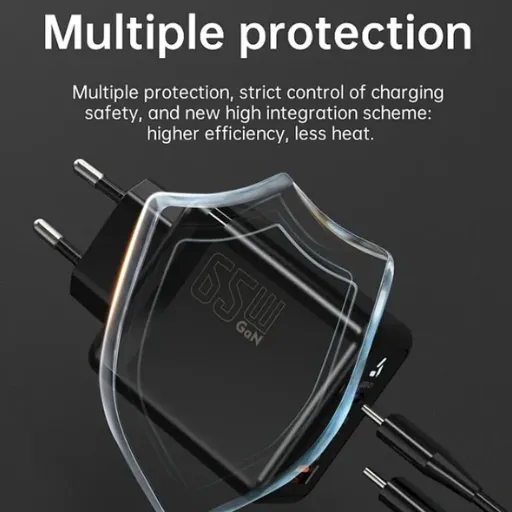
Not every product needs Quick Charge 3.0. But if your device has a lithium-ion battery and end users expect a fast top-up, the feature is now a baseline expectation in many markets.
Devices that commonly benefit
Smartphones and tablets
Portable Wi-Fi routers and mobile hotspots
Handheld scanners and POS terminals
Security walkie-talkies and field devices
Medical portable instruments
Power banks with fast-charging output
When Quick Charge 3.0 may be overkill
Always-powered IoT sensors with no user-facing charge cycle
Low-power devices where 5W is enough
Products where BOM cost is the overriding constraint
Devices that already plan to use USB Power Delivery (USB-PD) instead
Mini-story: When the product team at a Rotterdam-based handheld scanner company updated their flagship device in 2024, they assumed USB-PD was the obvious choice. Their industrial buyers, however, still used thousands of USB Type-A chargers in the field. Switching to Quick Charge 3.0 let them deliver 18W fast charging through the same Type-A infrastructure. They avoided a connector transition, kept accessory costs down, and cut average charge time from 3.5 hours to under 2 hours.
Compatibility: Device, Charger, and Cable
Quick Charge 3.0 only works when all three parts of the chain support it.
The device must support QC 3.0
The phone, tablet, or handheld device needs a Qualcomm-compatible PMIC (power management IC) or a chipset that understands the Quick Charge protocol. Many Snapdragon-based devices support it natively. Some device makers license the technology for non-Qualcomm platforms.
The charger must be Quick Charge 3.0 certified
The adapter or wall charger needs a licensed controller and the correct output profiles. Look for:
Qualcomm Quick Charge 3.0 logo or certification
Output ratings that include 3.6V–6.5V/3A, 6.5V–9V/2A, 9V–12V/1.5A, or similar ranges
Safety certifications for your target market (UL, CE, UKCA, FCC, CCC, SAA)
The cable matters
A cheap cable can throttle a fast charger. Standard USB 2.0 cables use 28AWG power wires that create too much voltage drop at 2A or 3A. For Quick Charge 3.0, specify 24AWG or 22AWG power conductors and proper shielding. For OEM brands shipping branded cables, this is where many field complaints originate.
Engineering note: If you ship a Quick Charge 3.0 charger with a bundled cable, test the pair as a system. A 9V/2A charger can drop below 8V at the device end if the cable resistance is too high, which slows charging or causes the device to fall back to 5V.
Quick Charge 3.0 vs USB Power Delivery
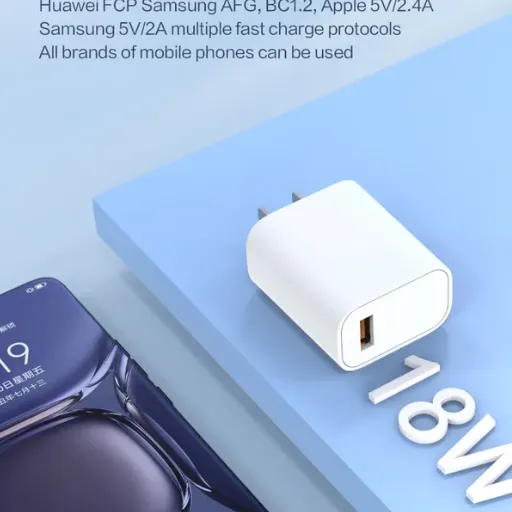
This is the most common point of confusion for OEM buyers. Quick Charge 3.0 and USB Power Delivery (USB-PD) are not the same thing. USB-PD is an open industry standard maintained by the USB Implementers Forum, while Quick Charge is a proprietary Qualcomm technology.
| Feature | Quick Charge 3.0 | USB Power Delivery |
|---|---|---|
| Developer | Qualcomm | USB Implementers Forum (USB-IF) |
| Connector | Usually USB Type-A | USB Type-C required |
| Voltage range | 3.6V–20V | 5V, 9V, 15V, 20V, up to 48V (PD 3.1) |
| Power level | Typically up to 18W | Up to 100W or 240W |
| Communication | Over D+/D- data lines | Over CC line (Type-C) |
| Standardization | Proprietary Qualcomm technology | Open industry standard |
| Common use | Smartphones, handhelds, legacy Type-A devices | Laptops, tablets, modern phones, high-power devices |
For many consumer electronics products, Quick Charge 3.0 is the pragmatic choice. It works with the USB Type-A cables and chargers already in the field, keeps BOM cost lower, and still delivers a meaningful fast-charging experience. USB-PD is the better path if you need more than 18W, USB Type-C is already part of your design, or you want a single charger strategy across phones and laptops.
Mini-story: A Los Angeles e-bike brand wanted a 5V/2A USB port on their handlebar display so riders could charge phones during commutes. Their first supplier shipped a generic 5W port. Riders complained that 30 minutes of riding added only 8–10% battery. The brand switched to a Quick Charge 3.0 USB module built into an AC/DC power adapter designed for their charging dock. Riders now get a meaningful top-up, and the brand has one less feature gap versus mainstream phone chargers.
Sourcing a Quick Charge 3.0 Adapter: What to Verify
If you are buying Quick Charge 3.0 chargers or adapters from a factory, treat the protocol as one specification among many. The fast-charging label means nothing if the unit fails safety certification or melts in a tropical warehouse.
1. Qualcomm licensing and controller documentation
Ask for:
The controller IC part number
Qualcomm Quick Charge certification or license agreement
Test report showing the actual voltage steps and handshake behavior
Unauthorized "compatible" ICs are common in the Shenzhen supply chain. They may work in a quick bench test but fail compatibility with some devices or overheat under sustained load.
2. Output voltage and current accuracy
A good Quick Charge 3.0 adapter keeps output voltage within tight tolerance across the full load range. At Anenerge, we target ±3% voltage accuracy and ±5% current accuracy on fast-charging outputs. That stability protects the downstream PMIC and avoids device-side charging rejections.
3. Thermal performance and efficiency
Fast charging generates heat. Verify the adapter's efficiency at 25%, 50%, 75%, and 100% load. Higher efficiency means less heat, smaller enclosure, and longer product life. For products shipping to regulated markets, confirm the adapter meets DOE Level VI in the U. S. and ErP Tier V in the EU.
4. Safety protections
Production-grade Quick Charge 3.0 adapters should include:
Over-voltage protection (OVP)
Over-current protection (OCP)
Short-circuit protection (SCP)
Over-temperature protection (OTP)
Input surge protection
Proper isolation between AC input and DC output
These protections are not optional add-ons. They are required by UL 62368-1, IEC 62368-1, and equivalent safety standards.
5. Certification stack for your markets
Before you approve a sample, map certifications to your sales regions:
U. S.: UL listed, FCC Part 15, DOE Level VI
EU: CE marked (EN 62368-1, EN 55032/35), ErP Tier V
UK: UKCA marked
Australia: SAA / RCM
China: CCC
You can review the full certification matrix on our certifications page.
6. Cable and connector matching
If your product ships with a captive cable or a custom connector, make sure the factory tests the complete system. Connector resistance, wire gauge, and strain relief all affect real-world fast-charging performance.
Mini-story: In 2023, a Jakarta-based security equipment brand ordered 5,000 "QC 3.0 compatible" adapters for a new handheld patrol device. The supplier delivered 5V-only units with a Quick Charge logo silk-screened on the case. Field testing revealed zero fast-charging behavior. The brand had to scrap the shipment and re-source. The lesson: verify the protocol behavior independently, not just the label.
Avoid These Quick Charge Sourcing Mistakes
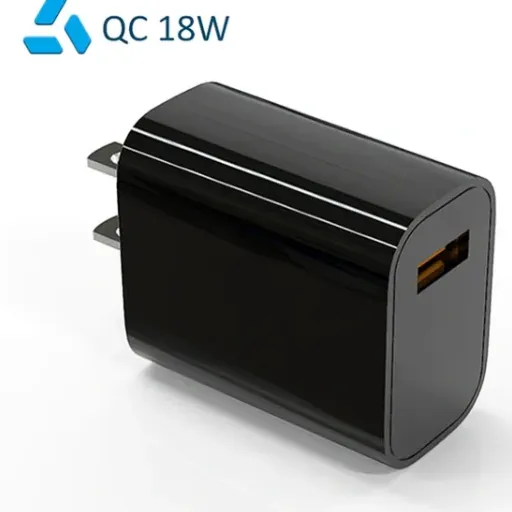
Mistake 1: Treating Quick Charge 3.0 as a cable-agnostic feature. The cable, connector, and charger must be designed as a system.
Mistake 2: Confusing Quick Charge 3.0 with USB-PD. They use different connectors, different negotiation lines, and different voltage steps.
Mistake 3: Skipping thermal validation. A QC 3.0 adapter running at 18W in a 45°C enclosure without proper derating will fail early.
Mistake 4: Assuming backward compatibility covers everything. A QC 3.0 charger will safely charge a non-QC device at 5V, but it will not fast-charge it.
Mistake 5: Ignoring the license. Selling a product with Quick Charge branding or technology without a Qualcomm license can create trademark and patent exposure.
How Anenerge Builds Quick Charge 3.0 into OEM Adapter Programs
Our AC/DC power adapter and lithium-ion battery charger platforms already support fast-charging requirements for consumer electronics, IoT, and e-mobility brands. When an OEM asks for Quick Charge 3.0, our process looks like this:
We confirm the target device platform and required voltage/current profiles.
We select a Qualcomm-licensed controller and design the output stage for the target enclosure.
We build engineering samples within two weeks.
We validate the adapter against representative devices from your compatibility list.
We run 100% functional test, high-voltage isolation test, and aging on every production unit.
We ship with current certification documents and traceable test reports.
Because we run three Panasonic SMT lines, two automatic insertion lines, and a full in-house test laboratory, we can support pilot runs from 500 units and scale to multi-million-unit annual programs without changing factories.
If your product roadmap includes USB Type-C and USB-PD instead of, or alongside, Quick Charge 3.0, our OEM/ODM services team can co-develop a multi-protocol charger that negotiates the correct profile for each connected device.
Specification Summary
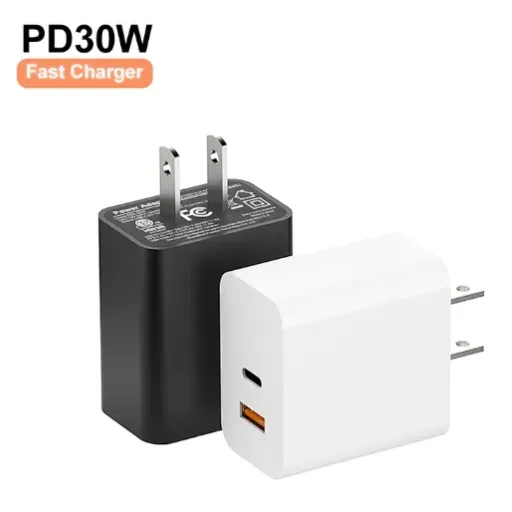
| Parameter | Specification |
|---|---|
| Input voltage | 100–240V AC, 47–63Hz typical |
| Output voltage range | 3.6V to 20V (200mV steps) |
| Typical max power | 18W (class A) |
| Common profiles | 5V/3A, 9V/2A, 12V/1.5A |
| Protocol | Qualcomm Quick Charge 3.0 with INOV |
| Backward compatibility | Quick Charge 2.0 and 1.0 |
| Typical connector | USB Type-A |
| Efficiency target | DOE Level VI / ErP Tier V |
Conclusion
Quick Charge 3.0 remains a practical fast-charging standard for OEMs who want better charge times without forcing a USB Type-C transition. Its INOV voltage negotiation runs cooler than fixed-step alternatives, and its backward compatibility protects accessory investments.
For product teams, the key is to treat Quick Charge 3.0 as a system specification, not a marketing sticker. Verify the Qualcomm license, validate voltage accuracy, confirm thermal performance, and demand the certification stack for every target market. The right adapter partner will deliver all of this with traceable documentation, not promises.
Key takeaways:
Quick Charge 3.0 uses INOV to select voltage from 3.6V to 20V in 200mV steps.
A complete QC 3.0 system requires a compatible device, certified charger, and capable cable.
Quick Charge 3.0 and USB-PD are different standards with different connectors and use cases.
Verify Qualcomm licensing, safety certifications, and thermal performance before approving a supplier.
If you are specifying a Quick Charge 3.0 adapter or charger for your next product, the next step is simple. Send us your device voltage, current, and connector requirements. Our engineering team will return a sample plan and certification roadmap within 24 hours.
Recently Posted
-
Why Is My Phone Charging Slowly? Causes and Fixes
June 22, 2026At 7:45 a.m., Maya plugged her phone into the charger she grabbed from the hotel nightstand. By 8:30, the battery had climbed from Read More
 -
Fast Charging vs Normal Charging: OEM Engineering Guide
June 22, 2026Last year, a European e-bike brand shipped 5,000 units with a 4A fast charger as a premium upgrade. Six months later, their warran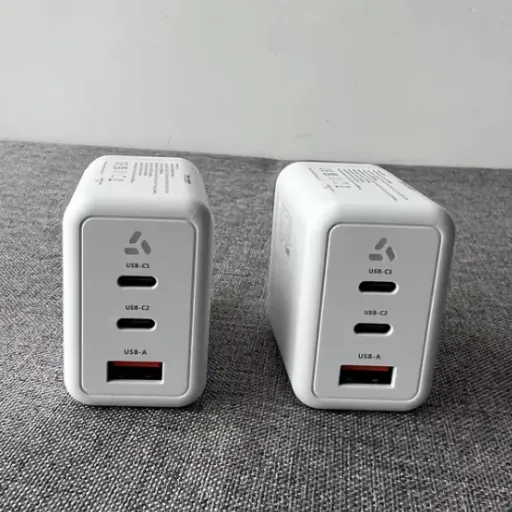 Read More
 -
How to Make Charging Faster: A Technical Guide for OEM Brand Owners
June 22, 2026When Elena, product manager at a Rotterdam e-bike brand, launched her 48V commuter line in spring 2026, she thought 6 hours on a s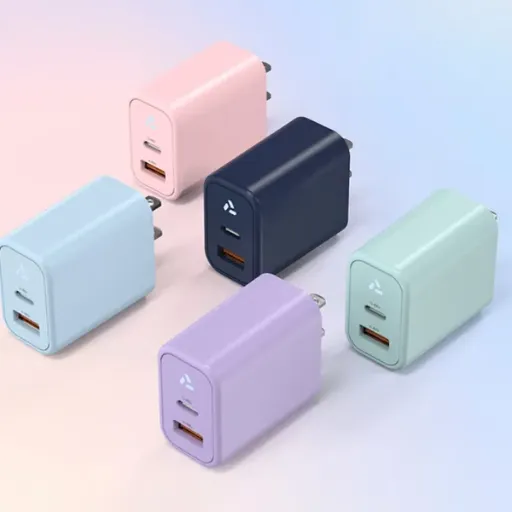 Read More
 -
Does Fast Charging Damage Battery? What OEM Buyers Need to Know
June 22, 2026Yes, fast charging can damage batteries when current exceeds the cell's thermal and electrochemical limits. The damage shows u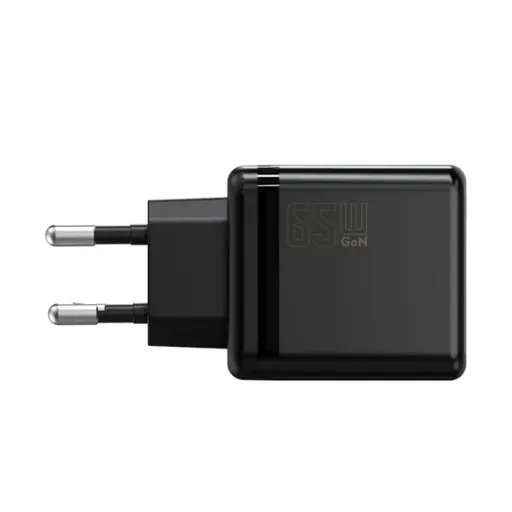 Read More

Contact Us
Recommended Products
-
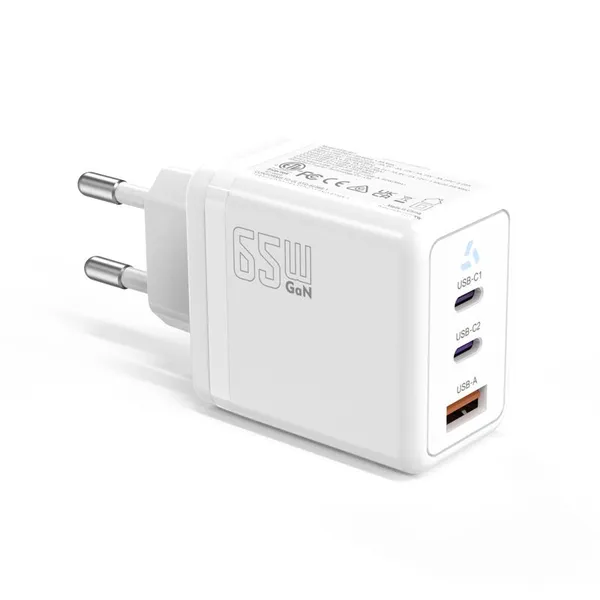
 65W USB-C GaN Wall Charger PD Fast Charging Adapter EU US Plug for Laptop Smartphone and TravelUS$ 6MOQ: 100 Pieces
 -
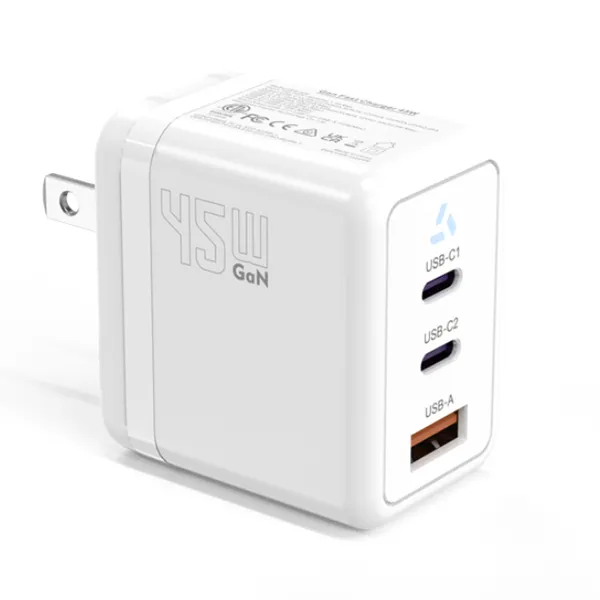
45W GaN USB-C Fast Charger JP Plug PD Wall Charging Adapter for IPhone MacBook and TabletsUS$ 8MOQ: 100 Pieces
-
QC3.0 30W USB Fast Charger With 18W Quick Charge Wall Adapter for Android and Mobile DevicesUS$ 4MOQ: 100 Pieces
-
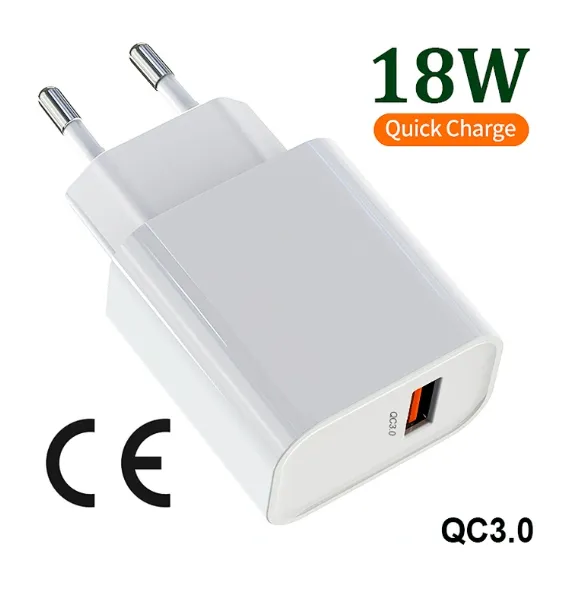
Compact 18W Quick Charge 3.0 USB Charger 30W Fast Charging Adapter EU US Plug for TravelUS$ 2MOQ: 100 Pieces
-
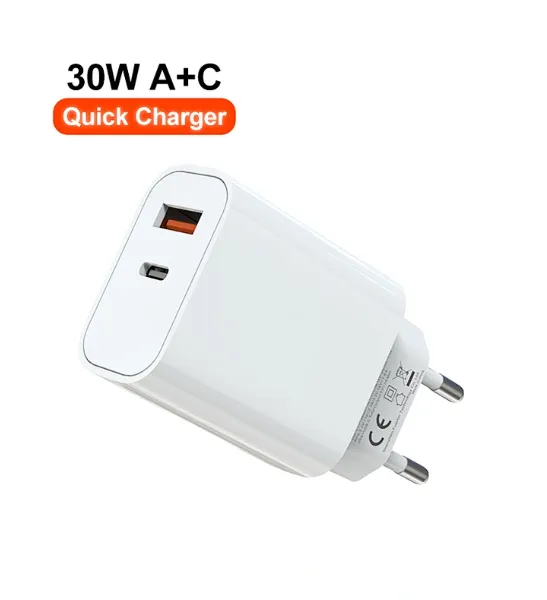
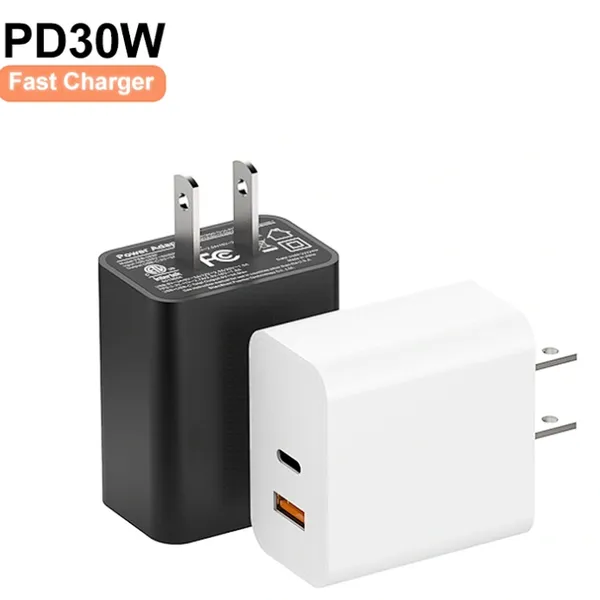
30W USB-C and USB-A PD Fast Charger Compact Wall Adapter for IPhone Samsung and IPadUS$ 3MOQ: 100 Pieces
-
35W Dual USB-C PD Charger Fast Charging Adapter for IPhone Samsung IPad and USB-C DevicesUS$ 3MOQ: 100 Pieces
-
65W USB-C GaN Charger EU Plug Fast Charging Adapter 65W USB-C PD Fast Charge Wall Charger Power Adapter for Macbook ProUS$ 5MOQ: 100 Pieces
-
65W GaN USB-C Fast Charger PD Wall Charging Adapter for Laptop IPhone and Mobile DevicesUS$ 5MOQ: 100 Pieces
-
100W GaN USB-C Fast Charger With PD 3.0 for Laptop, MacBook, IPhone & Multi-Device ChargingUS$ 12MOQ: 100 Pieces
-
45W GaN USB-C Fast Charger EU AU PD Fast Wall Charging Adapter for IPhone Tablets With CE REACH PassedUS$ 8MOQ: 100 Pieces
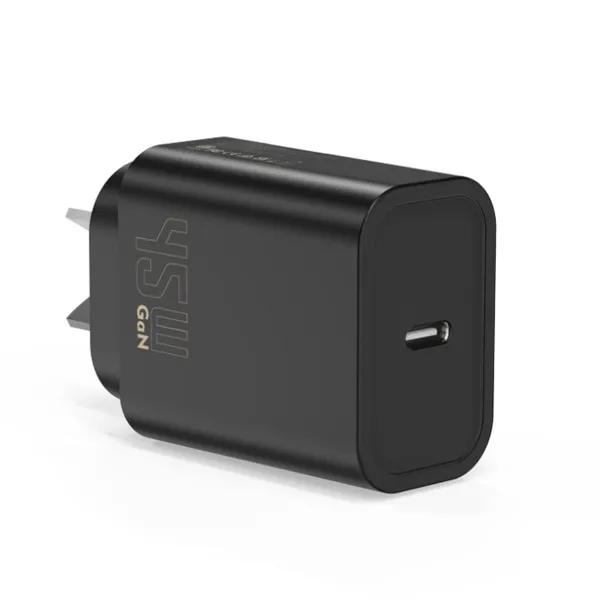
-
QC3.0 65W GaN USB C Super Fast Charger With UKCA 3 Ports PD 3.0 GaN Charger for Iphone Macbook SamsungUS$ 10MOQ: 100 Pieces
-
30W USB-C and USB-A GaN QC3.0 Fast Charging Adapter PD Fast Charger Compact Wall Adapter for IPhone Samsung and IPadUS$ 3MOQ: 100 Pieces
-
45W GaN USB-C Fast Charger With Dual Type-C and USB-A Ports PD Wall Charging AdapterUS$ 8MOQ: 100 Pieces
-
Dual USB C Ports QC3.0 30W Fast Charger With EU UK AU US USB-C PD Wall Chargeer 30W PD Power AdapterUS$ 3MOQ: 100 Pieces
-
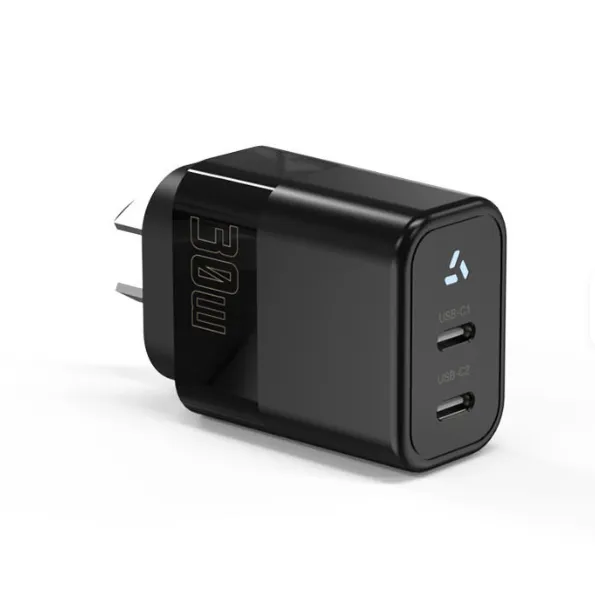
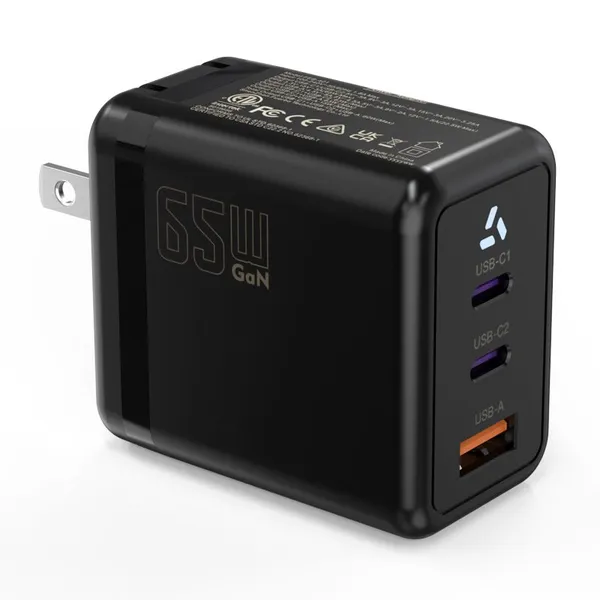
Compact 65W GaN USB-C Wall Charger With Dual USB-C Ports and USB-A Fast Charging Adapter With CE UKCA ETL SAAUS$ 10MOQ: 100 Pieces
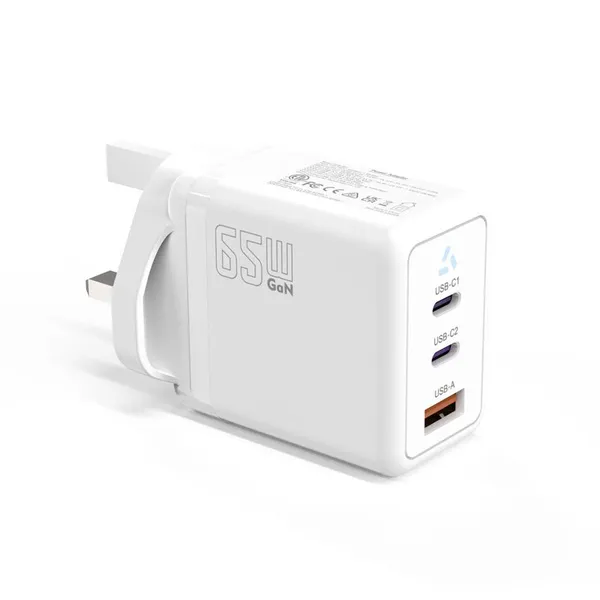
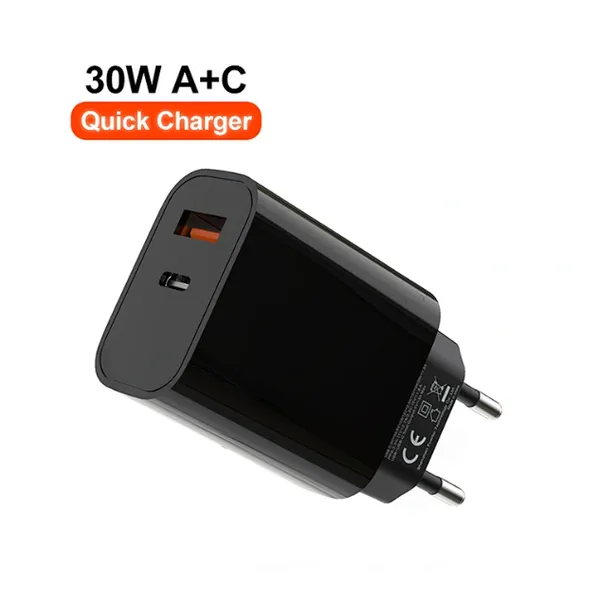
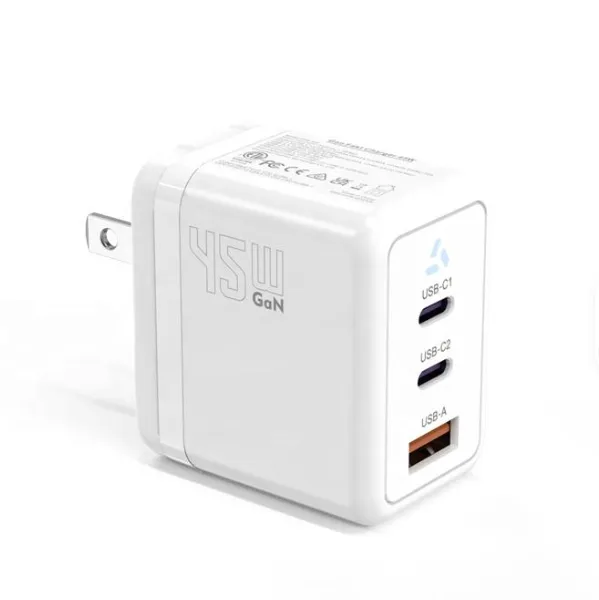
-
QC3.0 Fast Charging Adapter PD30W USB-C USB-A GaN PD Fast Charger PD 3.0 GaN Charger Compact Wall Adapter for IPhone Samsung and IPadUS$ 3MOQ: 100 Pieces
-
12V 5A 60W US EU AC DC Adapter LED Driver LED SMPS AC to DC Switching Power SupplyUS$ 5 - 7MOQ: 50 Pieces
-
CE FCC CUL SAA KC PSE 24Vdc 48W Switching Power Supply AdaptersUS$ 5 - 7MOQ: 50 Pieces
-
CE GS UKCA SAA CUL Qualified Waterproof Switching Power Supply Ip68 PSE UL SAA GS 12V 2AUS$ 3 - 6MOQ: 50 Pieces
-
12V 1A Factory OEM Waterproof AC Adapter for Laser Light Table Lamp ac dc Adaptor With TUV CE GS for EU MarketUS$ 5 - 7MOQ: 50 Pieces