
 Business License
GaN Charger vs Normal Charger: An OEM Buyer's Comparison
Last spring, a product manager at a Berlin laptop accessory brand opened two 65W samples on his desk. One was a normal silicon charger his team had used for three generations. The other was a GaN charger from a new supplier. Both delivered 20V at 3.25A. Both passed safety pre-checks. But the GaN unit was roughly 40% smaller, ran 10°C cooler under load, and cost only 12% more at 10,000 units.
That is the real GaN charger vs normal charger decision. It is not about hype or wattage. It is about whether the size, thermal, and efficiency gains are worth the unit-cost premium for your specific product and volume.
This article compares GaN chargers and normal silicon chargers from a buyer's perspective. We will look at how the technologies differ, where each one wins, what the cost math actually looks like, and how to specify either technology without overpaying.
What "Normal" Charger Actually Means

In this comparison, "normal charger" refers to the traditional switching power supply built around silicon MOSFETs. These have been the standard for decades. They are reliable, well-understood, and supported by a mature supply chain.
A normal charger converts AC wall power to DC using a high-frequency switching topology. Silicon transistors turn on and off rapidly, stepping voltage through a transformer and rectifier. The design is proven, the components are widely available, and the certifications are well established.
The catch is physics. Silicon has a relatively narrow bandgap, which means it leaks more energy as heat at high switching frequencies. To keep efficiency reasonable and temperatures safe, silicon chargers switch at lower frequencies and use larger transformers and filters. That is why a 65W silicon laptop brick is noticeably bulkier than a 65W GaN equivalent.
For many products, that bulk is not a problem. A desk-bound router, a wall-mounted security camera, or an industrial controller may not need a compact adapter. In those cases, a normal silicon charger can still be the smarter buy.
GaN Charger vs Normal Charger: The Core Difference
The GaN charger vs normal charger comparison starts at the transistor level. A GaN charger replaces silicon MOSFETs with gallium nitride transistors. Gallium nitride is a wide-bandgap semiconductor, which means it can switch faster, handle higher voltages, and waste less energy as heat.
For buyers comparing gallium nitride vs silicon charger technologies, the decision is not about abstract physics. It is about whether the performance gains justify the unit-cost premium for a specific product and volume.
For procurement engineers and brand owners, the comparison looks like this:
| Parameter | Normal Silicon Charger | GaN Charger |
|---|---|---|
| Switching frequency | 50–100 kHz | 200 kHz–1 MHz+ |
| Typical efficiency at 65W full load | 88–90% | 91–94% |
| Size at same wattage | 100% (baseline) | 55–70% |
| Heat at full load | Higher | Lower |
| Component count | Larger transformer and filters | Smaller magnetics, fewer passives |
| BOM cost at high volume | Lower | 10–20% premium, narrowing |
| Best fit | Cost-sensitive, size-tolerant | Compact, thermally constrained, high-efficiency |
The gap is not always dramatic at low wattages. A 5V 1A phone charger will see less benefit from GaN than a 65W laptop charger or a 100W multi-port hub. The physics advantage scales with power and frequency.
If you want the deeper technical explanation of why GaN behaves differently, read our what is a GaN charger guide. The rest of this article focuses on the buying decision.
GaN Charger vs Normal Charger: Size and Power Density
The most visible of the GaN adapter benefits is size reduction. Because GaN transistors switch at higher frequencies, the transformer and filtering components can shrink without sacrificing output quality. A 65W GaN charger can be roughly half the volume of an equivalent silicon charger.
That size reduction matters in three ways for OEMs:
Retail packaging: Smaller adapters mean smaller boxes, lower packaging cost, and more units per carton.
Shipping density: A 30% smaller adapter can remove several pallet positions per container at high volume.
Product integration: Compact adapters fit inside smaller product housings or hide behind furniture and displays.
David, a buyer at a U. K. smart-home brand, saw this directly. His team shipped a 24V 2A silicon adapter with each gateway. The adapter worked reliably, but the retail box was 30% larger than a competitor's. After switching to a GaN design, the box shrank by 25%, freight cost per unit dropped by $0.35, and the product looked visibly more premium on shelf. The GaN premium paid back within the first production run.
For products where the adapter lives behind a desk or inside an enclosure, the size advantage may not matter. A normal charger can still be the right call.
Efficiency and Thermal Performance
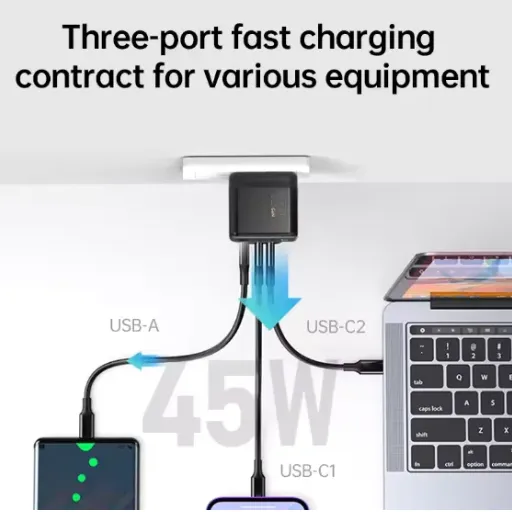
GaN chargers are generally more efficient than silicon chargers at the same wattage. The difference is usually 2–5 percentage points at full load. That may sound small, but it compounds across production volume and operating hours.
More importantly, GaN's lower switching losses reduce heat. A cooler adapter means:
Less stress on nearby components and enclosure plastics
Fewer warranty returns related to overheating
Better performance in sealed or outdoor enclosures
More headroom to pass efficiency standards like DOE Level VI
At 25%, 50%, 75%, and 100% load, a well-designed GaN adapter often has flatter efficiency curves. That helps with the weighted efficiency calculations used by U. S. and EU regulations. If your product needs to clear efficiency certification with margin to spare, GaN makes the target easier.
However, not every GaN charger is automatically efficient. Layout, transformer quality, and thermal design still matter. A poorly designed GaN adapter can run hotter than a well-designed silicon one. Always request multi-load efficiency data and thermal images from production samples.
Want to see how GaN efficiency compares in your actual product? Request a free sample and we will share the full-load and no-load test data side by side with your current adapter.
GaN Charger vs Normal Charger: Cost Analysis
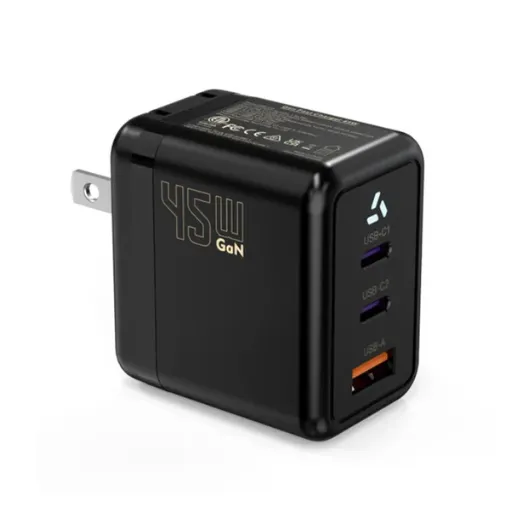
Cost is where the normal charger vs GaN debate gets interesting. The GaN power adapter cost premium has narrowed significantly in recent years. Today, at OEM volumes, the premium has narrowed to roughly 10–20% on the bill of materials for a 45W–100W adapter.
But unit cost is only part of the equation. A complete cost comparison should include:
Unit BOM cost: The actual charger cost at your volume
Packaging cost: Smaller adapters use smaller boxes
Freight cost: More units per carton and per container
Thermal management cost: Less heat may mean no heatsink, smaller enclosure, or no fan
Warranty cost: Cooler operation can reduce field failures
Certification cost: Efficiency headroom may reduce re-test risk
For a 65W laptop adapter shipped at 50,000 units, a $0.80 GaN premium can be offset by $0.40 in packaging savings, $0.30 in freight savings, and reduced thermal risk. The net cost difference becomes small. If the product also commands a higher retail price because of the compact design, the business case is often positive.
At very low wattages or very high cost sensitivity, silicon still wins. A 5V 1A adapter for a basic IoT sensor rarely justifies GaN. The size and efficiency gains are too small to matter.
When to Choose GaN, When to Stick With Normal
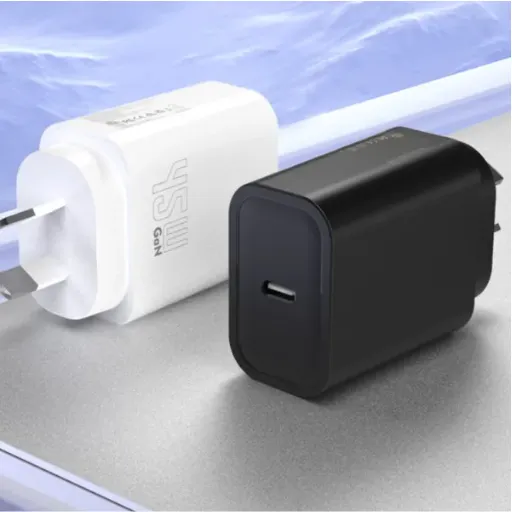
Neither technology is universally better. The right choice depends on the product.
Choose a GaN charger when:
Portability or retail size matters (laptops, travel adapters, mobile accessories)
Thermal headroom is limited (sealed enclosures, outdoor devices, no-fan designs)
You need multi-port fast charging (USB-C PD hubs, 100W+ shared outputs)
Efficiency certification margin is tight (DOE Level VI, ErP Tier V, ENERGY STAR)
Shipping volume is high enough to recover the BOM premium through packaging and freight savings
Stick with a normal silicon charger when:
Unit cost is the primary driver and margins are thin
The adapter is fixed in place and size is not constrained
Wattage is low enough that GaN gains are minimal
Your supply chain is already qualified around a proven silicon platform
You need the fastest possible sample turnaround from a mature design
Elena, a procurement engineer at a Rotterdam e-bike brand, made the wrong call once and the right call once. For a premium commuter e-bike display, she specified a 45W GaN USB-C charger. The compact size matched the premium positioning, and the efficiency data helped the marketing team publish a lower energy-loss claim. For a fleet-management tracking device, she stayed with a 12V 1A silicon adapter because the device was buried inside a scooter panel and the GaN premium added no user value.
Sourcing Checklist for GaN and Normal Chargers
Whether you choose GaN or silicon, the sourcing fundamentals are the same. The difference is which questions you emphasize.
For GaN chargers:
Request efficiency data at 25%, 50%, 75%, and 100% load
Ask for full-load temperature rise and thermal images
Verify EMI pre-compliance data for your target markets
Confirm USB-PD PDO profiles or fixed-output accuracy
Check that the GaN transistor vendor is a recognized supplier (Navitas, Infineon, GaN Systems, etc.)
Validate samples in your actual enclosure, not just on an open bench
If you are sourcing a USB-C GaN charger OEM program, also verify CC line termination and E-marker cable support at 60W and above.
For normal silicon chargers:
Confirm the design is current, not a legacy platform predating efficiency standards
Verify no-load power for DOE Level VI and ErP Tier V
Check production variability and sampling protocols
Ask for lifecycle roadmap, some silicon platforms are being phased out
Compare total landed cost, including packaging and freight
In both cases, demand current test reports that match the exact model number you will import. A report from a previous generation or a different wattage does not cover your unit.
Certifications: Same Rules, Different Margins
GaN technology does not change the regulatory landscape. A GaN charger and a normal charger sold into the same market need the same certifications:
Safety: UL 62368-1 (U. S.), CE/EN 62368-1 (EU), UKCA (UK), SAA (Australia), CCC (China), CB Scheme
EMC: FCC Part 15 (U. S.), EN 55032/35 (EU), CISPR 32
Efficiency: DOE Level VI (U. S.), ErP Tier V (EU), ENERGY STAR Level V where applicable
Environmental: RoHS, REACH, PAHs
The advantage GaN brings is margin. A GaN design starts closer to the efficiency target, which reduces the risk of failing re-test after a minor design change. It also gives marketing teams a better number to publish on datasheets and sustainability reports.
For U. S. market entry, review the DOE external power supply standards at the U.S. Department of Energy. For the technical case for GaN in power electronics, Analog Devices publishes a useful overview. For USB Power Delivery protocol details, see the USB Implementers Forum.
Common Mistakes in the GaN vs Normal Decision
We see buyers make the same errors on both sides of this choice.
Mistake 1: Treating GaN as a magic label. Not every adapter marketed as GaN is well engineered. Request data, not branding.
Mistake 2: Ignoring total cost of ownership. A cheaper silicon unit can become more expensive after packaging, freight, and warranty costs.
Mistake 3: Over-specifying GaN for low-wattage products. A 5W adapter rarely benefits from GaN enough to justify the premium.
Mistake 4: Assuming normal chargers are obsolete. Silicon remains the right choice for many fixed-installation and cost-sensitive products.
Mistake 5: Skipping sample validation in the real enclosure. Bench data and field performance are not the same, especially for thermally constrained designs.
How Anenerge Supports Both GaN and Normal Charger Programs
We manufacture both GaN and silicon-based AC/DC power adapters across the 5W–240W range. Our OEM/ODM services cover custom voltage, current, connector, enclosure, and labeling requirements. We do not push GaN where silicon is the better fit.
Our process for either technology:
Review your voltage, current, connector, and enclosure requirements
Recommend GaN or silicon based on size, thermal, efficiency, and cost targets
Propose a topology and share the efficiency curve
Build engineering samples within two weeks
Run thermal and EMI pre-compliance testing in our lab
Ship with current certification documents and 100% functional test on every unit
Whether your product needs a compact GaN fast charger or a cost-optimized silicon adapter, we start with the application and let the numbers drive the choice.
Ready to compare GaN and silicon side by side? Request a free sample of both technologies for your application and we will share efficiency, thermal, and certification data within 24 hours.
GaN Charger vs Normal Charger: Which Is Better?
There is no single winner. The better technology is the one that matches your product constraints.
Choose GaN when size, thermal performance, or efficiency margin matters. Choose a normal silicon charger when unit cost is the top priority and the adapter will live in a fixed location.
The real answer to "GaN charger vs normal charger: which is better?" is that both are viable. The wrong choice is specifying one without running the numbers for your volume, enclosure, and certification targets.
Frequently Asked Questions
Is a GaN charger better than a normal charger?
A GaN charger is better when size, heat, or efficiency margin matters. It is not automatically better for low-wattage or cost-sensitive products where a normal silicon charger is adequate.
Why are GaN chargers smaller than normal chargers?
GaN transistors switch at higher frequencies than silicon MOSFETs. Higher frequency allows smaller transformers and filtering components, which reduces overall charger volume.
Do GaN chargers cost more than normal chargers?
At OEM volumes, GaN chargers typically carry a 10–20% BOM premium over equivalent silicon chargers. The premium is often offset by packaging, freight, and thermal savings.
Can a GaN charger replace any normal charger?
Only if the output voltage, current, connector, and protocols match. GaN is a transistor technology, not a universal compatibility feature. Always verify electrical specs before substitution.
Are GaN chargers more efficient?
Generally yes. A well-designed GaN charger is 2–5 percentage points more efficient than an equivalent silicon charger and runs cooler under load.
Conclusion: Choose the Charger That Fits the Product
The GaN charger vs normal charger decision is not a universal winner-takes-all. GaN wins on size, heat, and efficiency margins. Silicon wins on unit cost, maturity, and suitability for fixed-installation products. The right choice depends on your wattage, volume, enclosure constraints, and certification targets.
Key takeaways:
GaN chargers switch faster and waste less energy than normal silicon chargers.
A 65W GaN charger is typically 30–45% smaller than an equivalent normal charger.
The GaN BOM premium is narrowing and can be offset by packaging, freight, and thermal savings.
Normal silicon chargers remain the better choice for cost-sensitive, low-wattage, or fixed-installation products.
Always validate samples in your real product and confirm test reports match the exact model number.
If you are sourcing an AC/DC adapter or USB-C charger and want an honest recommendation on GaN vs silicon, contact our engineering team. We will compare real sample data for your application and recommend the technology that makes business sense.
Recently Posted
-
Why Is My Phone Charging Slowly? Causes and Fixes
June 22, 2026At 7:45 a.m., Maya plugged her phone into the charger she grabbed from the hotel nightstand. By 8:30, the battery had climbed from Read More
 -
Fast Charging vs Normal Charging: OEM Engineering Guide
June 22, 2026Last year, a European e-bike brand shipped 5,000 units with a 4A fast charger as a premium upgrade. Six months later, their warran Read More
 -
How to Make Charging Faster: A Technical Guide for OEM Brand Owners
June 22, 2026When Elena, product manager at a Rotterdam e-bike brand, launched her 48V commuter line in spring 2026, she thought 6 hours on a s Read More
 -
Does Fast Charging Damage Battery? What OEM Buyers Need to Know
June 22, 2026Yes, fast charging can damage batteries when current exceeds the cell's thermal and electrochemical limits. The damage shows u Read More

Contact Us
Recommended Products
-
 65W USB-C GaN Wall Charger PD Fast Charging Adapter EU US Plug for Laptop Smartphone and TravelUS$ 6MOQ: 100 Pieces
 -
45W GaN USB-C Fast Charger JP Plug PD Wall Charging Adapter for IPhone MacBook and TabletsUS$ 8MOQ: 100 Pieces
-
QC3.0 30W USB Fast Charger With 18W Quick Charge Wall Adapter for Android and Mobile DevicesUS$ 4MOQ: 100 Pieces
-
Compact 18W Quick Charge 3.0 USB Charger 30W Fast Charging Adapter EU US Plug for TravelUS$ 2MOQ: 100 Pieces
-
30W USB-C and USB-A PD Fast Charger Compact Wall Adapter for IPhone Samsung and IPadUS$ 3MOQ: 100 Pieces
-
35W Dual USB-C PD Charger Fast Charging Adapter for IPhone Samsung IPad and USB-C DevicesUS$ 3MOQ: 100 Pieces
-
65W USB-C GaN Charger EU Plug Fast Charging Adapter 65W USB-C PD Fast Charge Wall Charger Power Adapter for Macbook ProUS$ 5MOQ: 100 Pieces
-
65W GaN USB-C Fast Charger PD Wall Charging Adapter for Laptop IPhone and Mobile DevicesUS$ 5MOQ: 100 Pieces
-
100W GaN USB-C Fast Charger With PD 3.0 for Laptop, MacBook, IPhone & Multi-Device ChargingUS$ 12MOQ: 100 Pieces
-
45W GaN USB-C Fast Charger EU AU PD Fast Wall Charging Adapter for IPhone Tablets With CE REACH PassedUS$ 8MOQ: 100 Pieces
-
QC3.0 65W GaN USB C Super Fast Charger With UKCA 3 Ports PD 3.0 GaN Charger for Iphone Macbook SamsungUS$ 10MOQ: 100 Pieces
-
30W USB-C and USB-A GaN QC3.0 Fast Charging Adapter PD Fast Charger Compact Wall Adapter for IPhone Samsung and IPadUS$ 3MOQ: 100 Pieces
-
45W GaN USB-C Fast Charger With Dual Type-C and USB-A Ports PD Wall Charging AdapterUS$ 8MOQ: 100 Pieces
-
Dual USB C Ports QC3.0 30W Fast Charger With EU UK AU US USB-C PD Wall Chargeer 30W PD Power AdapterUS$ 3MOQ: 100 Pieces
-
Compact 65W GaN USB-C Wall Charger With Dual USB-C Ports and USB-A Fast Charging Adapter With CE UKCA ETL SAAUS$ 10MOQ: 100 Pieces
-
QC3.0 Fast Charging Adapter PD30W USB-C USB-A GaN PD Fast Charger PD 3.0 GaN Charger Compact Wall Adapter for IPhone Samsung and IPadUS$ 3MOQ: 100 Pieces
-
12V 5A 60W US EU AC DC Adapter LED Driver LED SMPS AC to DC Switching Power SupplyUS$ 5 - 7MOQ: 50 Pieces
-
CE FCC CUL SAA KC PSE 24Vdc 48W Switching Power Supply AdaptersUS$ 5 - 7MOQ: 50 Pieces
-
CE GS UKCA SAA CUL Qualified Waterproof Switching Power Supply Ip68 PSE UL SAA GS 12V 2AUS$ 3 - 6MOQ: 50 Pieces
-
12V 1A Factory OEM Waterproof AC Adapter for Laser Light Table Lamp ac dc Adaptor With TUV CE GS for EU MarketUS$ 5 - 7MOQ: 50 Pieces