
 Business License
Why Is My Fast Charger Not Charging Fast? 7 Technical Reasons Explained
Last March, a product manager at a Rotterdam e-bike brand called us with a problem we see at least twice a quarter. Their new 48V 5A "fast chargers" were taking six hours to fill a 20Ah pack, nearly double the four-hour target their marketing team had promised customers. End users were leaving one-star reviews.
The brand's QA team had bench-tested the chargers before launch, and every unit hit 5A on the dot. So why were they slow in the field?
If you've ever plugged in a device labeled "fast charge" and watched the battery percentage crawl upward, you already know the frustration. The gap between advertised speed and real-world speed is one of the most common complaints in consumer electronics and e-mobility today. For OEM brand owners, that gap translates directly into warranty returns, negative reviews, and damaged brand equity.
This article explains the seven technical reasons a fast charger charges slowly, and what procurement engineers and brand owners should verify before specifying chargers for production. We'll cover cable limitations, power source mismatches, protocol negotiation failures, thermal throttling, battery condition, and the charger design decisions that determine whether your end users get the speed you promised.
Want to see how proper charger specification prevents field failures? Read our LiFePO4 charger buying guide for the seven specs OEM buyers must verify before placing a production order.
What "Fast Charging" Actually Means (and Why the Label Can Mislead)
Before diagnosing why a fast charger is slow, we need to define what "fast" means in electrical terms. Charging speed is measured in watts (W), which is the product of voltage (V) and current (A):
Power (W) = Voltage (V) × Current (A)
A 48V 5A charger delivers 240W. A 48V 2A charger delivers 96W. The 5A unit is "faster" because it pushes more power into the pack per hour, in theory.
In practice, fast charging requires three things to align:
The charger must be capable of the rated voltage and current
The cable and connectors must carry that current without excessive voltage drop
The device or battery pack must accept the charge rate and negotiate the protocol correctly
If any one of these three fails, the system falls back to a slower, safer charge rate. The charger itself may be perfectly capable. The bottleneck often lives elsewhere.
This is the critical distinction consumer marketing usually ignores. A charger labeled "fast" on the box is only one-third of the equation. For OEM buyers, understanding the full chain is the difference between a product that delivers on its promise and one that generates support tickets.
7 Reasons Your Fast Charger Is Charging Slowly
1. The Cable Is the Bottleneck
The most common cause of slow charging is also the most overlooked: the cable. Copper wire has resistance. Current flowing through that resistance creates a voltage drop. The longer and thinner the wire, the greater the drop.
A 48V 5A charger connected to a pack through a 2-meter, 20AWG cable can lose 1–2V across the cable alone. The charger senses the lower voltage at the pack and compensates by reducing current. The result: a 5A charger delivering 3A in practice.
What to check:
Cable gauge (AWG): Lower numbers mean thicker wire. For 5A+ charging, 18AWG or 16AWG is typical.
Cable length: Shorter is better. Every extra meter adds resistance.
Connector contact resistance: Poor-quality connectors add heat and voltage drop.
Pro tip: When specifying chargers for production, always test with the exact cable length and gauge your end users will see. Bench-testing with a 0.5-meter lab cable tells you very little about field performance.
2. The Power Source Cannot Deliver
A charger is only as good as the power feeding it. If the AC input voltage sags, the DC output sags with it. This is especially common in:
Regions with unstable grid voltage (rural areas, developing markets)
Extension cords and power strips shared with high-draw devices
Generator or inverter-powered environments (RVs, construction sites, off-grid setups)
Most quality chargers include input voltage regulation that maintains output within specification across a range, typically 100–240V AC for global adapters. But the regulation has limits. If input voltage drops below the specified minimum, the charger either shuts down or reduces output current to protect itself.
For LiFePO4 battery chargers used in e-mobility, this matters because riders charge in garages, outdoor outlets, and shared parking facilities where power quality varies widely.
3. Protocol Negotiation Failed
Smart chargers and smart devices communicate before charging begins. They negotiate voltage, current, and charge profile. If negotiation fails, the system defaults to the lowest safe setting, often 5V at 0.5A or 1A.
Common protocol standards include:
USB Power Delivery (USB-PD): Up to 240W over USB-C
Qualcomm Quick Charge: Voltage steps up to 20V
Proprietary protocols: Many brands use custom signaling
In the battery charger world, the equivalent is BMS (Battery Management System) communication. A smart charger may query the BMS for pack temperature, state of charge, and maximum allowed current. If the BMS reports a fault or the communication protocol mismatches, the charger falls back to trickle charge or stops entirely.
This is why specifying the communication protocol, CAN-bus, UART, or simple voltage signaling, is essential for OEM projects. A charger that speaks the wrong language charges slowly, or not at all.
4. Thermal Throttling Kicks In
Batteries heat up when charging. Chargers heat up when delivering high current. Heat is the enemy of both speed and longevity. When internal temperatures exceed safe thresholds, the charger or BMS reduces current to cool things down.
Thermal throttling is not a defect. It is a protective feature. But it explains why a 5A charger may deliver 5A for the first 30 minutes, then drop to 3A as the pack warms. In summer conditions, or in poorly ventilated enclosures, throttling happens earlier and more aggressively.
Design factors that affect thermal performance:
Charger efficiency: A 90% efficient charger wastes 10% of input power as heat. An 85% efficient unit wastes 15%. That difference determines whether the fan runs constantly or not at all.
Enclosure design: Metal housings dissipate heat better than plastic. Ventilation holes help, but compromise IP ratings for outdoor use.
Ambient temperature: A charger rated for full output at 25°C may derate at 40°C.
At Anenerge, our LiFePO4 chargers maintain ≥90% efficiency across the full load range. This means less heat, less throttling, and more consistent charge times, especially in the field, where conditions are never as ideal as the lab.
5. Battery Age and State of Charge
A battery's ability to accept fast charging changes over its life. New cells absorb high current readily. Aged cells with higher internal resistance convert more of that current into heat, triggering the BMS to limit charge rate for safety.
State of charge also matters. A deeply discharged pack can accept high current during the constant-current (CC) phase. But as cells fill and the charger transitions to constant-voltage (CV) mode, current naturally tapers. The last 20% of charge always takes longer than the first 20%.
This is why charge time estimates like "charges in 4 hours" are usually quoted from 0% to 80%, not 0% to 100%. For OEM brand owners, setting the right customer expectation is half the battle.
Ready to eliminate charge-time surprises from your product line? Contact our engineering team to review your charge profile and thermal design. We validate every spec against real-world conditions, not just datasheet ideals.
6. The Charger Was Never Actually Fast
Not every charger with "fast" printed on the label delivers the advertised output. We have tested competitor chargers that claim 5A but deliver 3.2A at the DC jack under load. The discrepancy comes from:
Overstated ratings: Some suppliers label chargers with peak capability, not continuous capability.
Design shortcuts: Insufficient transformer sizing, undersized output capacitors, or marginal thermal design force the unit to run below its labeled spec.
Component drift: Cheap components change value with temperature and age, causing output current to sag over time.
For brand owners sourcing chargers from factories, the only way to verify real output is to test under load at operating temperature, not just at room temperature, and not just for five minutes.
Marcus, an e-bike brand owner in Los Angeles, learned this the hard way. In 2024, he sourced 1,000 "5A fast chargers" from a low-cost supplier for his new 52V e-bike line. The samples looked fine on a quick bench check. But after three months of summer sales, customer complaints piled up. Riders reported 7-hour charge times instead of the advertised 4 hours.
Marcus sent five units to our lab for analysis. We found the chargers delivered 5A for approximately 8 minutes, then thermally derated to 2.8A for the remainder of the cycle. The transformer was undersized for continuous duty, and the thermal design had no margin for 35°C garage temperatures.
He replaced the entire batch at a cost of $18,000. That was more than double the savings he thought he had achieved by choosing the cheaper supplier.
7. Environmental Conditions
Chargers are rated for specific temperature and humidity ranges. Operating outside those ranges affects performance and safety:
Cold environments: Below 0°C, LiFePO4 and Li-ion cells charge poorly. Most BMS units limit current to prevent lithium plating.
Hot environments: Above 45°C, chargers derate or shut down to protect semiconductors.
High humidity: Condensation inside the charger can cause arcing or corrosion over time.
Dust and debris: Blocked ventilation leads to overheating and throttling.
For outdoor applications, e-bike charging stations, scooter fleets, security equipment, specifying the right IP rating and operating temperature range is as important as specifying voltage and current.
How Charger Design Determines Real-World Speed
The seven factors above explain why a capable charger charges slowly. But what separates a charger that delivers its rated speed from one that does not? The answer lies in design margins.
A well-engineered fast charger has headroom built in at every stage:
Transformer sizing: Rated for continuous duty at full load, not just peak.
Output capacitor bank: Large enough to maintain stable voltage during CC-CV transitions.
Thermal management: Heat sinks, thermal pads, and fan curves designed for worst-case ambient temperatures.
Efficiency optimization: Higher efficiency means less heat, which means less throttling and more consistent output.
Protection margins: OVP, OCP, OTP, and SCP set with realistic tolerances, not razor-thin windows that trigger nuisance faults.
The difference between a 240W charger that delivers 240W continuously and one that delivers 240W for ten minutes is not visible in a spec sheet. It is visible in the BOM, the transformer datasheet, the thermal simulation, and the production test data.
At Anenerge, every charger we build is tested at 100% rated load for a full burn-in cycle before it ships. We measure actual output voltage, current, and case temperature, not just whether the green LED turns on. This is why our OEM partners can specify charge times with confidence.
What Slow Charging Costs OEM Brands
Slow charging is not just an end-user annoyance. For brand owners, it has real financial consequences:
Warranty returns: If your product promises a 4-hour charge time and delivers 7 hours, some customers will demand refunds or replacements. At 50–50–150 per return, this adds up fast.
Negative reviews: In e-commerce and direct-to-consumer markets, charge time is one of the most mentioned metrics in reviews. A consistent complaint pattern damages brand reputation and conversion rates.
Support overhead: Every "why is my charger slow?" ticket costs 15–15–30 to resolve. Multiply by hundreds or thousands of units, and the cost of specifying the wrong charger quickly exceeds the cost of specifying the right one.
Lost repeat purchases: Customers who feel misled about charge speed are less likely to buy accessories, upgrades, or next-generation products from the same brand.
Engineering insight: The total cost of ownership for a charger includes the unit price plus warranty cost, support cost, and brand damage cost. A $2 cheaper charger that generates 5% more returns is not cheaper. It is significantly more expensive.
What to Specify for Reliable Fast Charging
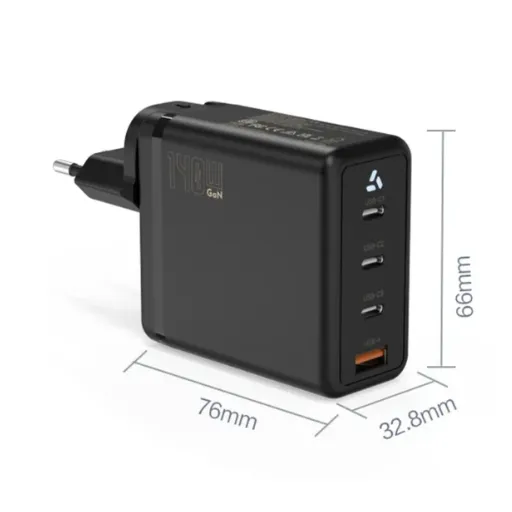
For procurement engineers and brand owners, preventing slow charging starts at the specification stage. Here is the checklist we recommend before placing any charger production order:
Verify the Full-Load Continuous Rating
Ask the supplier: "What is the continuous output current at maximum ambient temperature?" not "What is the peak rating?" Demand test data, not just a label claim.
Match the Cable to the Current
Specify cable gauge, length, and connector type in the BOM. Test the complete assembly, charger, cable, and connector, under full load. Measure voltage at the pack terminals, not at the charger output.
Define the Operating Environment
Document the expected ambient temperature range, humidity, and dust exposure. Specify IP rating accordingly. For outdoor e-bike and scooter chargers, IP65 or IP67 is typical.
Validate the Charge Profile
Request the CC-CV curve from the supplier. Verify the constant-current duration, the CV transition point, and the taper current termination threshold. Compare against your cell vendor's recommended profile. Learn more in our CC-CV charging guide.
Test Protocol Compatibility
If your pack BMS uses CAN-bus, UART, or any digital communication, validate that the charger supports the exact protocol version and message format. Mismatched protocols cause silent fallback to slow charging.
Plan for Thermal Validation
Require the supplier to provide thermal test data at maximum ambient temperature. If possible, run your own thermal validation on production samples before launch.
How to Test and Verify Charge Speed in Your Own Lab
You do not need a million-dollar facility to verify whether a fast charger is actually fast. Here is the basic test setup we recommend for OEM QA teams:
Equipment needed:
Electronic load or actual battery pack of known capacity
DC power analyzer or quality multimeter with current clamp
Thermocouples or infrared thermometer
Timer
Test procedure:
Connect the charger to the electronic load set to draw the rated current.
Record output voltage and current every 5 minutes for the full charge cycle.
Measure case temperature at multiple points.
Repeat the test at minimum, nominal, and maximum rated ambient temperature.
Repeat with the actual cable and connector your product will ship with.
What to look for:
Current should remain stable during the CC phase, not sag over time.
Voltage should hold within ±1% of rated value during the CV phase.
Case temperature should stay within the supplier's rated maximum.
Total charge time should match the supplier's specification within 10%.
If any of these four criteria fails, the charger does not meet its spec. Do not accept "it's within tolerance" as an explanation for a 40% charge time overrun.
Key Takeaways
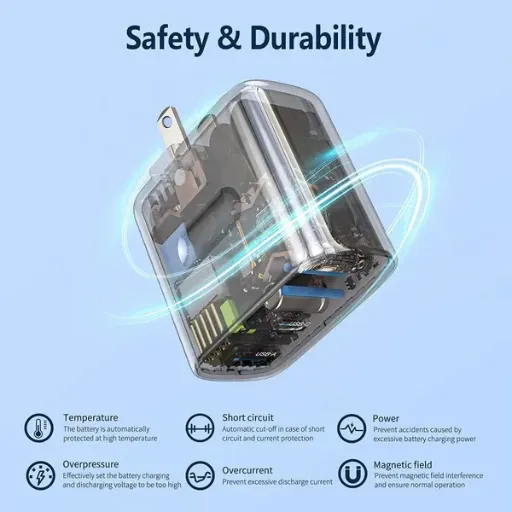
A fast charger not charging fast is rarely a single failure. It is usually a mismatch between expectation and reality, caused by cables, power sources, protocols, heat, battery condition, or design margins that looked fine on paper but failed in the field.
For OEM brand owners, the solution is not to buy a bigger charger. It is to specify the right charger, with the right cable, the right thermal design, and the right verification testing, before the first unit ships to a customer.
Here is what to remember:
Fast charging is a system, not a device. The charger, cable, connector, protocol, and battery must all align.
Test under real conditions. Lab bench tests with short cables and room temperature tell you very little about field performance.
Thermal design matters. Efficiency and heat dissipation determine whether a charger sustains its rated speed or throttles after minutes.
Specifications are only as good as the test data behind them. Demand continuous-load test reports, not just peak ratings.
The cheapest charger is rarely the lowest cost. Warranty returns, support tickets, and brand damage from slow charging cost far more than a few dollars saved at PO.
Slow charging frustrates end users, damages brands, and creates avoidable costs. The brands that get it right are the ones that treat charger specification as a core engineering decision, not an afterthought.
Send us your battery specification, target charge time, and operating environment. Our engineering team will propose a charger design with validated CC-CV curves, thermal test data, and the certification stack your markets require. Samples ship within two weeks.
Recently Posted
-
Why Is My Phone Charging Slowly? Causes and Fixes
June 22, 2026At 7:45 a.m., Maya plugged her phone into the charger she grabbed from the hotel nightstand. By 8:30, the battery had climbed from Read More
 -
Fast Charging vs Normal Charging: OEM Engineering Guide
June 22, 2026Last year, a European e-bike brand shipped 5,000 units with a 4A fast charger as a premium upgrade. Six months later, their warran Read More
 -
How to Make Charging Faster: A Technical Guide for OEM Brand Owners
June 22, 2026When Elena, product manager at a Rotterdam e-bike brand, launched her 48V commuter line in spring 2026, she thought 6 hours on a s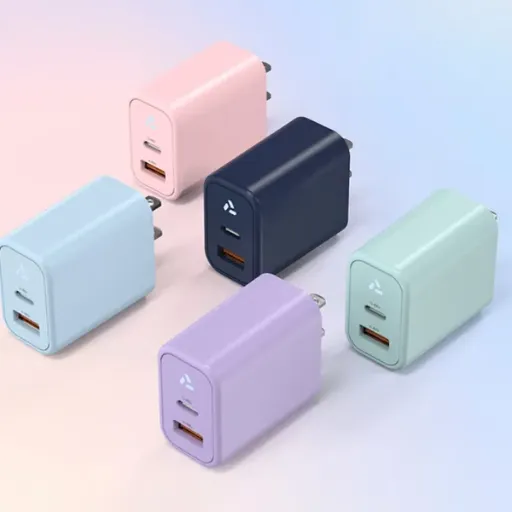 Read More
 -
Does Fast Charging Damage Battery? What OEM Buyers Need to Know
June 22, 2026Yes, fast charging can damage batteries when current exceeds the cell's thermal and electrochemical limits. The damage shows u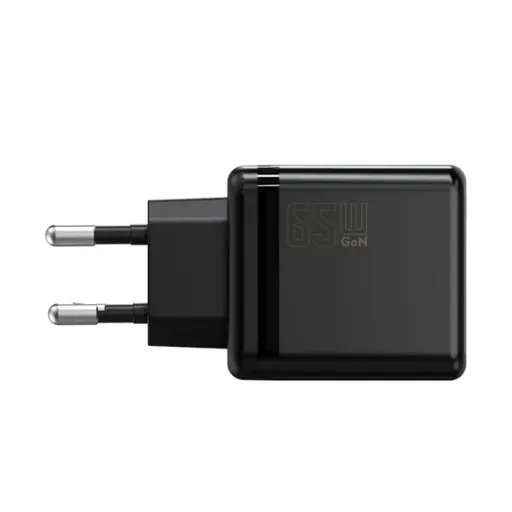 Read More

Contact Us
Recommended Products
-
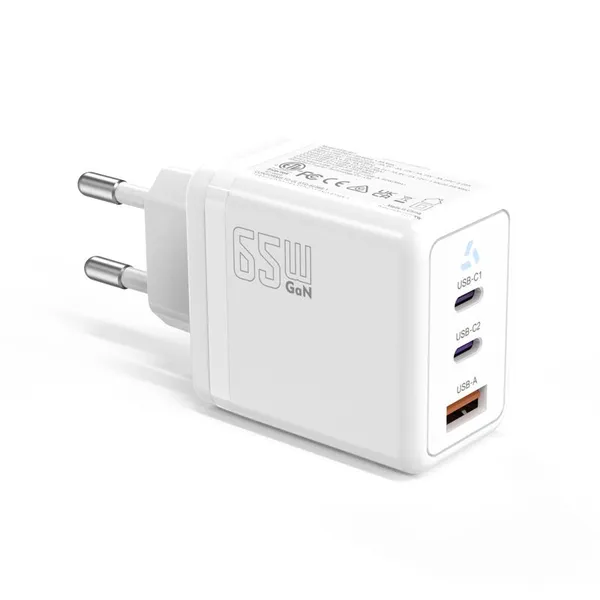
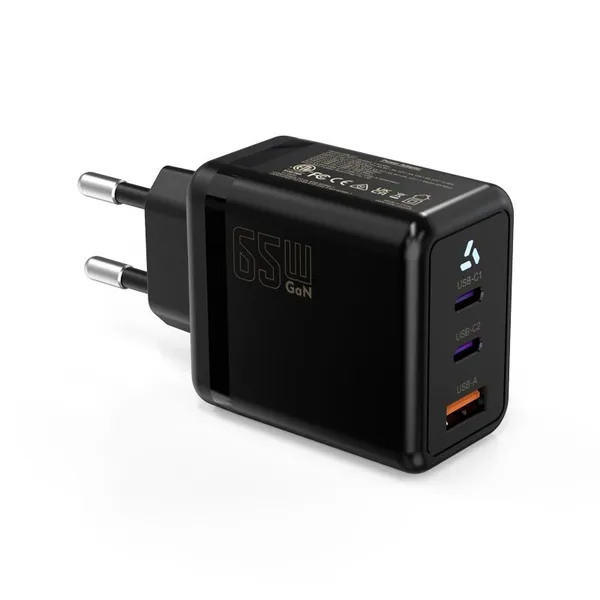
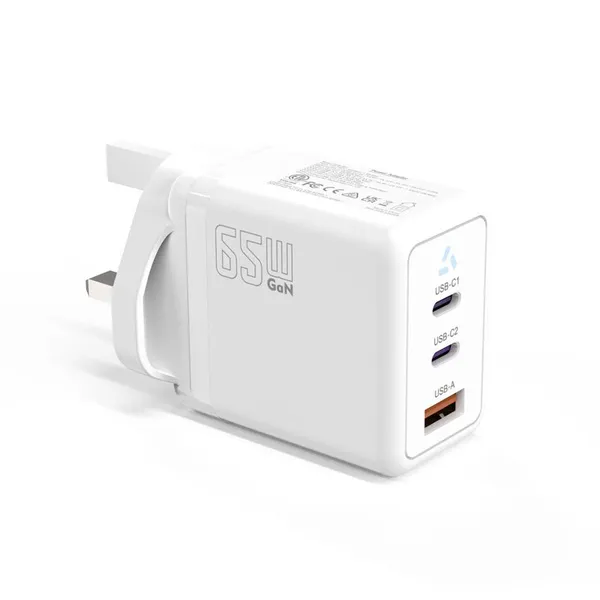
 65W USB-C GaN Wall Charger PD Fast Charging Adapter EU US Plug for Laptop Smartphone and TravelUS$ 6MOQ: 100 Pieces
 -
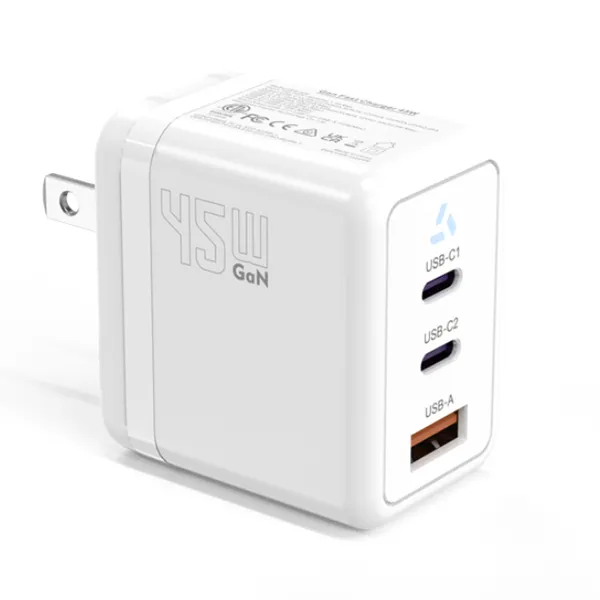
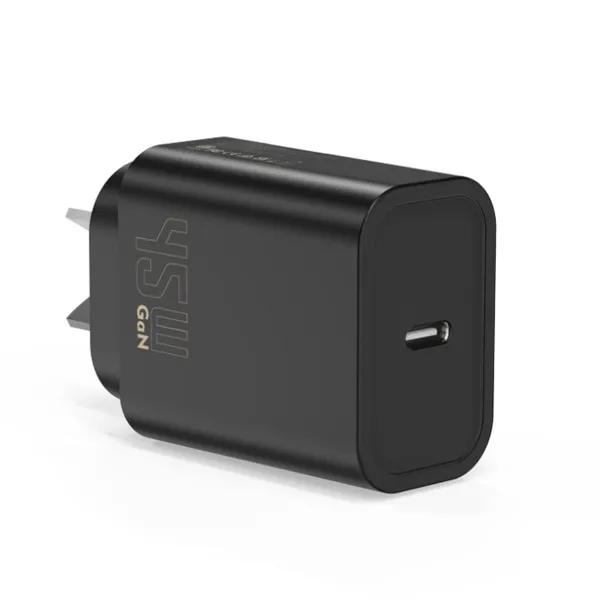
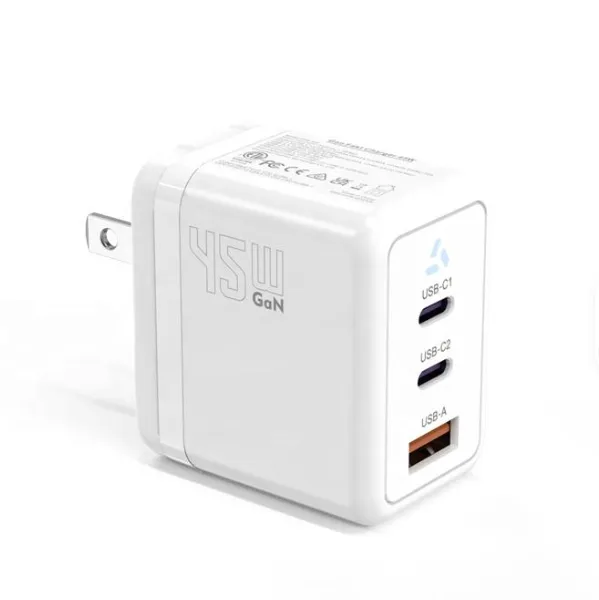
45W GaN USB-C Fast Charger JP Plug PD Wall Charging Adapter for IPhone MacBook and TabletsUS$ 8MOQ: 100 Pieces
-
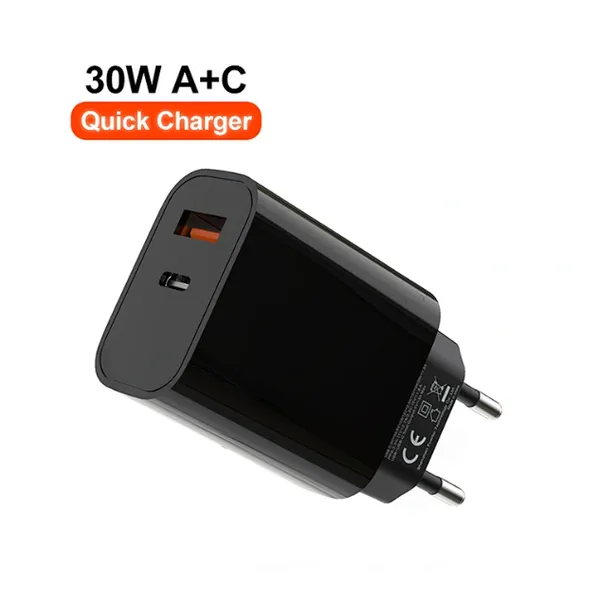
QC3.0 30W USB Fast Charger With 18W Quick Charge Wall Adapter for Android and Mobile DevicesUS$ 4MOQ: 100 Pieces
-
Compact 18W Quick Charge 3.0 USB Charger 30W Fast Charging Adapter EU US Plug for TravelUS$ 2MOQ: 100 Pieces
-
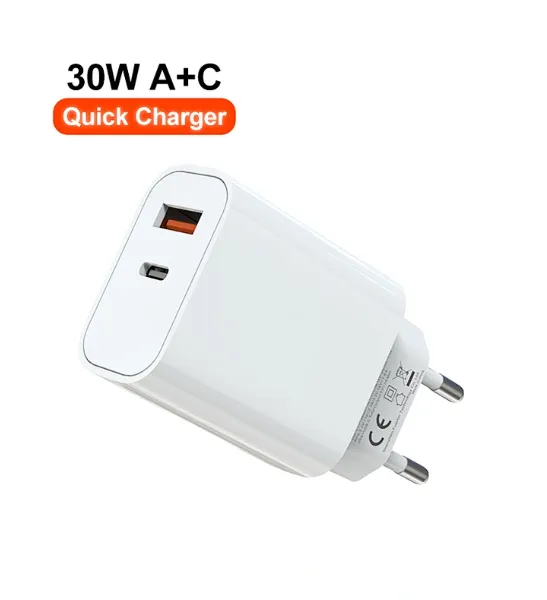
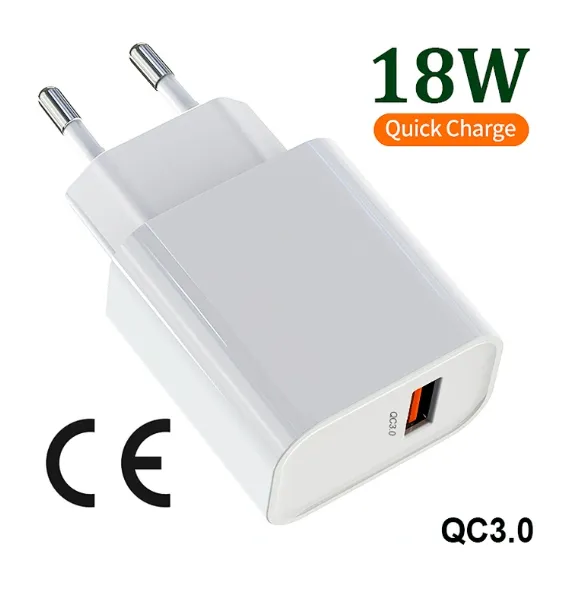
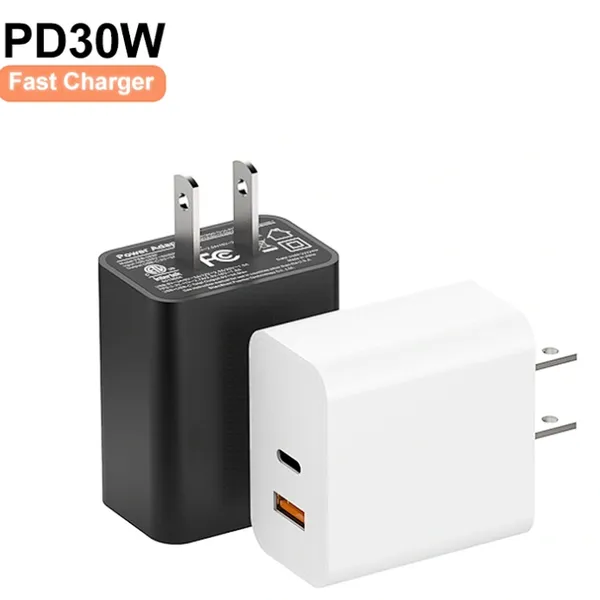
30W USB-C and USB-A PD Fast Charger Compact Wall Adapter for IPhone Samsung and IPadUS$ 3MOQ: 100 Pieces
-
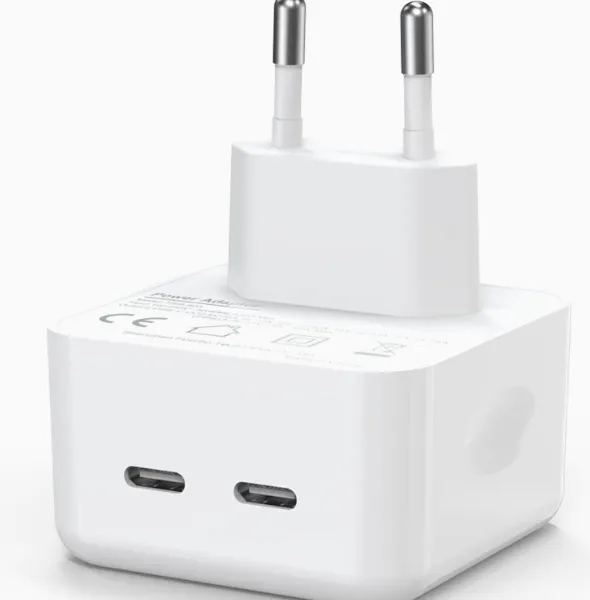
35W Dual USB-C PD Charger Fast Charging Adapter for IPhone Samsung IPad and USB-C DevicesUS$ 3MOQ: 100 Pieces
-
65W USB-C GaN Charger EU Plug Fast Charging Adapter 65W USB-C PD Fast Charge Wall Charger Power Adapter for Macbook ProUS$ 5MOQ: 100 Pieces
-
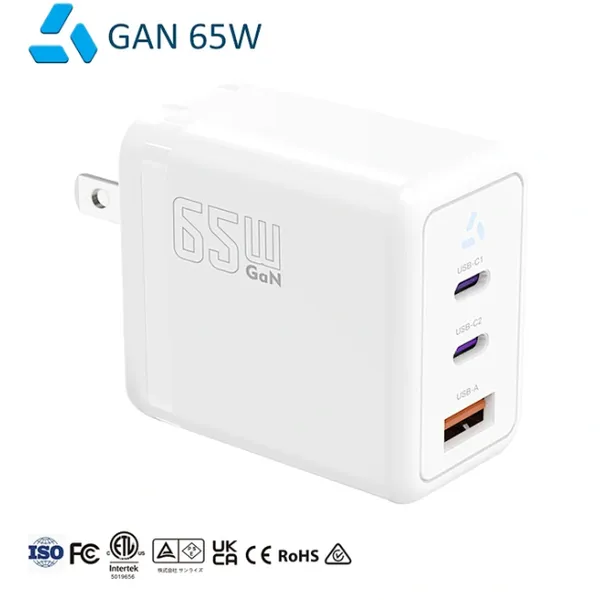
65W GaN USB-C Fast Charger PD Wall Charging Adapter for Laptop IPhone and Mobile DevicesUS$ 5MOQ: 100 Pieces
-
100W GaN USB-C Fast Charger With PD 3.0 for Laptop, MacBook, IPhone & Multi-Device ChargingUS$ 12MOQ: 100 Pieces
-
45W GaN USB-C Fast Charger EU AU PD Fast Wall Charging Adapter for IPhone Tablets With CE REACH PassedUS$ 8MOQ: 100 Pieces
-
QC3.0 65W GaN USB C Super Fast Charger With UKCA 3 Ports PD 3.0 GaN Charger for Iphone Macbook SamsungUS$ 10MOQ: 100 Pieces
-
30W USB-C and USB-A GaN QC3.0 Fast Charging Adapter PD Fast Charger Compact Wall Adapter for IPhone Samsung and IPadUS$ 3MOQ: 100 Pieces
-
45W GaN USB-C Fast Charger With Dual Type-C and USB-A Ports PD Wall Charging AdapterUS$ 8MOQ: 100 Pieces
-
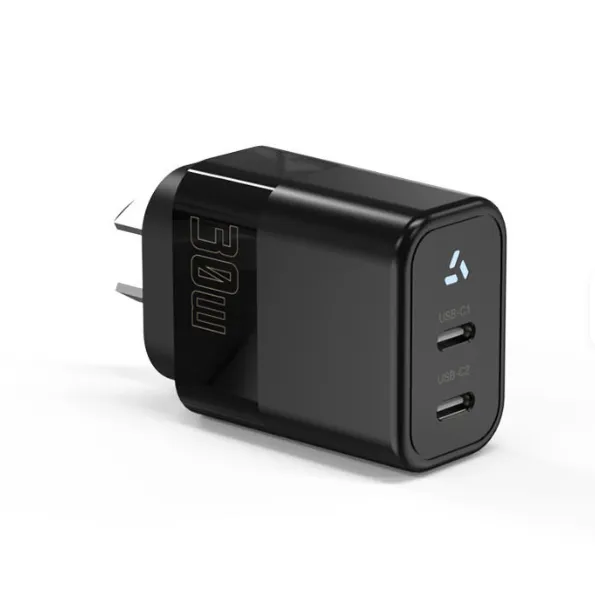
Dual USB C Ports QC3.0 30W Fast Charger With EU UK AU US USB-C PD Wall Chargeer 30W PD Power AdapterUS$ 3MOQ: 100 Pieces
-
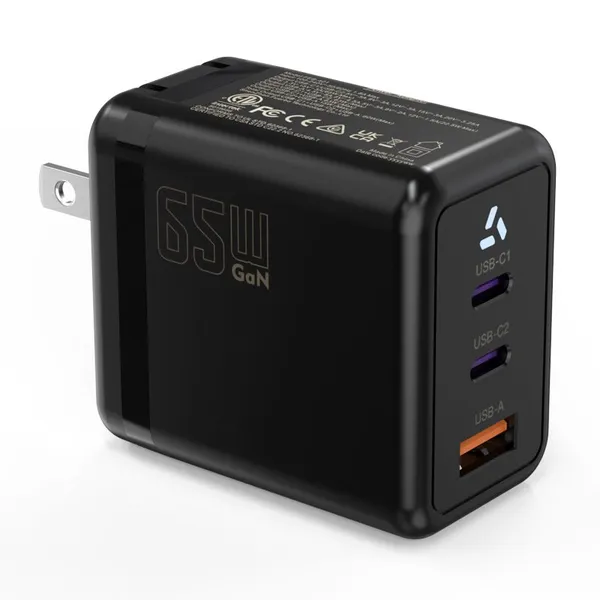
Compact 65W GaN USB-C Wall Charger With Dual USB-C Ports and USB-A Fast Charging Adapter With CE UKCA ETL SAAUS$ 10MOQ: 100 Pieces
-
QC3.0 Fast Charging Adapter PD30W USB-C USB-A GaN PD Fast Charger PD 3.0 GaN Charger Compact Wall Adapter for IPhone Samsung and IPadUS$ 3MOQ: 100 Pieces
-
12V 5A 60W US EU AC DC Adapter LED Driver LED SMPS AC to DC Switching Power SupplyUS$ 5 - 7MOQ: 50 Pieces
-
CE FCC CUL SAA KC PSE 24Vdc 48W Switching Power Supply AdaptersUS$ 5 - 7MOQ: 50 Pieces
-
CE GS UKCA SAA CUL Qualified Waterproof Switching Power Supply Ip68 PSE UL SAA GS 12V 2AUS$ 3 - 6MOQ: 50 Pieces
-
12V 1A Factory OEM Waterproof AC Adapter for Laser Light Table Lamp ac dc Adaptor With TUV CE GS for EU MarketUS$ 5 - 7MOQ: 50 Pieces