
 Business License
What Makes a Fast Charger? A Technical Guide for OEM Buyers
When the Rotterdam-based e-mobility brand VoltRide switched from 2A to 5A chargers on their 48V e-bike fleet in Q3 2024, customer satisfaction scores jumped 23% in a single quarter. The bikes had not changed. The batteries had not changed. Only the charger had.
Every OEM brand owner knows that charge time matters to end users. What many do not know is that "fast" is not a single number, it is a system of variables. Charge current, battery chemistry, cell tolerance, and thermal management all work together to determine how quickly a pack can safely reach full charge. Specify the wrong combination, and the fast battery charger you ship today becomes the warranty headache you handle six months from now.
This article breaks down the engineering factors that determine charging speed. You will learn how C-rates work, why LiFePO4 and Li-ion have different speed ceilings, what safety protections are non-negotiable, and how to match the fast charger to your application. Whether you are building e-bikes, scooters, energy storage systems, or consumer electronics, the principles here will help you specify a charger that delivers speed without sacrificing cell life.
Want to see how fast charging applies to your product category? Explore our LiFePO4 battery charger range to view voltage and current options.
What "Fast Charging" Actually Means (and What It Doesn't)
"Fast charger" is one of the most misused terms in the power industry. A 10A charger is fast for a 10Ah pack. It is dangerously fast for a 5Ah pack. The speed of a charger is meaningless without knowing the battery capacity it serves.
Engineers measure charging speed in C-rate, not amps. C-rate is the ratio of charge current to battery capacity. A 1C charge means the current in amps equals the capacity in amp-hours. A 20Ah pack charging at 20A is at 1C. The same 20A applied to a 10Ah pack is 2C, twice as aggressive relative to the battery's size.
Here is how common charge rates map to real-world scenarios:
| C-Rate | Charge Current (20Ah Pack) | Approximate Full Charge Time | Typical Application |
|---|---|---|---|
| 0.2C | 4A | 5–6 hours | Lead-acid, conservative LiFePO4 |
| 0.5C | 10A | 2–3 hours | Standard LiFePO4 e-bike |
| 1C | 20A | 1–1.5 hours | High-performance Li-ion |
| 2C | 40A | 30–45 minutes | Premium EV, racing applications |
(Source: Battery University, Fast Charging)
A fast battery charger, therefore, is not defined by its amp rating alone. It is defined by how aggressively it charges relative to the pack's capacity, and whether the battery chemistry can tolerate that rate without accelerated degradation.
What fast charging is NOT: a marketing label you can slap on any charger with a higher amp number. A 5A charger is only "fast" if the pack it serves was previously charged at 2A. The same 5A charger is standard, or even slow, if the pack capacity is 50Ah.
The Three Factors That Determine Charging Speed
Three engineering variables control how fast a battery can charge: the charger's output current, the battery's chemistry and cell construction, and the thermal path that removes heat from the pack.
Charge Current (C-Rate)
The charger delivers current in the constant-current (CC) phase. Higher current fills the pack faster, but only to a point. Every cell chemistry has a maximum recommended charge rate. Exceed it, and three things happen: heat generation increases exponentially, cycle life drops, and the risk of thermal events rises.
LiFePO4 cells typically tolerate 0.5C–1C continuous charging. Some high-rate LiFePO4 variants handle 2C. Standard NMC Li-ion cells accept 0.5C–1C. High-rate Li-ion cells (designed for power tools and EVs) tolerate 2C–3C. Lead-acid is the slowest: 0.1C–0.2C is standard, and 0.3C is aggressive.
Charger Output Power (Watts)
Power is voltage multiplied by current. A 48V 5A charger delivers 240W. A 48V 10A charger delivers 480W. The charger must have enough power to sustain the target current through the entire CC phase, even when the pack voltage is at its lowest (most discharged) state.
OEM buyers often overlook this. They specify "5A" but choose a 200W charger for a 54.6V pack. At full charge voltage (54.6V), 200W can only deliver 3.66A. The charger current-sags, and the actual charge time is longer than the specification promises.
Always verify: charger wattage must equal or exceed (max voltage × target current).
Battery Chemistry and Cell Tolerance
The battery itself is the ultimate speed limit. Cell manufacturers publish maximum charge rates in their datasheets. These limits are not suggestions, they are the boundary between acceptable operation and accelerated aging.
LiFePO4 cells have a stable olivine structure that handles higher currents more gracefully than cobalt-based Li-ion. That is why LiFePO4 fast chargers are popular in e-bike and scooter applications where users want shorter charge times.
However, even LiFePO4 has limits. Charging at 2C generates roughly four times the heat of 1C charging (heat scales with the square of current in resistive losses). Without adequate thermal management, the cells age faster than the speed gain justifies.
How Fast Charging Affects Different Battery Chemistries
Not all batteries charge at the same speed, and not all should. Here is how the three most common chemistries respond to increased charge rates.
LiFePO4 Fast Charging
LiFePO4 (lithium iron phosphate) is the workhorse of the e-mobility and energy storage markets. Its 3.2V nominal voltage and flat discharge curve make it predictable. For fast charging, LiFePO4 offers one major advantage: it does not use cobalt, which is prone to structural breakdown under thermal stress.
Most LiFePO4 cell manufacturers specify 0.5C as the standard charge rate and 1C as the maximum continuous rate. Some high-power cells allow 2C for short bursts.
The key is temperature. At 25°C ambient, 1C charging is generally safe. At 45°C, the same 1C rate accelerates calendar aging significantly.
A properly specified LiFePO4 fast charger monitors cell temperature via NTC thermistor and reduces current when the pack gets warm. This is not a bonus feature; it is a requirement for any charger shipping to end users who will charge in garages, sheds, and outdoor spaces where temperatures vary.
Li-ion Fast Charging
Standard Li-ion (NMC, NCA, LCO) charges at 0.5C–1C in most applications. High-rate variants used in power tools and electric vehicles accept 2C–3C, but these cells are engineered with thinner electrodes, optimized electrolytes, and enhanced thermal paths. They cost more, and they are not the cells found in typical consumer e-bikes.
The danger with Li-ion fast charging is lithium plating. When charge current is too high or temperature is too low, metallic lithium deposits on the anode instead of intercalating into the graphite. Plated lithium is lost capacity, permanently. It also forms dendrites that can pierce the separator and cause internal shorts.
For OEM buyers, the lesson is clear: do not specify a fast charger for Li-ion packs without confirming the cell's maximum charge rate with your battery vendor. The charger must match the cell, not the other way around.
Lead-Acid Charging Reality
Lead-acid batteries charge slowly by design. The chemical reaction at the plates simply cannot accept high currents without generating excessive heat and gassing. A 0.2C charge rate (5 hours to full) is standard. Pushing 0.5C on a standard lead-acid battery causes electrolyte boiling, venting, and permanent capacity loss.
Some AGM (absorbent glass mat) lead-acid variants accept 0.3C–0.4C, but these are the exception. For most lead-acid applications, "fast charging" means 3–4 hours instead of 8–10. It does not mean 1 hour.
The Hidden Risks of Pushing Speed
Faster charging creates three engineering challenges that every OEM buyer must address: heat, cell degradation, and BMS compatibility.
Thermal Runaway and Heat Generation
Heat is the enemy of battery life. Charge current passing through the cell's internal resistance generates I²R heat, current squared times resistance. Double the current, and resistive heating quadruples. This is why a 2C charger generates four times the heat of a 1C charger, not twice.
When Marcus, a product manager at a Berlin security equipment firm, specified 2A chargers for his 10Ah LiFePO4 battery packs, the units ran warm but within spec. When he switched to 5A chargers to cut charge time for his field technicians, three packs failed within two months.
The root cause was not the charger, it was the enclosure. The IP65 sealed housing trapped heat, and the cells spent every charge cycle at 55°C. The packs lost 30% of their capacity in eight weeks.
The fix was not a slower charger. It was a charger with temperature-compensated current reduction. When the NTC thermistor reported pack temperatures above 45°C, the charger automatically dropped from 5A to 3A. Charge time increased by 20 minutes, but cell life returned to the manufacturer's specified cycle count.
Cell Degradation and Cycle Life
Every battery cell has a cycle life rating, the number of charge-discharge cycles before capacity drops to 80% of nominal. This rating assumes the manufacturer's recommended charge rate. Charge faster, and cycle life drops.
For LiFePO4, charging at 1C instead of 0.5C typically reduces cycle life by 15–25%. For Li-ion, the penalty is steeper: 1C versus 0.5C can mean 30–40% fewer cycles.
Whether this trade-off is acceptable depends on the application. A rental e-scooter fleet that charges between rides values speed over longevity. A residential energy storage system values longevity over speed.
BMS Compatibility
The battery management system (BMS) is the gatekeeper. It monitors cell voltages, balances the pack, and cuts off charging if any cell exceeds safe limits. A fast charger must work with the BMS, not against it.
Common BMS-charger conflicts include:
BMS over-current protection set lower than the charger's CC current
BMS voltage cutoff mismatched with the charger's CV setpoint
BMS balancing current too low to keep up with a fast CC phase
Missing temperature sensor input, so the BMS cannot derate charging in heat
Before specifying a fast battery charger, request the BMS specification from your battery vendor. Verify that the charger's CC current is below the BMS over-current threshold, and that the CV voltage matches the BMS charge cutoff within 50mV.
What OEM Buyers Should Specify in a Fast Charger
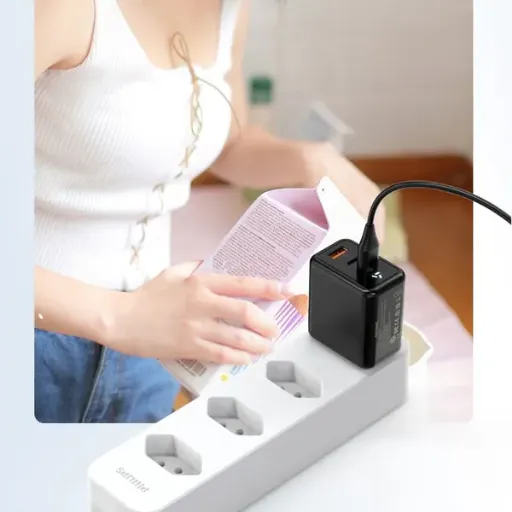
A fast charger is more than a high-current power supply. These are the specifications that separate a reliable fast battery charger from a warranty liability.
Voltage Accuracy
Fast charging amplifies any voltage error. A 1% error at 54.6V is 0.55V. In a 15S LiFePO4 pack, that translates to 37mV per cell, enough to push some cells above the 3.65V safety limit while others sit below it. Specify voltage accuracy of ±0.5% or better.
CC-CV Profile Tuning
The constant-current to constant-voltage transition must happen at the correct voltage, and the taper current must terminate at the correct threshold. For LiFePO4, that means CC at the rated current until 3.65V/cell, then CV at 3.65V/cell until current drops to 0.05C.
A fast charger does not skip the CV phase. The CV phase is where the final 10–15% of capacity enters the pack. Skip it, and the pack reports 100% charge while actually holding 85–90% capacity.
Safety Protections
Every fast battery charger must include:
Over-voltage protection (OVP)
Over-current protection (OCP)
Short-circuit protection (SCP)
Over-temperature protection (OTP)
Reverse-polarity protection
3KVAC isolation between AC input and DC output
These are baseline requirements, not premium features. They are mandatory for UL, CE, and CB certification.
Thermal Management
Fast chargers need active thermal management. This includes:
NTC thermistor input for pack temperature monitoring
Temperature-compensated charge voltage (typically -3mV/°C per cell)
Automatic current derating when pack temperature exceeds 45°C
Charger-internal fan with temperature-based speed control
Ready to specify a fast charger for your product? Request an OEM quote with your pack voltage, capacity, and target charge time, our engineering team will return a CC-CV profile proposal within 24 hours.
Fast Charger Certifications for Global Markets
A fast charger shipping with your product must carry the certifications your target market requires. Speed does not exempt a charger from safety standards. In fact, higher-current chargers face more scrutiny because the energy density during a fault is higher.
U. S. Market Requirements
UL 62368-1 (safety for audio/video and IT equipment)
FCC Part 15 (electromagnetic interference)
DOE Level VI (efficiency for external power supplies)
DOE Level VI applies to chargers under 250W. A 48V 5A charger (240W) is just under the threshold. A 48V 6A charger (288W) is exempt from DOE Level VI but still subject to UL and FCC.
European Market Requirements
CE marking (EN 62368-1, EN 55032/35)
ErP Tier V (energy efficiency)
RoHS (hazardous substance restriction)
ErP Tier V efficiency requirements are comparable to DOE Level VI but use slightly different test methods. A charger that passes one typically passes the other, but verify with actual test reports, do not assume.
UK, Australia, and Other Markets
UKCA (UK post-Brexit, same standards as CE)
SAA / RCM (Australia)
CCC (China)
CB Scheme (international baseline for mutual recognition)
When Anenerge shipped a 2,000-unit fast charger order to a Melbourne e-bike brand in 2024, the buyer assumed the CE test report covered Australia. It did not.
SAA requires local registration of the CB certificate. The shipment cleared customs only after the brand paid for expedited SAA processing. The $4,200 delay could have been avoided by requesting the full certification stack before the PO.
How to Choose the Right Fast Charger for Your Product
Selecting a fast battery charger is a matching exercise. The charger must match the battery, the application, and the regulatory environment. Here is the decision framework we use with OEM partners.
Step 1: Define Your Target Charge Time
Start with the user experience. How long should charging take? Work backward from that target.
E-bike commuter: 3–4 hours overnight (0.2C–0.3C)
E-scooter rental fleet: 1–2 hours between rides (0.5C–1C)
Power tool: 30–60 minutes (1C–2C)
Energy storage: 4–6 hours (0.2C–0.3C, prioritizing cycle life)
Step 2: Verify Cell Charge Rate Limits
Contact your cell vendor. Request the datasheet maximum charge rate. If the cell is rated for 0.5C maximum, do not specify a 1C charger, no matter what your marketing team wants.
Step 3: Calculate Required Charger Power
Use the formula: Charger power (W) = Pack full-charge voltage (V) × Target charge current (A) × 1.1 (safety margin).
Example: A 15S LiFePO4 pack at 54.6V, charged at 5A, needs 54.6 × 5 × 1.1 = 300W minimum. Specify a 300W charger, not a 240W unit.
Step 4: Confirm BMS Compatibility
Share the charger specification with your battery vendor. Verify:
CC current is below BMS over-current threshold
CV voltage matches BMS charge cutoff
BMS balancing current can keep up with the charge rate
Temperature sensor inputs are compatible
Step 5: Specify Certifications
List every market you plan to enter in the next 24 months. Request a charger with the full certification stack already in place. Adding certifications to an existing design costs more and takes longer than sourcing a pre-certified platform.
| Application | Typical Voltage | Typical Current | C-Rate | Key Certifications |
|---|---|---|---|---|
| E-bike (LiFePO4) | 48V (54.6V) | 3A–5A | 0.2C–0.3C | CE, UKCA, DOE VI |
| E-scooter (Li-ion) | 36V (42V) | 2A–4A | 0.5C–1C | CE, FCC, DOE VI |
| Energy storage | 48V–51.2V | 5A–10A | 0.2C–0.5C | UL, CE, SAA |
| Power tool | 18V–21V | 4A–8A | 1C–2C | UL, CE, CCC |
Conclusion
Fast charging is not about the highest amp number on the label. It is about matching charge current to battery capacity, respecting chemistry limits, managing heat, and maintaining safety protections that protect both the pack and the end user.
Here are the key takeaways for OEM buyers:
C-rate, not amps, defines charging speed. A 5A charger is fast for a 10Ah pack and slow for a 50Ah pack.
LiFePO4 tolerates higher charge rates than standard Li-ion, but heat management is critical at 1C and above.
Every fast battery charger needs temperature monitoring, current derating, and a complete protection suite (OVP, OCP, SCP, OTP).
BMS compatibility is non-negotiable. Verify charger specs against BMS limits before production.
Certifications do not change for fast chargers. UL, CE, DOE VI, and ErP Tier V still apply, and customs still checks them.
When you specify your next charger, start with the cell datasheet, work backward from the user experience, and build in thermal management from day one. Speed without safety is not fast charging, it is just premature failure.
Get an OEM Quote for Your Fast Charger, send us your pack voltage, capacity, and target charge time. Our engineering team will return a proposed CC-CV profile, sample timeline, and certification stack within one business day.
Recently Posted
-
Why Is My Fast Charger Not Charging Fast? 7 Technical Reasons Explained
June 8, 2026Last March, a product manager at a Rotterdam e-bike brand called us with a problem we see at least twice a quarter. Their new 48V Read More
 -
USB-A vs USB-C Charging: What OEM Buyers Need to Know
June 8, 2026Your customers plug in a USB-A cable they have used for three years, and their new device takes six hours to charge. They switch t Read More
 -
QC3.0 vs QC4.0: What OEM Buyers Need to Know Before Specifying Fast Charging
June 6, 2026When Raj's team at a Bangalore-based smartphone accessories brand specified QC3.0 adapters for their 2024 power bank line, the Read More
 -
What Is a QC3 Plug? A Technical Guide for Adapter Buyers
June 6, 2026Marcus Chen's product team shipped 10,000 portable power stations to a U.S. distributor in March 2025. The units looked perfec Read More

Contact Us
Recommended Products
-
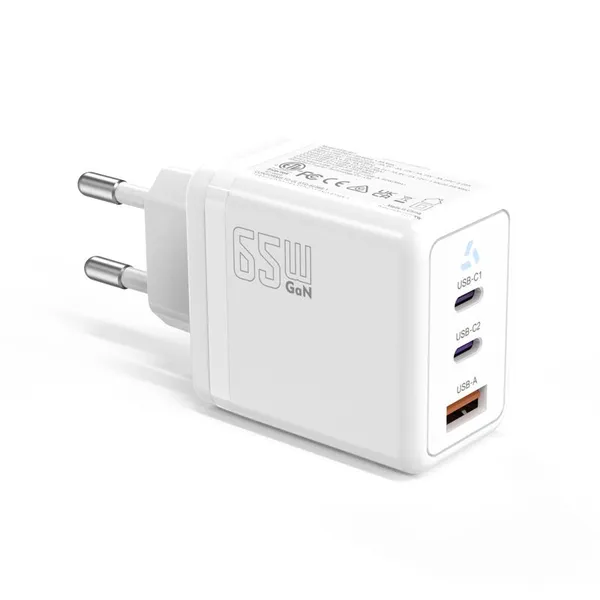
 65W USB-C GaN Wall Charger PD Fast Charging Adapter EU US Plug for Laptop Smartphone and TravelUS$ 6MOQ: 100 Pieces
 -
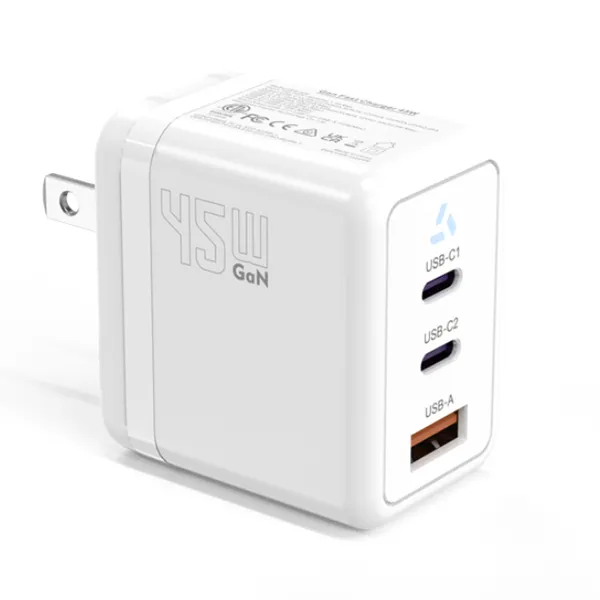
45W GaN USB-C Fast Charger JP Plug PD Wall Charging Adapter for IPhone MacBook and TabletsUS$ 8MOQ: 100 Pieces
-
QC3.0 30W USB Fast Charger With 18W Quick Charge Wall Adapter for Android and Mobile DevicesUS$ 4MOQ: 100 Pieces
-
Compact 18W Quick Charge 3.0 USB Charger 30W Fast Charging Adapter EU US Plug for TravelUS$ 2MOQ: 100 Pieces
-
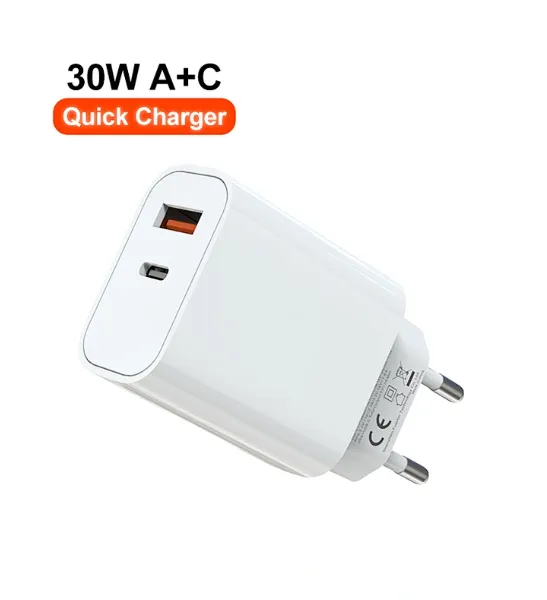
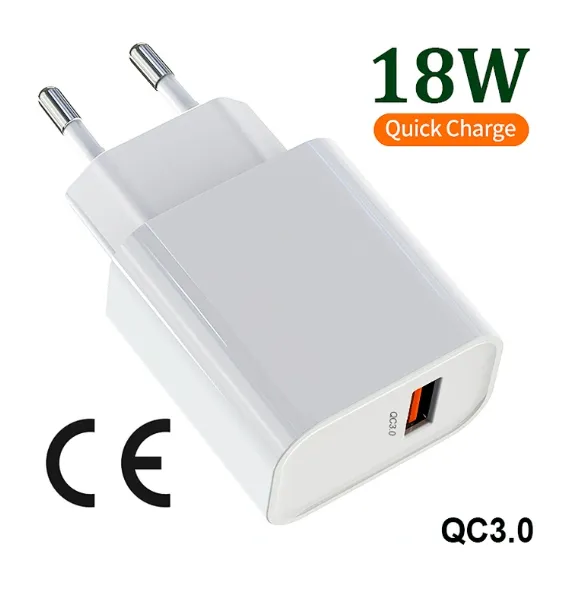
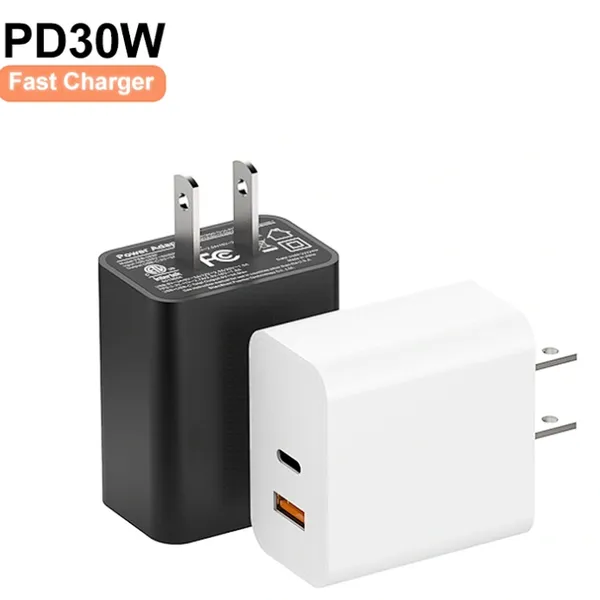
30W USB-C and USB-A PD Fast Charger Compact Wall Adapter for IPhone Samsung and IPadUS$ 3MOQ: 100 Pieces
-
35W Dual USB-C PD Charger Fast Charging Adapter for IPhone Samsung IPad and USB-C DevicesUS$ 3MOQ: 100 Pieces
-
65W USB-C GaN Charger EU Plug Fast Charging Adapter 65W USB-C PD Fast Charge Wall Charger Power Adapter for Macbook ProUS$ 5MOQ: 100 Pieces
-
65W GaN USB-C Fast Charger PD Wall Charging Adapter for Laptop IPhone and Mobile DevicesUS$ 5MOQ: 100 Pieces
-
100W GaN USB-C Fast Charger With PD 3.0 for Laptop, MacBook, IPhone & Multi-Device ChargingUS$ 12MOQ: 100 Pieces
-
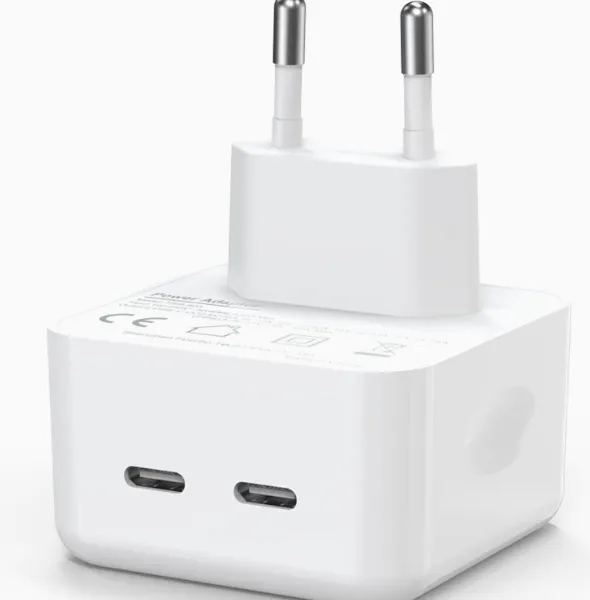
45W GaN USB-C Fast Charger EU AU PD Fast Wall Charging Adapter for IPhone Tablets With CE REACH PassedUS$ 8MOQ: 100 Pieces
-
QC3.0 65W GaN USB C Super Fast Charger With UKCA 3 Ports PD 3.0 GaN Charger for Iphone Macbook SamsungUS$ 10MOQ: 100 Pieces
-
30W USB-C and USB-A GaN QC3.0 Fast Charging Adapter PD Fast Charger Compact Wall Adapter for IPhone Samsung and IPadUS$ 3MOQ: 100 Pieces
-
45W GaN USB-C Fast Charger With Dual Type-C and USB-A Ports PD Wall Charging AdapterUS$ 8MOQ: 100 Pieces
-
Dual USB C Ports QC3.0 30W Fast Charger With EU UK AU US USB-C PD Wall Chargeer 30W PD Power AdapterUS$ 3MOQ: 100 Pieces
-
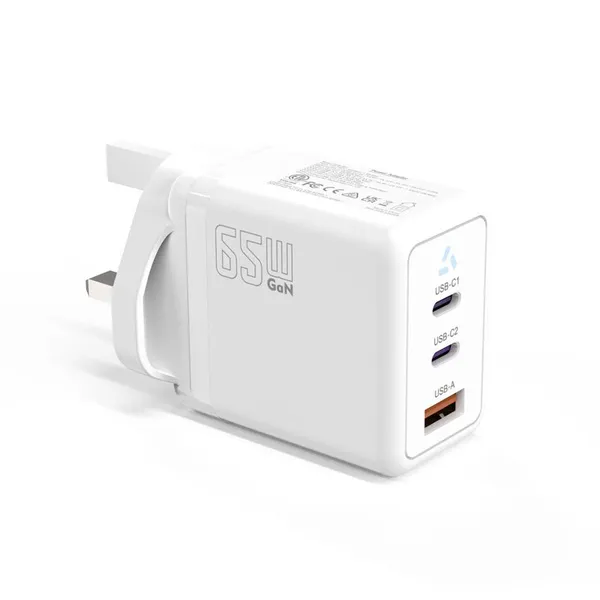
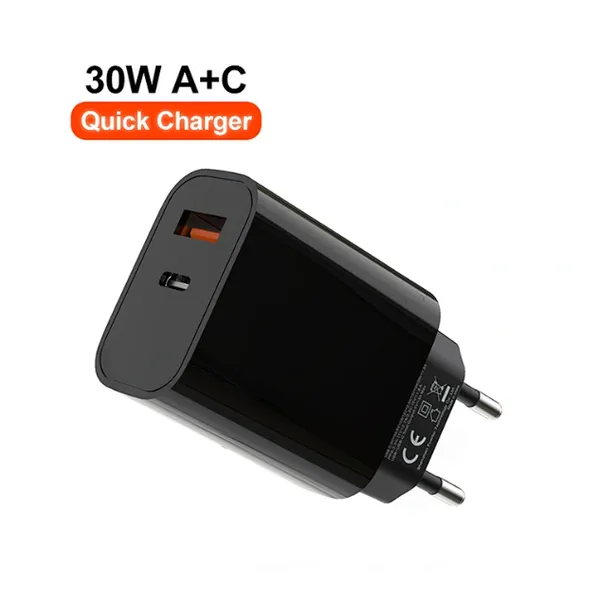
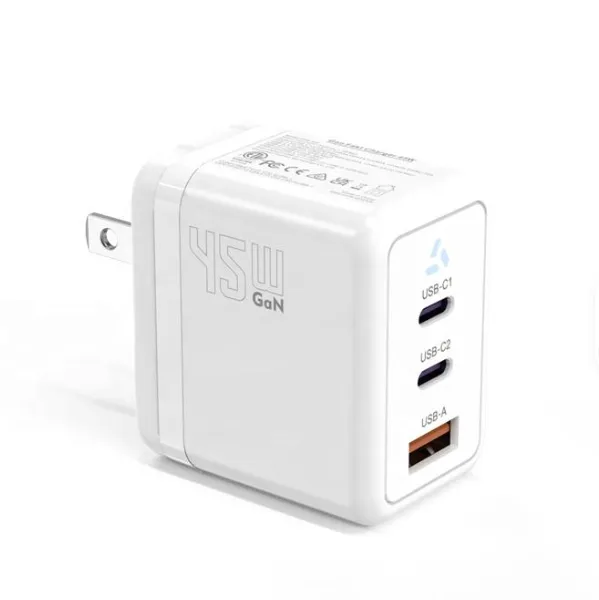
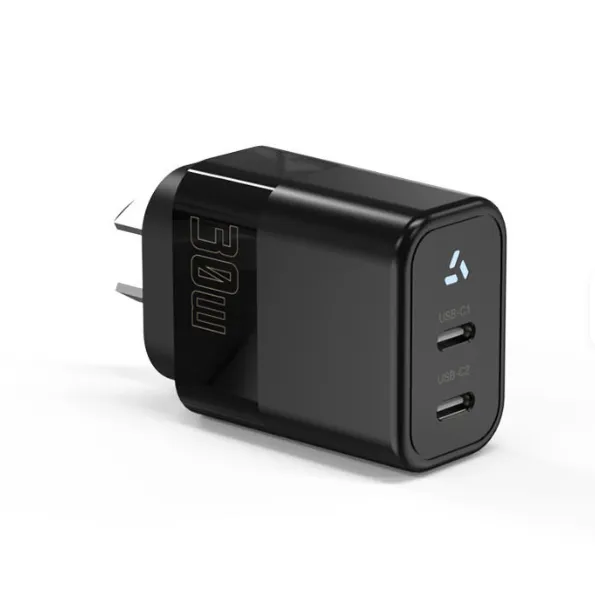
Compact 65W GaN USB-C Wall Charger With Dual USB-C Ports and USB-A Fast Charging Adapter With CE UKCA ETL SAAUS$ 10MOQ: 100 Pieces
-
QC3.0 Fast Charging Adapter PD30W USB-C USB-A GaN PD Fast Charger PD 3.0 GaN Charger Compact Wall Adapter for IPhone Samsung and IPadUS$ 3MOQ: 100 Pieces
-
12V 5A 60W US EU AC DC Adapter LED Driver LED SMPS AC to DC Switching Power SupplyUS$ 5 - 7MOQ: 50 Pieces
-
CE FCC CUL SAA KC PSE 24Vdc 48W Switching Power Supply AdaptersUS$ 5 - 7MOQ: 50 Pieces
-
CE GS UKCA SAA CUL Qualified Waterproof Switching Power Supply Ip68 PSE UL SAA GS 12V 2AUS$ 3 - 6MOQ: 50 Pieces
-
12V 1A Factory OEM Waterproof AC Adapter for Laser Light Table Lamp ac dc Adaptor With TUV CE GS for EU MarketUS$ 5 - 7MOQ: 50 Pieces