
 Business License
What Is a QC3 Plug? A Technical Guide for Adapter Buyers
Marcus Chen's product team shipped 10,000 portable power stations to a U.S. distributor in March 2025. The units looked perfect on paper — 120Wh capacity, solar input, USB-A and USB-C ports, all housed in a rugged enclosure. But within two weeks, customer reviews started mentioning the same complaint: "Charges my phone slower than my wall charger." The culprit wasn't the battery or the solar panel. It was the QC3 plug inside — or rather, the generic 5V/2A adapter that Marcus had specified to save $1.20 per unit. That $1.20 saved became a $12,000 return authorization and a delisted product.
If you're specifying AC/DC adapters or USB chargers for consumer electronics, IoT devices, or portable power products, understanding what a QC3 plug actually does — and what it doesn't do — protects your margins and your brand reputation.
This article explains Qualcomm Quick Charge 3.0 from a buyer's perspective. You'll learn how the voltage negotiation protocol works, how QC3 differs from QC2.0 and USB Power Delivery, what specifications to verify when sourcing, and the compliance angles that matter for global market entry.
What a QC3 Plug Actually Does
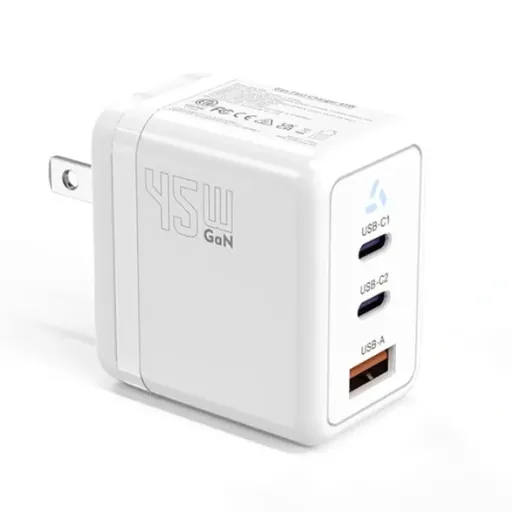
A QC3 plug is a USB power adapter or charging port that implements Qualcomm's Quick Charge 3.0 protocol. Unlike a standard 5V USB adapter that delivers a fixed voltage, a QC3 plug negotiates voltage with the connected device in real time, stepping output from 3.6V up to 12V in 200mV increments.
That granular voltage control is the core feature. Qualcomm calls it INOV — Intelligent Negotiation for Optimum Voltage. Instead of forcing the device to accept a preset voltage (like QC2.0's fixed 5V, 9V, or 12V steps), INOV lets the charger and device agree on the exact voltage that minimizes heat and maximizes charging speed at that moment in the charge cycle.
What this means in practical terms:
A nearly empty phone battery at 10% charge might negotiate 9.2V to pull maximum current safely
The same phone at 80% charge might drop to 6.4V as the battery approaches saturation and can't absorb high-current input
The charger adjusts in real time, typically every few seconds, based on temperature and state of charge
The maximum power output for QC3 is 18W (though some implementations support up to 36W with proprietary extensions). The standard configuration is:
| Parameter | QC3.0 Specification |
|---|---|
| Output voltage range | 3.6V – 12V (continuous) |
| Voltage step size | 200mV increments |
| Max power (standard) | 18W |
| Max current | 3A at lower voltages, 1.5A at 12V |
| Input voltage | 100–240V AC (universal) |
| Backward compatibility | QC2.0, QC1.0, standard 5V USB |
For OEM buyers, the key takeaway is this: a QC3 plug is not just a "faster charger." It is an intelligent power source that adapts to the load in real time. That intelligence has implications for efficiency, thermal design, and — critically — what you need to specify when you place a production order.
Want to see how voltage negotiation affects your adapter's thermal envelope? Explore our AC/DC power adapter range with engineering samples available for thermal validation.
How INOV Voltage Negotiation Works
Understanding INOV helps you evaluate supplier claims and avoid specification mismatches. The negotiation happens over the D+ and D- data lines of a standard USB-A to micro-USB or USB-A to USB-C cable. Here's the sequence:
Handshaking: The device connects and signals that it supports QC3 by applying specific voltages to the D+ and D- lines. The charger detects this and enters QC3 mode.
Voltage request: The device requests a target voltage within the 3.6V–12V range. The request is encoded as a pulse pattern on the data lines.
Voltage transition: The charger adjusts its output to the requested level. Because QC3 supports 200mV steps, there are theoretically 30 possible voltage points between 3.6V and 12V (though real-world implementations typically use a narrower range).
Continuous adjustment: The device monitors battery temperature, state of charge, and charge current. It requests voltage adjustments as conditions change — usually every few seconds during active charging.
Fallback to 5V: If the handshake fails or the device doesn't support QC3, the charger falls back to standard 5V USB output at up to 2.4A.
The INOV approach produces two measurable benefits for end users:
Lower heat generation. Fixed-voltage fast charging (like QC2.0 at 9V or 12V) forces the device to dissipate excess voltage as heat through its internal charging circuit. INOV's granular matching reduces that waste, which translates to cooler devices and less thermal throttling during charging.
Faster overall charge times. Qualcomm's own testing claims up to 38% faster charging versus QC2.0 and up to 4x faster than standard 5V charging. Real-world results vary by device, battery size, and thermal conditions, but the principle holds: matching voltage to need is more efficient than over-volting and regulating down.
When Marcus's team reviewed their failed power station project, they discovered that their adapter supplier had claimed "fast charging support" but had not implemented the QC3 handshake protocol at all. The adapter simply output 5V/2A regardless of what the device requested. The supplier's datasheet had listed "QC3 compatible" — a meaningless phrase that cost Marcus's company a retail relationship.
QC3 vs QC2.0 vs USB PD: What Buyers Need to Know
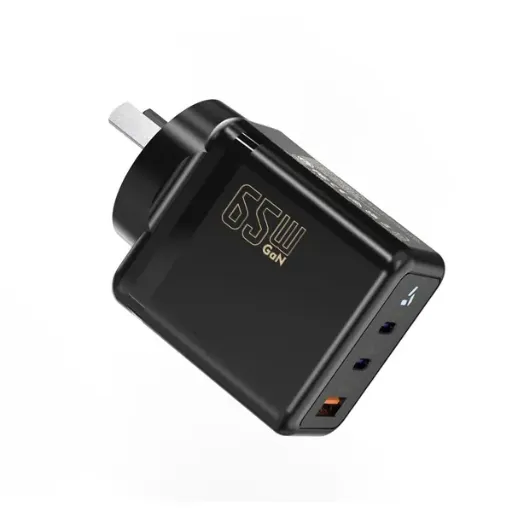
If you're evaluating fast charging for your product, you'll encounter three main protocols. Understanding the differences prevents mismatched specifications and angry customers.
QC2.0: Fixed Steps
Qualcomm Quick Charge 2.0 was the predecessor. It uses fixed voltage steps — 5V, 9V, 12V, and optionally 20V — instead of the continuous 200mV increments of QC3. The device picks the closest step, which means more voltage mismatch and more heat.
QC2.0 is cheaper to implement and still widely available, but it is aging. Most new QC-certified adapters ship with QC3 backward compatibility.
QC3: Continuous Voltage
QC3 replaced the fixed steps with INOV's continuous range. It is backward compatible with QC2.0 devices — a QC3 charger will negotiate QC2.0 voltages with older hardware. It is not, however, compatible with USB Power Delivery in the forward direction. A QC3 charger will not fast-charge a USB PD-only device.
USB Power Delivery (USB PD)
USB PD is the industry-standard fast charging protocol that operates over the USB-C connector's CC (configuration channel) line. It supports much higher power levels — up to 100W with USB PD 3.0 and 240W with USB PD 3.1 — and uses a completely different negotiation mechanism.
| Feature | QC3.0 | QC2.0 | USB PD 3.0 |
|---|---|---|---|
| Voltage range | 3.6V – 12V (continuous) | 5V, 9V, 12V, 20V (fixed) | 5V, 9V, 15V, 20V (fixed) |
| Voltage step | 200mV | Fixed levels | Fixed levels |
| Max power | 18W (standard) | 18W | 100W |
| Connector | USB-A, USB-C | USB-A, USB-C | USB-C only |
| Negotiation line | D+/D- data lines | D+/D- data lines | CC line (USB-C) |
| Backward compat | QC2.0, 5V USB | 5V USB | USB-C 5V |
| Cross-compat | Not with USB PD | Not with USB PD | Not with QC3 |
The procurement lesson: If your product targets Android devices with Snapdragon processors (the majority of mid-range and flagship phones outside Apple's ecosystem), QC3 coverage is essential. If your product targets laptops, tablets, or iPhones, USB PD is the right protocol. Many adapters now ship with dual-protocol support — QC3 over USB-A and USB PD over USB-C — but this costs more and requires separate certification testing.
Ready to test which protocol your target devices actually support? Request a free engineering sample with QC3, QC2.0, and 5V fallback validation.
Why QC3 Still Matters for OEM Buyers in 2026
USB PD gets the headlines with its 100W+ capability and universal USB-C push. But QC3 remains relevant for three reasons that directly affect your BOM and market reach.
Reason 1: Massive Installed Base
Qualcomm Snapdragon processors power the majority of Android phones sold globally. QC3 has been shipping since 2016, and the installed base of QC3-compatible devices numbers in the billions. A USB charger that only supports USB PD will not fast-charge most Android phones sold between 2016 and 2023. For accessory manufacturers — power banks, portable stations, multi-port chargers, car chargers — omitting QC3 means alienating a large segment of the market.
Reason 2: Lower BOM Cost Than Dual-Protocol
A QC3-only adapter costs less than a QC3 + USB PD dual-protocol unit. If your product's use case is phone charging (not laptop charging), specifying QC3 alone keeps your adapter cost down without sacrificing fast-charge coverage for your target demographic.
Reason 3: Simpler Certification Path
USB PD certification through the USB-IF program adds cost and time. QC3 certification through Qualcomm's program is more streamlined for single-port adapters. For brands racing to hit a launch window, that difference matters.
Sarah Okonkwo, a procurement manager for a Lagos-based electronics distributor, learned this the hard way. She sourced 5,000 dual-port car chargers for the West African market, specifying USB PD on both ports to "future-proof" the product. The per-unit cost came in 35% higher than budget. Worse, customer feedback revealed that 80% of buyers were charging Android phones that couldn't use USB PD at all — they fell back to 5V/1A. The "future-proof" spec was over-engineering for the actual market. Sarah's next SKU specified QC3 on one port and 5V/2.4A on the other, cutting the BOM by 28% while covering 95% of her customers' devices.
What to Specify When Sourcing a QC3 Adapter
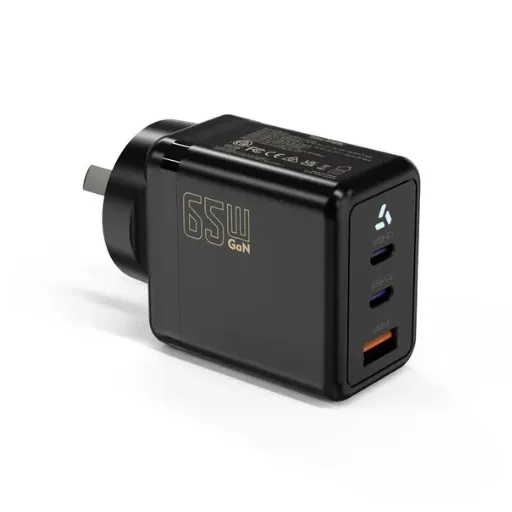
If you're writing a specification for a QC3 plug or adapter, these are the parameters that matter. Request them explicitly — don't assume the supplier knows your application.
1. Output Voltage and Current Profile
Verify the continuous voltage range. A genuine QC3 adapter supports 3.6V–12V in 200mV steps. Some low-cost adapters claim "QC3 compatible" but only implement the 5V, 9V, and 12V steps from QC2.0 without INOV. Ask for the voltage step verification data.
2. Maximum Power Output
Standard QC3 is 18W. Some extended implementations support up to 36W. Specify what your application needs. For most phone and power-bank applications, 18W is sufficient. For tablets or larger power stations, 36W may be justified.
3. Port Configuration
Single-port QC3: Simple, lower cost
Multi-port with QC3 + standard 5V: One fast-charge port plus additional standard ports
Multi-port with QC3 + USB PD: Dual-protocol coverage, higher cost
4. Efficiency Rating
QC3 adapters are external power supplies and fall under regional efficiency regulations:
U.S. market: Must meet DOE Level VI (10 CFR 430). Learn what to verify in our DOE Level VI compliance guide.
EU market: Must meet ErP Tier V for no-load power and active-mode efficiency
Certification marks: Verify the supplier has current UL, CE, FCC, and DOE VI test reports for the exact model you plan to order
5. Thermal Performance
Fast charging generates heat — in the adapter, in the cable, and in the device. Request thermal test data at maximum load (18W continuous) under elevated ambient temperature. A QC3 adapter that shuts down from overheating in a 40°C environment is not suitable for markets in the Middle East, Southeast Asia, or summer U.S. conditions.
6. Connector and Cable Assembly
QC3 works over USB-A, but the device-side connector matters:
Micro-USB: Common on older Android devices, limited to ~2A current
USB-C: Required for higher current, supports reversible insertion
Proprietary connectors: Some OEMs use custom connectors for their own ecosystems
If you're bundling a cable with the adapter, specify the wire gauge. 18W at 9V is 2A — a thin 28AWG cable will overheat. 22AWG or 24AWG power conductors are the standard for QC3 cables.
7. Protection Features
Production-grade QC3 adapters must include:
Over-voltage protection (OVP)
Over-current protection (OCP)
Short-circuit protection (SCP)
Over-temperature protection (OTP)
Input surge protection
These are baseline requirements, not premium features. Any supplier who treats them as optional is not a production-grade partner.
Common Mistakes OEM Buyers Make with QC3
After reviewing hundreds of adapter specifications, we see the same errors repeat:
Mistake 1: Confusing "QC3 compatible" with QC3 certified. "Compatible" is an unregulated marketing term. It can mean anything from full INOV implementation to simple 9V fixed-output that happens to charge QC3 devices at a reduced rate. Always request Qualcomm certification documentation for the specific model.
Mistake 2: Ignoring the cable. A QC3 adapter is only as good as the cable connecting it. Thin cables, worn connectors, or third-party cables without proper D+/D- signaling will cause the device to fall back to 5V charging. If you're bundling a cable, specify the conductor gauge and QC3 signal wire requirements.
Mistake 3: Specifying voltage without current. "9V output" means nothing without a current rating. A 9V/1A adapter delivers 9W — slower than a 5V/2A (10W) standard adapter. Verify both voltage range and maximum current at each voltage step.
Mistake 4: Assuming QC3 covers all devices. QC3 does not fast-charge iPhones (Apple uses its own protocol and USB PD). It does not fast-charge most laptops. It does not fast-charge devices with non-Qualcomm processors (some Samsung Exynos devices, Google Tensor devices, MediaTek devices). Know your target market's device mix before specifying.
Mistake 5: Skipping the handshake test. Before placing a production order, test the adapter with the actual devices your customers will use. Verify that the handshake completes, that INOV voltage steps occur during charging, and that the device reports "fast charging" or "charging rapidly" in its UI. This test takes 30 minutes and prevents field failures.
Certifications and Compliance for QC3 Adapters
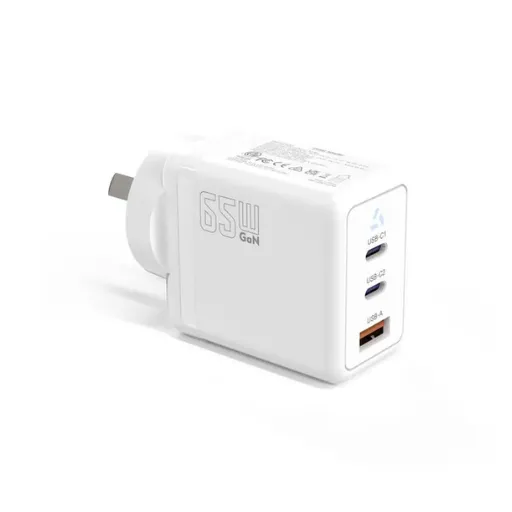
QC3 adapters are subject to the same regulatory framework as any external power supply. The fast-charging feature does not exempt the adapter from safety or efficiency requirements.
Safety Certifications
UL 62368-1 (U.S. and Canada): Applies to all external power supplies. Verify the test report covers the exact adapter model and output configuration.
IEC 62368-1 / EN 62368-1 (EU and international): The harmonized safety standard for audio/video and IT equipment power supplies.
CCC (China): Mandatory for adapters sold in China. The certification is product-specific.
SAA / RCM (Australia and New Zealand): Required for market entry.
UKCA (UK): Post-Brexit marking required for the British market.
Efficiency and Environmental
DOE Level VI (U.S.): Mandatory since 2016. Covers active-mode efficiency and no-load power. Learn more about DOE Level VI requirements.
ErP Tier V (EU): European equivalent, covers no-load power and active efficiency.
RoHS / PAHs: Environmental compliance for hazardous substance restrictions.
Qualcomm-Specific Requirements
Qualcomm licenses the Quick Charge technology to adapter manufacturers. A legitimately QC3-certified adapter carries a Qualcomm license and appears in Qualcomm's public database of certified products. This is separate from UL or CE — it is a technology licensing requirement.
If your supplier cannot provide a Qualcomm license number or the product does not appear in Qualcomm's certification database, it is not a certified QC3 adapter. Using uncertified adapters in products carries intellectual property risk and may result in compatibility issues that surface only in the field.
How Anenerge Approaches Fast-Charging Adapters
Our adapter line includes QC3-certified single-port and multi-port USB chargers for consumer electronics, IoT gateways, portable power stations, and automotive accessory applications. Every unit is built on our standard AC/DC power adapter platform, which means:
The same global certification stack (UL, CE, UKCA, SAA, FCC, DOE VI) applies to QC3 variants
100% automatic functional testing, including voltage step verification under load
OEM customization for enclosure color, labeling, cable length, and connector type
Engineering samples within 7 days for catalog variants, 2 weeks for custom configurations
For OEM buyers who need dual-protocol coverage, we also build QC3 + USB PD multi-port adapters with independent port controllers. Each port negotiates its own protocol — no shared bus that degrades performance when multiple devices connect.
Get an OEM quote for your QC3 adapter specification, or request a free sample for compatibility testing with your target devices.
Conclusion
A QC3 plug is more than a marketing badge — it is an intelligent voltage negotiation system that adapts to the device it charges. For OEM buyers, that intelligence translates into happier end users, cooler-running products, and a competitive spec sheet. But only if the adapter is genuinely certified, properly specified, and tested against the actual devices in your market.
Here are the key takeaways:
QC3 uses INOV to negotiate voltage from 3.6V to 12V in 200mV steps, reducing heat and improving charge speed versus fixed-voltage protocols
QC3 is not USB PD — they use different negotiation mechanisms and different connectors. Know which protocol your target devices support
"QC3 compatible" is not certification — request Qualcomm license documentation and verify in the public database
The cable matters — specify conductor gauge and signal wire quality for any bundled cable
Regional compliance still applies — QC3 adapters need UL, CE, DOE VI, and other standard certifications regardless of charging speed
If you're specifying a QC3 plug for your next product, the next step is straightforward. Send us your port configuration, target device list, and power requirements. Our engineering team will propose a certified QC3 adapter solution and ship a sample for handshake validation within one week.
Recently Posted
-
GaN Charger vs Normal Charger: An OEM Buyer's Comparison
June 12, 2026Last spring, a product manager at a Berlin laptop accessory brand opened two 65W samples on his desk. One was a normal silicon cha Read More
 -
What Is a GaN Charger? A Buyer’s Guide to Gallium Nitride Power Adapters
June 12, 2026In 2024, Maria Chen’s team at a Shenzhen router OEM received a blunt message from their largest U.S. distributor: shrink the power Read More
 -
What Is GaN Technology? A Manufacturer's Guide for Power Adapter Buyers
June 12, 2026Lisa, a product manager at a Rotterdam-based IoT brand, stared at the mechanical drawing for her new gateway. The enclosure was 30 Read More
 -
What Is Power Delivery? Understanding Energy Transfer in Modern Electronics
June 12, 2026When Ravi Patel, a hardware engineer at a consumer electronics firm in Mumbai, received the first production samples of his team&# Read More

Contact Us
Recommended Products
-
 65W USB-C GaN Wall Charger PD Fast Charging Adapter EU US Plug for Laptop Smartphone and TravelUS$ 6MOQ: 100 Pieces
 -
45W GaN USB-C Fast Charger JP Plug PD Wall Charging Adapter for IPhone MacBook and TabletsUS$ 8MOQ: 100 Pieces
-
QC3.0 30W USB Fast Charger With 18W Quick Charge Wall Adapter for Android and Mobile DevicesUS$ 4MOQ: 100 Pieces
-
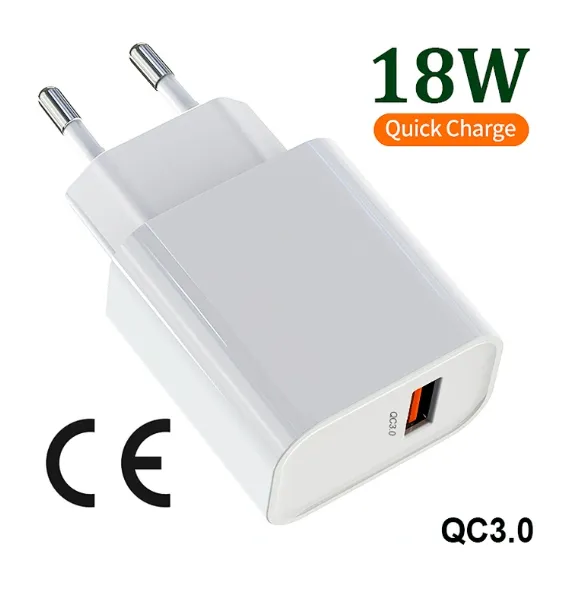
Compact 18W Quick Charge 3.0 USB Charger 30W Fast Charging Adapter EU US Plug for TravelUS$ 2MOQ: 100 Pieces
-
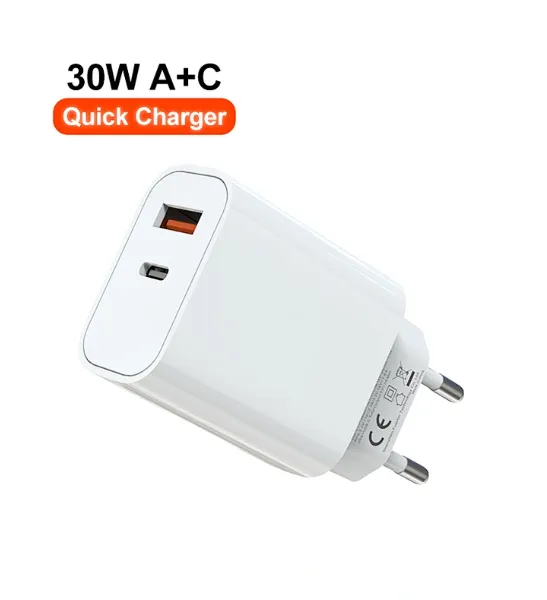
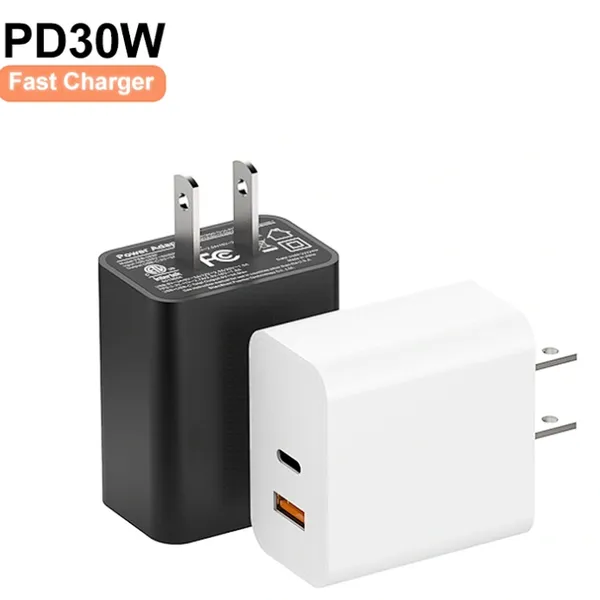
30W USB-C and USB-A PD Fast Charger Compact Wall Adapter for IPhone Samsung and IPadUS$ 3MOQ: 100 Pieces
-
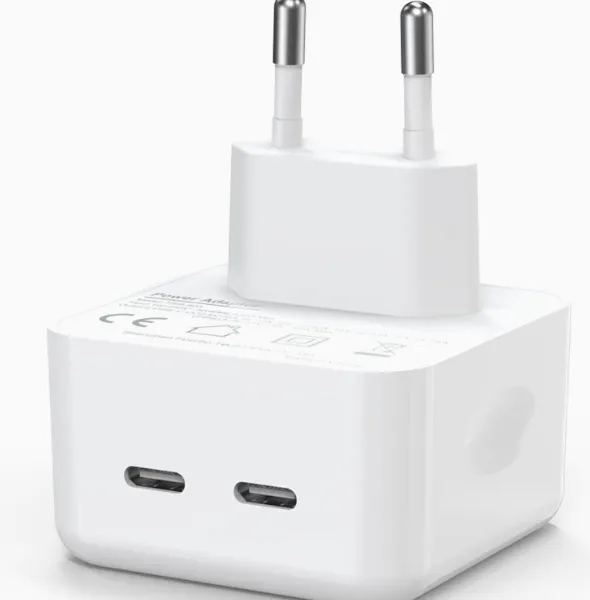
35W Dual USB-C PD Charger Fast Charging Adapter for IPhone Samsung IPad and USB-C DevicesUS$ 3MOQ: 100 Pieces
-
65W USB-C GaN Charger EU Plug Fast Charging Adapter 65W USB-C PD Fast Charge Wall Charger Power Adapter for Macbook ProUS$ 5MOQ: 100 Pieces
-
65W GaN USB-C Fast Charger PD Wall Charging Adapter for Laptop IPhone and Mobile DevicesUS$ 5MOQ: 100 Pieces
-
100W GaN USB-C Fast Charger With PD 3.0 for Laptop, MacBook, IPhone & Multi-Device ChargingUS$ 12MOQ: 100 Pieces
-
45W GaN USB-C Fast Charger EU AU PD Fast Wall Charging Adapter for IPhone Tablets With CE REACH PassedUS$ 8MOQ: 100 Pieces
-
QC3.0 65W GaN USB C Super Fast Charger With UKCA 3 Ports PD 3.0 GaN Charger for Iphone Macbook SamsungUS$ 10MOQ: 100 Pieces
-
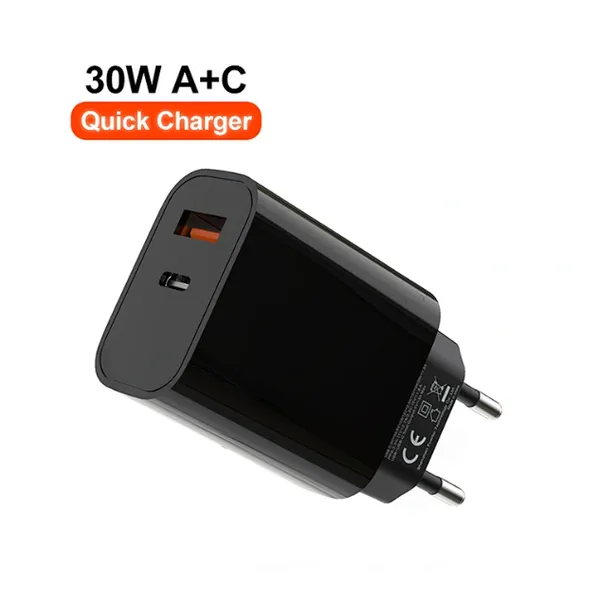
30W USB-C and USB-A GaN QC3.0 Fast Charging Adapter PD Fast Charger Compact Wall Adapter for IPhone Samsung and IPadUS$ 3MOQ: 100 Pieces
-
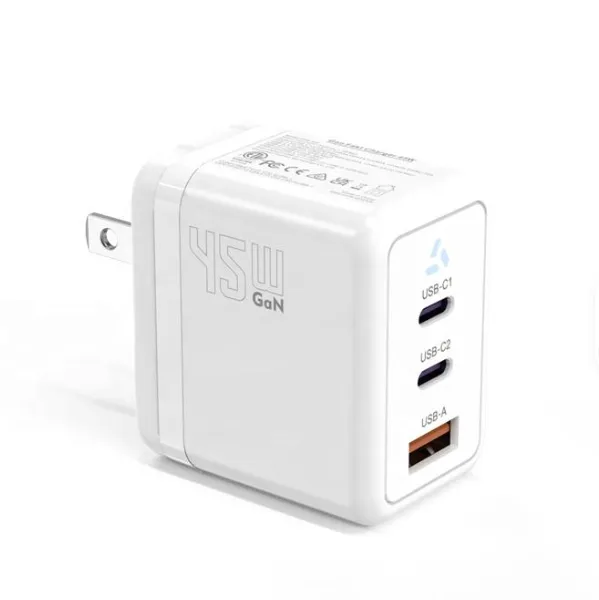
45W GaN USB-C Fast Charger With Dual Type-C and USB-A Ports PD Wall Charging AdapterUS$ 8MOQ: 100 Pieces
-
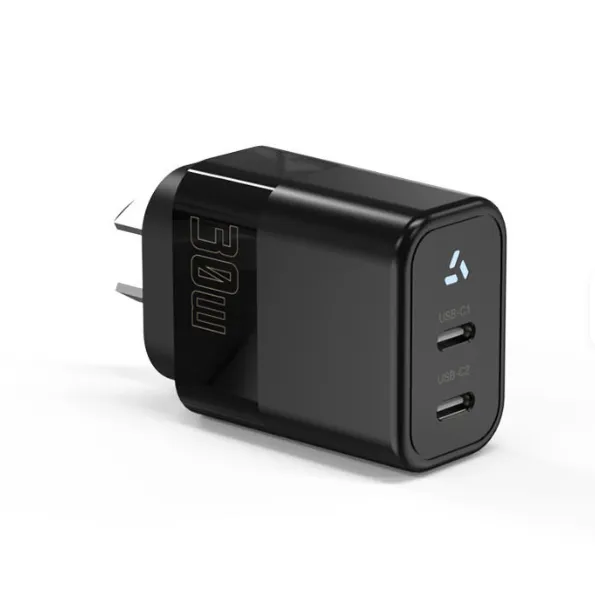
Dual USB C Ports QC3.0 30W Fast Charger With EU UK AU US USB-C PD Wall Chargeer 30W PD Power AdapterUS$ 3MOQ: 100 Pieces
-
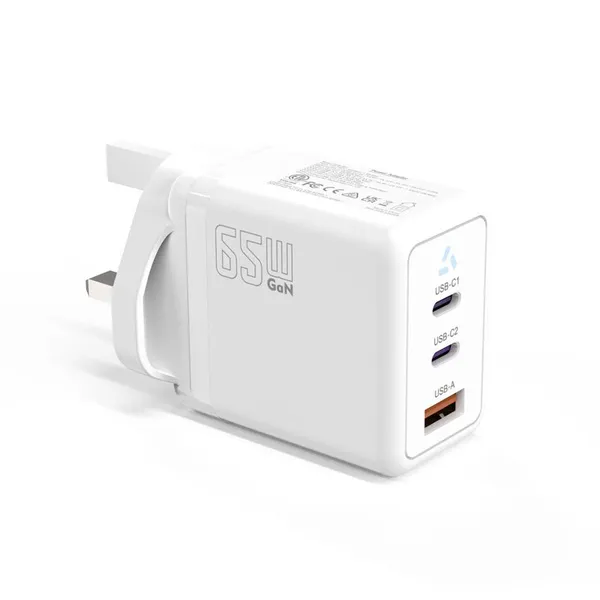
Compact 65W GaN USB-C Wall Charger With Dual USB-C Ports and USB-A Fast Charging Adapter With CE UKCA ETL SAAUS$ 10MOQ: 100 Pieces
-
QC3.0 Fast Charging Adapter PD30W USB-C USB-A GaN PD Fast Charger PD 3.0 GaN Charger Compact Wall Adapter for IPhone Samsung and IPadUS$ 3MOQ: 100 Pieces
-
12V 5A 60W US EU AC DC Adapter LED Driver LED SMPS AC to DC Switching Power SupplyUS$ 5 - 7MOQ: 50 Pieces
-
CE FCC CUL SAA KC PSE 24Vdc 48W Switching Power Supply AdaptersUS$ 5 - 7MOQ: 50 Pieces
-
CE GS UKCA SAA CUL Qualified Waterproof Switching Power Supply Ip68 PSE UL SAA GS 12V 2AUS$ 3 - 6MOQ: 50 Pieces
-
12V 1A Factory OEM Waterproof AC Adapter for Laser Light Table Lamp ac dc Adaptor With TUV CE GS for EU MarketUS$ 5 - 7MOQ: 50 Pieces