
 Business License
Are GaN Chargers Safe? What Every OEM Buyer and Brand Owner Should Know
Last October, a consumer electronics brand in Shenzhen launched a 65W GaN charger on Amazon. Sales were strong for three weeks. Then a customer posted a photo of a melted USB-C port, and the listing was suspended within 48 hours.
The charger had passed basic CE testing, but it had never been tested under the thermal stress conditions that GaN's high switching frequencies can create in compact enclosures.
The problem was not GaN technology itself. It was a supplier who treated GaN like a drop-in replacement for silicon without revalidating the thermal design.
If you are evaluating GaN chargers for your product line, the question "are GaN chargers safe?" does not have a simple yes or no answer. GaN (gallium nitride) semiconductors offer genuine safety advantages over traditional silicon, but those advantages only materialize when the charger is properly designed, tested, and certified.
This article breaks down the safety profile of GaN chargers, compares them to silicon-based alternatives, and gives you a checklist for sourcing GaN chargers that will not become your next recall headache.
How GaN technology works and why it matters for safety
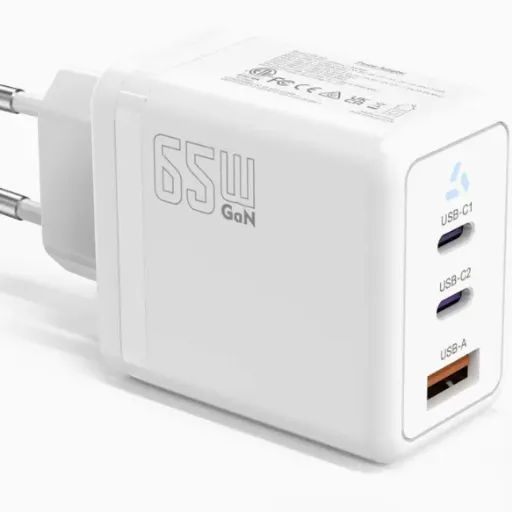
Gallium nitride is a wide-bandgap semiconductor material. Unlike silicon, which has been the backbone of power electronics for decades, GaN can operate at higher voltages, higher frequencies, and higher temperatures with lower energy loss.
For charger design, this translates to three safety-relevant properties:
Higher efficiency: GaN chargers typically convert 92–95% of input power to output, compared to 80–87% for silicon chargers. Less wasted energy means less heat.
Higher switching frequency: GaN transistors switch faster, allowing smaller transformers and capacitors. This enables compact designs without sacrificing power.
Better thermal performance: GaN's wide bandgap allows it to operate at junction temperatures above 150°C without degradation, while silicon starts to suffer above 125°C.
These properties do not automatically make every GaN charger safe. They make it possible to build a safer, smaller charger, but only if the designer accounts for the unique characteristics of GaN during the engineering process.
Are GaN chargers safe compared to silicon chargers?
When comparing GaN chargers to silicon chargers on safety, the answer depends on what you mean by safe. Let's break it down by the failure modes that matter most for OEM and brand owners.
Heat generation and thermal runaway risk
GaN chargers produce less waste heat than equivalent silicon chargers. A 65W GaN charger running at full load typically operates 10–15°C cooler than a silicon charger delivering the same power. Lower operating temperatures reduce the risk of:
Component degradation over time
Thermal runaway in adjacent battery cells
Softening or melting of enclosure materials
However, GaN's compact form factor can work against thermal safety if the designer packs too much power into too small a space without adequate ventilation. The charger that melted in the Shenzhen brand's Amazon listing was a 65W unit in an enclosure designed for a 45W silicon charger. The GaN chip itself was fine. The thermal path was not.
Safety takeaway: GaN gives you a thermal advantage, but you must validate the thermal design of the specific charger, not just trust the GaN label.
Electromagnetic interference (EMI)
GaN's higher switching frequencies can generate more electromagnetic interference if not properly filtered. GaN chargers often switch at 500 kHz to 2 MHz, compared to 50–200 kHz for silicon. EMI is a safety concern because it can:
Interfere with nearby medical devices or communication equipment
Cause erratic behavior in sensitive electronics
Fail FCC or CE EMC testing, making the product illegal to sell
Well-designed GaN chargers include EMI filtering and shielding that address these higher frequencies. Cheap GaN chargers often skip or undersize these components to hit a price point.
Safety takeaway: Always verify that a GaN charger has passed EMC testing (FCC Part 15, EN 55032, EN 55035) at an accredited lab. A charger that passes only conducted emissions testing but fails radiated emissions is a liability.
Component failure and fire risk
Both GaN and silicon chargers can fail. The question is what happens when they do. GaN's higher efficiency and lower heat generation reduce the probability of catastrophic failure, but the failure mode of a GaN transistor is different from silicon.
Silicon MOSFETs tend to fail short-circuit, which can trip overcurrent protection quickly. GaN transistors can fail in ways that are harder to predict, and their higher operating frequencies mean that protection circuits must respond faster.
Modern GaN charger ICs from companies like Navitas Semiconductor and GaN Systems integrate protection features directly into the chip, including overcurrent, overvoltage, and overtemperature shutdown. These integrated protections have significantly improved the safety profile of GaN chargers over the past three years.
Safety takeaway: GaN charger safety depends heavily on the IC vendor and the protection circuit design. Ask your supplier which GaN IC they use and request the datasheet.
What certifications do GaN chargers need?
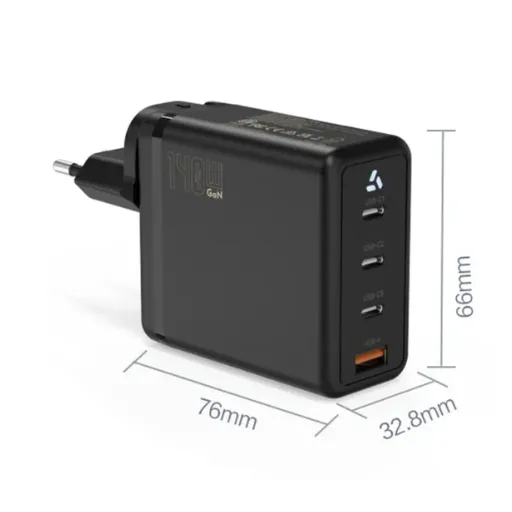
A common question when evaluating GaN charger safety is whether these chargers need different certifications than traditional silicon chargers. The answer is no. GaN chargers must meet the same safety and EMC standards as silicon chargers. There is no separate "GaN certification" track. This GaN charger certification requirement is identical to what silicon-based chargers must pass. The key standards are:
| Standard | What it covers | Market |
|---|---|---|
| UL 62368-1 | Product safety for IT and AV equipment | U.S. and Canada |
| IEC 62368-1 | International base safety standard | Global |
| EN 62368-1 | European harmonized safety standard | EU and UK |
| FCC Part 15 | Electromagnetic emissions limits | U. S. |
| EN 55032 / EN 55035 | EMC emissions and immunity | EU |
| EN 61000-3-2 | Harmonic current limits | EU |
| DoE Level VI | Energy efficiency in no-load and active states | U. S. |
| RoHS | Restriction of hazardous substances | EU and global |
For GaN chargers specifically, two additional considerations apply:
Higher-frequency EMC testing: Some test houses apply additional scrutiny to GaN chargers because of their higher switching frequencies. Ensure your test lab has experience with GaN designs.
Thermal derating verification: Certifications like UL 62368-1 include temperature rise testing. GaN chargers in compact enclosures must demonstrate that surface temperatures remain within safe limits under worst-case conditions.
OEM tip: Request the full test report, not just the certificate. A certificate tells you the charger passed. The test report tells you how close it was to failing. A charger that barely passed thermal testing at 25°C ambient may fail in a hot warehouse or inside an enclosed product.
Anenerge chargers ship with UL, CE, UKCA, FCC, and DoE Level VI documentation. See our certifications or request the full test package for your evaluation. You can verify UL certification numbers directly on the UL Product iQ database.
The real risks: cheap GaN chargers and counterfeit components
The biggest safety risk with GaN chargers is not the technology. It is the market.
GaN's reputation as a premium technology has created a flood of cheap, uncertified chargers that use the "GaN" label as a marketing term. Some of these chargers:
Use silicon MOSFETs with GaN printed on the label
Skip EMI filtering to reduce cost
Use recycled or counterfeit GaN ICs that fail under stress
Carry fake CE or FCC marks with no actual test documentation
When Priya, a procurement manager for a UK-based electronics distributor, sourced a batch of 65W GaN chargers from a new supplier in late 2023, the samples passed her visual inspection and basic function test. The price was 30% below market rate. Six months later, customer complaints about chargers getting "too hot to touch" led to independent testing that revealed the units used counterfeit GaN ICs with no overtemperature protection. The distributor pulled 4,000 units from the market and lost two retail accounts.
The cost of verifying a charger's authenticity is a fraction of the cost of a product recall.
How to protect yourself:
Request a Bill of Materials (BOM) from your charger supplier and verify the GaN IC part number against the manufacturer's database
Ask for UL or ETL certification numbers and verify them on the UL database
Insist on seeing the full EMC test report from an accredited lab
Test a random sample from production, not just the golden sample
GaN charger safety for specific applications
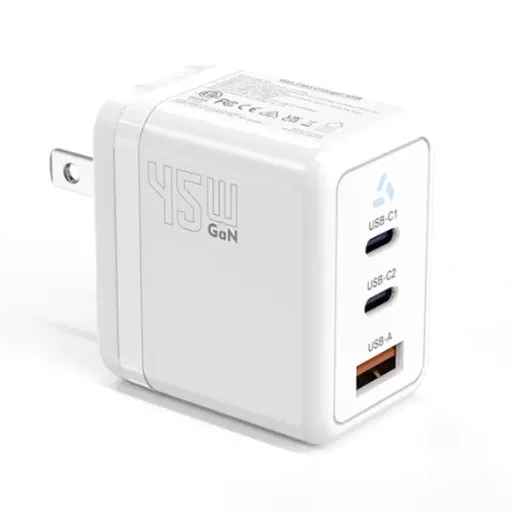
Different applications have different safety requirements. Here is how GaN charger safety applies to common use cases:
Consumer electronics (phones, tablets, laptops)
When comparing GaN vs silicon charger performance for consumer electronics, GaN chargers are well-suited because USB-PD (Power Delivery) protocol handles negotiation between the charger and device. A properly implemented gallium nitride charger with USB-PD will:
Deliver only the voltage and current the device requests
Shut down if communication fails (fallback to 5V)
Support PPS (Programmable Power Supply) for fine-grained voltage control
The risk here is cheap chargers that claim USB-PD support but do not implement the protocol correctly. This is a USB-PD charger safety concern because it can result in overvoltage delivery to devices that expect a specific voltage.
E-mobility (e-bikes, e-scooters)
GaN chargers for e-mobility applications must integrate with the battery's BMS and charge profile. A GaN charger that delivers 54.6V to a 48V LiFePO4 pack (which should terminate at 58.4V for a 16S configuration) is a mismatch that can cause undercharging and premature capacity loss. Conversely, a GaN charger that delivers 58.4V to a 48V lithium-ion pack (which should terminate at 54.6V for a 13S configuration) is an overcharge hazard.
For e-mobility, GaN's efficiency advantage matters because it reduces heat in chargers that may be used in enclosed spaces or warm environments. But the charger must still be matched to the battery chemistry and series count. Learn how to specify a charger for your e-mobility application or explore our e-bike and scooter charger solutions.
Industrial and IoT devices
Industrial applications often require chargers that operate in wide temperature ranges and resist vibration and moisture. GaN's thermal tolerance is an advantage here, but the charger enclosure and connectors must match the environmental requirements. A GaN charger with IP20 connectors is not suitable for a factory floor, regardless of how efficient the GaN IC is inside.
How to evaluate GaN charger suppliers for safety
When sourcing GaN chargers for your product line, use this checklist to separate serious manufacturers from label-slap resellers:
Documentation you should receive without asking:
UL or ETL certification number (verifiable on UL's database)
CE Declaration of Reference to EN 62368-1
FCC test report or SDoC (Supplier's Declaration of Conformity)
DoE Level VI compliance statement
RoHS declaration
Documentation you should request:
Full EMC test report (not just the certificate)
Thermal rise test data at maximum load and maximum ambient temperature
BOM with manufacturer names and part numbers for key components (GaN IC, controller, MOSFETs, capacitors)
Charge curve or output voltage/current specification with tolerances
MTBF (Mean Time Between Failures) data or reliability test summary
Red flags that should stop a purchase:
Supplier cannot provide a verifiable UL or ETL number
Certification documents show a different company name than the supplier
No EMC test report available, or report is from a non-accredited lab
Price is more than 25% below market rate for comparable specifications
Supplier is unwilling to provide a BOM or identify the GaN IC vendor
Contact our engineering team to review your charger specifications against these criteria. We provide complete documentation packages for every charger we manufacture.
What the science says: GaN reliability data
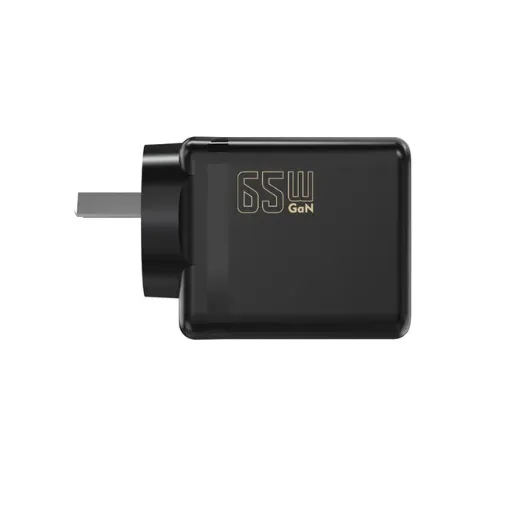
GaN semiconductor technology has matured a lot since Navitas Semiconductor introduced the first commercial GaN power IC in 2014. Key reliability findings:
GaN ICs have demonstrated MTBF figures exceeding 10 million hours in accelerated life testing conducted by Navitas and GaN Systems
GaN transistors exhibit lower gate charge degradation than silicon MOSFETs under equivalent stress conditions, meaning they maintain performance over more charge cycles
Thermal cycling tests show GaN packages surviving over 1,000 cycles from -40°C to 125°C without bond wire or die-attach failures
However, these figures apply to GaN ICs from established manufacturers (Navitas, GaN Systems, Infineon, Texas Instruments) tested under controlled conditions. Counterfeit or no-name GaN chips don't have this reliability data, and independent testing has shown big variation in quality.
The bottom line: GaN technology itself is proven and reliable. The risk lies in the specific implementation and the authenticity of the components used.
Frequently asked questions about GaN charger safety
Are GaN chargers safe to leave plugged in overnight?
Yes, a certified GaN charger from a reputable brand is safe to leave plugged in overnight. GaN chargers with USB-PD protocol talk to the connected device and stop delivering power when the device is fully charged. The charger itself enters a low-power idle state. However, this assumes the charger has proper overcurrent, overvoltage, and overtemperature protections, which is why certification matters.
Can GaN chargers overheat?
GaN chargers generate less heat than equivalent silicon chargers due to higher efficiency (92–95% vs 80–87%). However, any charger can overheat if it's operated beyond its rated capacity, enclosed without ventilation, or used in ambient temperatures above its rating. A well-designed GaN charger includes thermal derating and overtemperature shutdown to prevent damage.
Are cheap GaN chargers safe?
Not always. The "GaN" label on a charger doesn't guarantee safety. Cheap GaN chargers may use counterfeit components, skip EMI filtering, or carry fake certification marks. Always verify UL or ETL certification numbers independently and request full test reports before sourcing from an unfamiliar supplier.
Do GaN chargers damage batteries?
A properly designed GaN charger with correct output voltage and USB-PD or CC-CV charging profile will not damage batteries. The charging protocol, not the semiconductor material, determines how the charger interacts with the battery. A GaN charger with incorrect voltage settings for your battery chemistry can cause the same damage as a silicon charger with the same mismatch.
What is the difference between GaN and GaNFast?
GaNFast is a brand name for GaN power ICs manufactured by Navitas Semiconductor. It is not a different technology from GaN; it is a specific product line of integrated GaN power stages that combine the GaN transistor, gate driver, and protection logic in a single package. Other GaN IC brands include GaN Systems (now part of Infineon) and Texas Instruments' LMG series.
Do GaN chargers need special cables?
GaN chargers use standard USB-C and USB-A connectors. They don't require special cables, but the cable must be rated for the power level being delivered. A 100W GaN charger connected to a cable rated for 60W will either limit power delivery or, in poorly designed systems, overload the cable. Always use cables rated for the charger's maximum output.
Conclusion
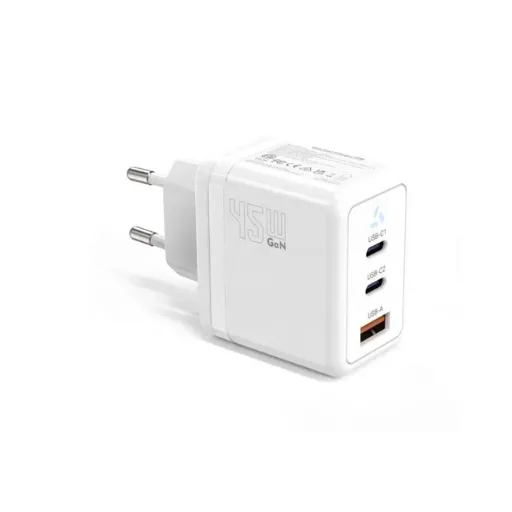
So, are GaN chargers safe? The technology is sound. GaN semiconductors offer genuine safety advantages over silicon. They run cooler, waste less energy, and handle higher temperatures. GaN ICs from established manufacturers have proven reliable in accelerated life testing.
But technology alone does not make a product safe. A GaN charger from a supplier who skips EMC testing, uses counterfeit ICs, or misapplies the thermal design is more dangerous than a properly engineered silicon charger. The semiconductor material is one factor in a system that includes the controller IC, protection circuits, enclosure design, cable quality, and certification testing.
For OEM buyers and brand owners, the decision is not "GaN or silicon." It is "verified or unverified." A GaN charger with complete UL, CE, and FCC documentation from a supplier who provides full BOM transparency and test reports is a safe product. A GaN charger with a fake CE mark and no test data is a liability, regardless of what is written on the label.
If you are evaluating GaN chargers for your next product, send us your power and voltage requirements. We will provide a documented charger specification with full certification data and a sample unit for your testing.
Recently Posted
-
Why Is My Phone Charging Slowly? Causes and Fixes
June 22, 2026At 7:45 a.m., Maya plugged her phone into the charger she grabbed from the hotel nightstand. By 8:30, the battery had climbed from Read More
 -
Fast Charging vs Normal Charging: OEM Engineering Guide
June 22, 2026Last year, a European e-bike brand shipped 5,000 units with a 4A fast charger as a premium upgrade. Six months later, their warran Read More
 -
How to Make Charging Faster: A Technical Guide for OEM Brand Owners
June 22, 2026When Elena, product manager at a Rotterdam e-bike brand, launched her 48V commuter line in spring 2026, she thought 6 hours on a s Read More
 -
Does Fast Charging Damage Battery? What OEM Buyers Need to Know
June 22, 2026Yes, fast charging can damage batteries when current exceeds the cell's thermal and electrochemical limits. The damage shows u Read More

Contact Us
Recommended Products
-
 65W USB-C GaN Wall Charger PD Fast Charging Adapter EU US Plug for Laptop Smartphone and TravelUS$ 6MOQ: 100 Pieces
 -
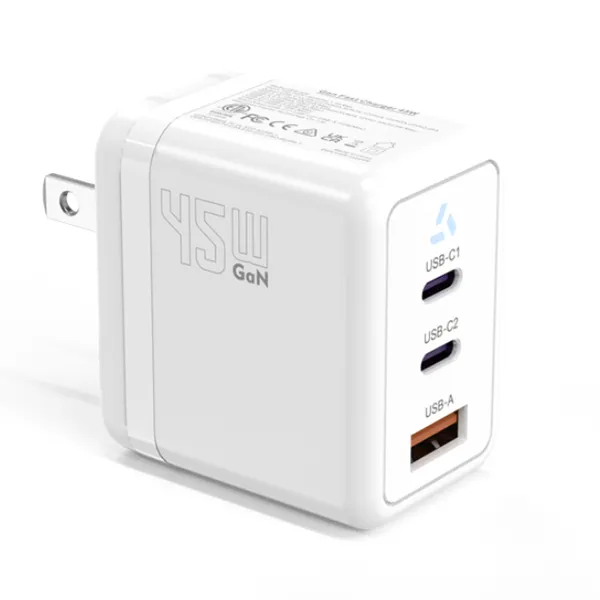
45W GaN USB-C Fast Charger JP Plug PD Wall Charging Adapter for IPhone MacBook and TabletsUS$ 8MOQ: 100 Pieces
-
QC3.0 30W USB Fast Charger With 18W Quick Charge Wall Adapter for Android and Mobile DevicesUS$ 4MOQ: 100 Pieces
-
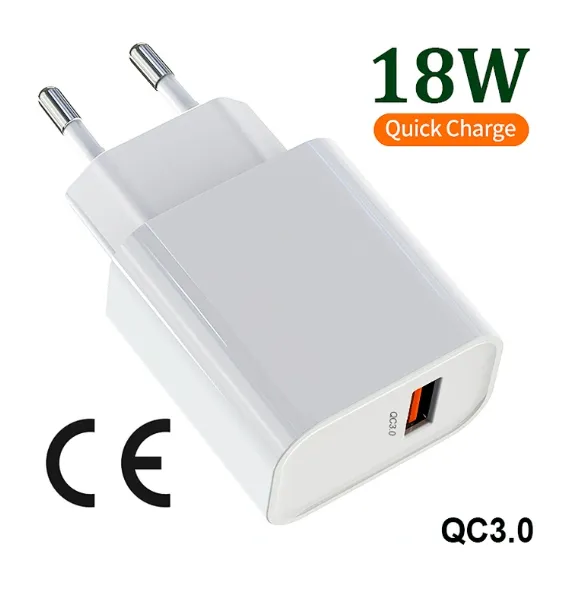
Compact 18W Quick Charge 3.0 USB Charger 30W Fast Charging Adapter EU US Plug for TravelUS$ 2MOQ: 100 Pieces
-
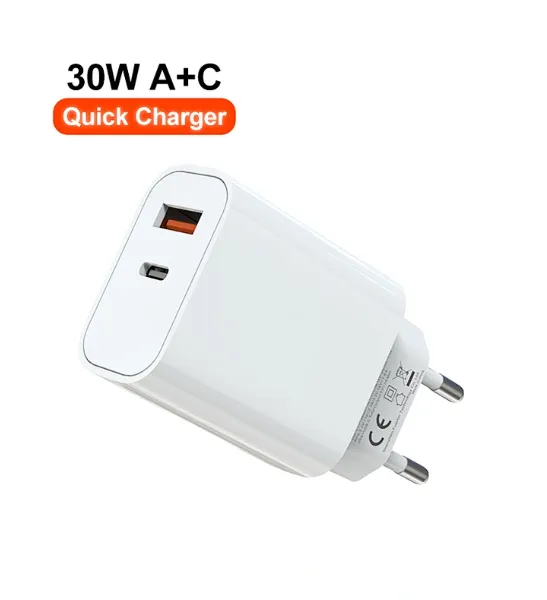
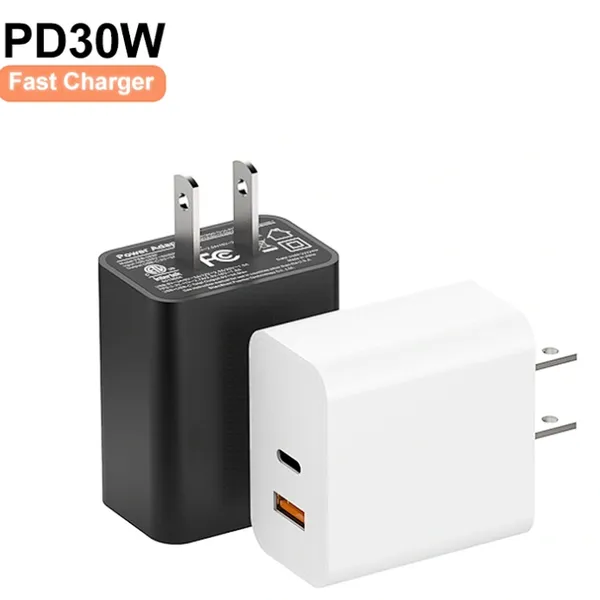
30W USB-C and USB-A PD Fast Charger Compact Wall Adapter for IPhone Samsung and IPadUS$ 3MOQ: 100 Pieces
-
35W Dual USB-C PD Charger Fast Charging Adapter for IPhone Samsung IPad and USB-C DevicesUS$ 3MOQ: 100 Pieces
-
65W USB-C GaN Charger EU Plug Fast Charging Adapter 65W USB-C PD Fast Charge Wall Charger Power Adapter for Macbook ProUS$ 5MOQ: 100 Pieces
-
65W GaN USB-C Fast Charger PD Wall Charging Adapter for Laptop IPhone and Mobile DevicesUS$ 5MOQ: 100 Pieces
-
100W GaN USB-C Fast Charger With PD 3.0 for Laptop, MacBook, IPhone & Multi-Device ChargingUS$ 12MOQ: 100 Pieces
-
45W GaN USB-C Fast Charger EU AU PD Fast Wall Charging Adapter for IPhone Tablets With CE REACH PassedUS$ 8MOQ: 100 Pieces
-
QC3.0 65W GaN USB C Super Fast Charger With UKCA 3 Ports PD 3.0 GaN Charger for Iphone Macbook SamsungUS$ 10MOQ: 100 Pieces
-
30W USB-C and USB-A GaN QC3.0 Fast Charging Adapter PD Fast Charger Compact Wall Adapter for IPhone Samsung and IPadUS$ 3MOQ: 100 Pieces
-
45W GaN USB-C Fast Charger With Dual Type-C and USB-A Ports PD Wall Charging AdapterUS$ 8MOQ: 100 Pieces
-
Dual USB C Ports QC3.0 30W Fast Charger With EU UK AU US USB-C PD Wall Chargeer 30W PD Power AdapterUS$ 3MOQ: 100 Pieces
-
Compact 65W GaN USB-C Wall Charger With Dual USB-C Ports and USB-A Fast Charging Adapter With CE UKCA ETL SAAUS$ 10MOQ: 100 Pieces
-
QC3.0 Fast Charging Adapter PD30W USB-C USB-A GaN PD Fast Charger PD 3.0 GaN Charger Compact Wall Adapter for IPhone Samsung and IPadUS$ 3MOQ: 100 Pieces
-
12V 5A 60W US EU AC DC Adapter LED Driver LED SMPS AC to DC Switching Power SupplyUS$ 5 - 7MOQ: 50 Pieces
-
CE FCC CUL SAA KC PSE 24Vdc 48W Switching Power Supply AdaptersUS$ 5 - 7MOQ: 50 Pieces
-
CE GS UKCA SAA CUL Qualified Waterproof Switching Power Supply Ip68 PSE UL SAA GS 12V 2AUS$ 3 - 6MOQ: 50 Pieces
-
12V 1A Factory OEM Waterproof AC Adapter for Laser Light Table Lamp ac dc Adaptor With TUV CE GS for EU MarketUS$ 5 - 7MOQ: 50 Pieces