
 Business License
What Is a Battery Energy Storage System? A Technical Guide for OEM Buyers
In 2024, global battery energy storage deployments grew by more than 60% year-over-year, yet a third of those installations underperformed their expected cycle life because the charging infrastructure was treated as an afterthought. The battery pack gets the engineering budget. The inverter gets the vendor audit. The charger? Often sourced from a generic catalog with no chemistry match.
That is a costly mistake, and it is why OEM buyers and procurement engineers need to understand what a battery energy storage system actually is, how its components interact, and why the charger is not a commodity add-on but a critical system element that determines longevity, safety, and total cost of ownership.
This guide explains battery energy storage systems in practical, specification-driven terms. You will learn the core architecture of a BESS, the battery chemistries that dominate the market, the applications driving demand, and the charger specifications that protect your pack investment. Whether you are sourcing components for a residential energy storage product, an industrial backup system, or a grid-scale installation, this article gives you the parameters to specify with confidence.
Want the right charger for your energy storage system? Request a free sample matched to your battery chemistry and voltage, or browse our LiFePO4 charger range.
What Is a Battery Energy Storage System?
A battery energy storage system (BESS) is an integrated assembly that stores electrical energy in rechargeable battery cells and releases it on demand. At its simplest, a BESS captures energy when supply exceeds demand, or when energy is cheap, and dispatches it when the grid is strained, prices spike, or a primary power source fails.
The term "system" matters. A BESS is not just a battery pack. It is a coordinated set of subsystems: the battery modules, the battery management system (BMS), the power conversion system (inverter/charger), thermal management, and control electronics. Each subsystem must be specified to work with the others. A mismatch between the BMS and the charger, for example, can cause premature cell degradation or trigger safety shutdowns that leave the system offline when it is needed most.
Battery energy storage systems range from small residential units (5–20 kWh) to commercial and industrial systems (100 kWh–10 MWh) to utility-scale installations (100 MWh and above). The scale changes the enclosure, the cooling requirements, and the regulatory standards. The fundamentals of chemistry, voltage, and charge control remain the same.
The Five Core Components Every BESS Needs
Every battery energy storage system, regardless of scale, includes these five elements:
Battery cells or modules: The energy reservoir. Cells are connected in series and parallel to achieve the target voltage and capacity.
Battery Management System (BMS): Monitors cell voltage, temperature, and state of charge. Protects against over-voltage, under-voltage, and thermal runaway.
Power Conversion System (PCS): Converts DC battery power to AC for grid or load connection. Includes the inverter for discharge and the rectifier/charger for charging.
Thermal management: Maintains cells within their optimal temperature range, typically 15°C to 35°C for lithium-based chemistries.
Enclosure and safety systems: Physical housing, fire suppression, ventilation, and electrical isolation.
OEM buyers often focus on the battery and inverter while assuming the charger is a generic off-the-shelf part. In practice, the charger must be matched to the cell chemistry, the BMS communication protocol, and the thermal envelope of the full system. A 48V LiFePO4 energy storage pack needs a charger with a 54.6V CC-CV profile, temperature-compensated voltage regulation, and BMS-compatible fault signaling. Substitute a standard 48V lead-acid charger and the cells will never reach full charge. The BMS may fault repeatedly. Cycle life drops by 40% or more.
Battery Chemistries Used in Energy Storage
Not all battery energy storage systems use the same chemistry. The choice of cell chemistry determines voltage, energy density, cycle life, safety profile, thermal behavior, and — critically for OEM buyers — the charger specification.
LiFePO4 (Lithium Iron Phosphate)
LiFePO4 has become the dominant chemistry for stationary energy storage. It offers:
Nominal cell voltage: 3.2V
Full-charge cutoff: 3.65V per cell
Cycle life: 2,000–6,000 cycles at 80% depth of discharge
Thermal stability: Excellent. LiFePO4 cells are far less prone to thermal runaway than NMC or LCO alternatives.
Energy density: Lower than NMC, but acceptable for stationary applications where weight is not a constraint.
For energy storage OEMs, LiFePO4's safety profile and long cycle life make it the default choice for residential and commercial BESS products. The trade-off is that LiFePO4 requires a dedicated charger with a CC-CV profile tuned to 3.65V/cell. Generic lithium-ion chargers target 4.2V/cell and will over-voltage LiFePO4 packs, shortening life and voiding cell warranties.
Need a LiFePO4 charger matched to your energy storage pack? Get an OEM quote with your cell spec and we will return a proposed charge profile within 24 hours.
NMC (Nickel Manganese Cobalt)
NMC cells offer higher energy density than LiFePO4, making them attractive for space-constrained installations or applications where weight matters. Key parameters:
Nominal cell voltage: 3.6–3.7V
Full-charge cutoff: 4.2V per cell
Cycle life: 1,000–2,500 cycles
Thermal stability: Moderate. NMC requires more aggressive thermal management and stricter BMS oversight.
NMC is common in electric vehicles and some commercial BESS installations. The charger must be tuned to 4.2V/cell with precise voltage tolerance (typically ±25mV per cell) to avoid over-charge conditions that accelerate degradation.
Lead-Acid (SLA, AGM, Gel)
Lead-acid remains in use for legacy backup power, off-grid installations, and cost-sensitive markets. Parameters:
Nominal cell voltage: 2.0V
Full-charge cutoff: 2.4V per cell (flooded) or 2.3–2.35V (AGM/gel)
Cycle life: 200–800 cycles
Energy density: Low
Cost: Lowest upfront, highest lifetime cost per kWh
Lead-acid chargers use a multi-stage profile: bulk charge, absorption, and float. A lead-acid charger cannot be used on lithium chemistries, and vice versa. The voltage windows and charge termination logic are fundamentally different.
Chemistry Comparison Table
| Parameter | LiFePO4 (LFP) | NMC (Li-ion) | Lead-Acid (AGM) |
|---|---|---|---|
| Nominal voltage | 3.2V | 3.6–3.7V | 2.0V |
| Full-charge cutoff | 3.65V | 4.2V | 2.3–2.4V |
| Cycle life | 2,000–6,000 | 1,000–2,500 | 200–800 |
| Energy density | 90–160 Wh/kg | 150–250 Wh/kg | 30–50 Wh/kg |
| Thermal stability | Excellent | Moderate | Good |
| Charger type | CC-CV, 3.65V/cell | CC-CV, 4.2V/cell | Multi-stage, 2.4V/cell |
| Best for | Stationary storage | Space-constrained BESS | Cost-sensitive backup |
BESS Applications Driving OEM Demand
Battery energy storage systems are not a single market. They are a technology platform serving multiple industries with distinct requirements, duty cycles, and regulatory environments. Understanding the application context helps OEM buyers specify the right charger, enclosure, and certification stack.
Residential Energy Storage
Residential BESS units typically range from 5 kWh to 20 kWh, paired with solar PV or used for time-of-use arbitrage. These systems charge during the day from solar or at night from the grid when rates are low, then discharge during peak pricing periods or outages.
OEM buyers in this segment need chargers that handle intermittent solar input, grid fallback, and daily cycling. The charger must communicate with the solar inverter and the home energy management system. Voltage accuracy matters because residential systems often operate at the edge of their rated capacity, and every percentage of efficiency translates to homeowner savings.
Commercial and Industrial (C&I) Backup
C&I battery energy storage systems provide peak shaving, demand charge reduction, and uninterruptible power for critical loads. System sizes range from 100 kWh to 10 MWh. These installations cycle daily or multiple times per day, placing high stress on the battery and charger.
Mini-story: In March 2024, a facility manager named Elena in Barcelona installed a 500 kWh LiFePO4 BESS for her manufacturing plant's peak-shaving program. The integrator specified a generic 48V charger catalog unit to save $40 per unit. Within eight months, the packs were consistently under-charging because the charger's voltage tolerance was too loose for the BMS threshold. Elena's peak-shaving savings dropped by 18% as usable capacity degraded. Replacing the chargers with chemistry-matched units restored full capacity and recouped the upgrade cost in under six months.
Grid-Scale and Utility Storage
Utility-scale BESS installations range from 100 MWh to multiple GWh. These systems provide frequency regulation, grid stabilization, and renewable energy firming. The charger/inverter systems are integrated into large containerized units with sophisticated thermal management and grid communication.
At this scale, charger efficiency becomes a major operating cost. A 1% efficiency improvement on a 100 MW system operating 8,000 hours per year saves hundreds of thousands of dollars in energy losses. OEM buyers should verify charger efficiency curves across the full load range, not just at rated power.
Off-Grid and Remote Power
Off-grid BESS systems serve remote telecom towers, mining operations, rural clinics, and island communities. These systems often pair solar or wind with battery storage and a diesel generator as backup. Reliability is paramount because grid support is unavailable.
Off-grid chargers must handle wide input voltage ranges from solar charge controllers, tolerate temperature extremes, and operate for years without maintenance. IP65 or IP67 outdoor-rated enclosures are often required for field installations.
E-Mobility Charging Infrastructure
Battery energy storage systems are increasingly deployed at EV charging stations to buffer grid demand. A 350 kW DC fast charger can draw massive instantaneous power. A BESS smooths that demand, allowing the station to operate on a lower grid connection and avoiding demand charges.
These applications need high-power chargers with rapid cycling capability, CAN-bus or Modbus communication with the station controller, and robust thermal management.
Key Specifications OEM Buyers Must Verify
When sourcing components for a battery energy storage system, procurement engineers should verify these specifications before placing a production order. The charger is highlighted because it is the most commonly under-specified subsystem.
Battery Pack Voltage and Capacity
Verify the nominal voltage, full-charge voltage, and amp-hour capacity of the battery pack. Common BESS voltages include:
48V (15S or 16S LiFePO4)
51.2V (16S LiFePO4)
400V–800V (high-voltage automotive or grid-scale systems)
1,000V+ (utility-scale installations)
The charger output voltage must match the pack's full-charge voltage exactly. A 15S LiFePO4 pack needs 54.6V. A 16S pack needs 58.4V. Using the wrong voltage will either under-charge the pack (reducing usable capacity) or over-charge it (damaging cells and voiding warranties).
Charge Current and C-Rate
Charge current is typically specified as a C-rate relative to pack capacity. For LiFePO4 in stationary storage, 0.2C–0.5C is standard. A 100Ah pack at 0.2C charges at 20A.
Higher C-rates charge faster but generate more heat and reduce cycle life. For systems that cycle once or twice daily, conservative C-rates (0.2C–0.3C) maximize return on investment through longer cell life.
CC-CV Profile and Termination
A proper BESS charger uses a two-stage CC-CV profile:
Constant Current (CC): The charger delivers the rated current while pack voltage rises to the cutoff.
Constant Voltage (CV): The charger holds voltage at the cutoff while current tapers naturally.
Termination: Charging stops when current falls to approximately 0.05C (5% of pack capacity).
Ask for the actual charge curve before ordering. Reputable manufacturers will share a voltage-versus-time graph showing the CC-CV transition and the termination point. If a supplier cannot produce one, that is a red flag.
Communication Protocol
Modern battery energy storage systems require communication between the charger and the BMS. Common protocols include:
CAN-bus: Common in automotive and high-power BESS applications
RS-485 / Modbus: Common in industrial and grid-tied systems
UART: Common in smaller residential systems
I2C or SMBus: Used in some consumer electronics integrations
Verify that the charger supports your BMS protocol and that the fault signaling is compatible. A charger that cannot receive a "stop charge" command from the BMS is a safety liability.
Efficiency and No-Load Power
For systems that spend significant time in standby or float mode, no-load power draw matters. A charger that draws 5W at no load will consume 43.8 kWh per year doing nothing. Multiply that across thousands of units and the waste becomes significant.
Look for chargers that meet:
DOE Level VI (U.S.): ≤ 0.21W no-load for adapters above 49W
ErP Tier V (EU): Comparable no-load requirements for European markets
ENERGY STAR Level V: Stricter active-mode efficiency than DOE Level VI
Active-mode efficiency at 25%, 50%, 75%, and 100% load should be verified with a current third-party test report, not just a datasheet claim.
Certifications for Target Markets
Different markets require different safety and efficiency certifications. The most common stack for BESS component suppliers:
U.S.: UL 1973 (battery safety), UL 9540 (BESS safety), FCC Part 15, DOE Level VI
EU: CE (EN 62477, EN 61000), ErP Tier V
UK: UKCA (same standards as CE post-Brexit)
Australia: SAA / RCM
International: CB Scheme
Verify that your charger supplier can provide current test reports with traceable report numbers for every certification claimed. Old reports from a previous design revision do not transfer.
Charging Infrastructure: The Overlooked BESS Component
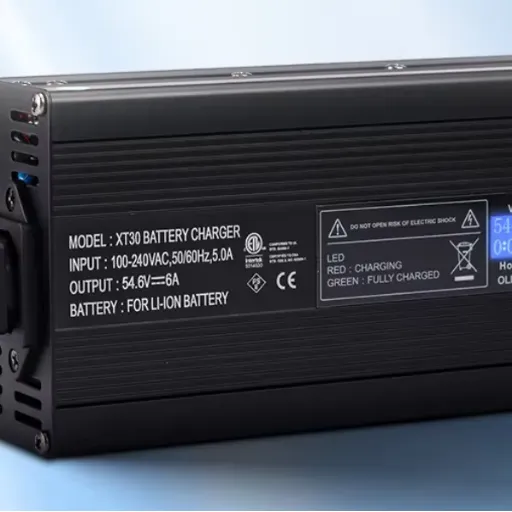
Every battery energy storage system needs a way to recharge. The charger is the interface between the energy source (grid, solar, generator) and the battery pack. Spec it wrong, and the entire system underperforms. Spec it right, and you extend cell life, reduce warranty exposure, and improve total cost of ownership.
Mini-story: In 2023, a renewable energy integrator named David in Melbourne deployed 200 residential BESS units with 48V 100Ah LiFePO4 packs. To meet an aggressive price target, his procurement team selected a generic 48V 10A charger from a trading company on Alibaba. The chargers lacked temperature compensation. When summer temperatures hit 40°C, the chargers continued charging at full voltage, pushing cells beyond their thermal limits. The BMS shut down 47 units within the first summer. David's team spent six months replacing chargers with temperature-compensated models and recalibrating the BMS thresholds. The "savings" from the cheap chargers cost his company $180,000 in field service, replacements, and brand damage.
Why Charger Chemistry Matching Matters
A battery energy storage system is only as good as its weakest component. The charger is often that weak point because buyers treat it as a commodity.
The reality: LiFePO4, NMC, and lead-acid each require a fundamentally different charge profile. Voltage cutoffs differ by chemistry. Termination logic differs. Thermal compensation requirements differ. Using a generic charger rated for "48V lithium" on a LiFePO4 pack is like using a diesel nozzle at a petrol pump. The voltages are close enough to fit, but the chemistry mismatch will cause damage over time.
Temperature Compensation: Non-Negotiable for Outdoor Systems
Battery charge voltage must be adjusted based on cell temperature. At low temperatures, the optimal charge voltage increases slightly. At high temperatures, it decreases. Without temperature compensation:
Cold charging under-charges cells, reducing usable capacity
Hot charging over-charges cells, accelerating degradation and increasing thermal runaway risk
For outdoor or unconditioned installations, specify a charger with an NTC thermistor that monitors pack temperature and adjusts charge voltage in real time. Anenerge LiFePO4 chargers include built-in NTC monitoring with programmable temperature coefficients.
Parallel Charging for Large BESS Arrays
Large battery energy storage systems often use multiple chargers in parallel to achieve the required charge current. Parallel charging requires:
Current sharing between chargers to prevent one unit from carrying the full load
Synchronized CC-CV transitions so all chargers switch modes at the same pack voltage
Fault propagation so a fault on one charger triggers a system-wide shutdown
Not all chargers support parallel operation. Verify with the manufacturer before specifying for multi-charger architectures.
How Anenerge Supports BESS Charger Requirements
Shenzhen Anenerge designs and manufactures chargers for battery energy storage systems across all major chemistries and voltage levels. Our approach for energy storage OEMs:
Chemistry match: We verify your cell specification and propose a CC-CV profile tuned to your exact chemistry — LiFePO4 at 3.65V/cell, NMC at 4.2V/cell, or lead-acid with the correct multi-stage profile.
Voltage configuration: Standard BESS voltages including 48V, 51.2V, and custom high-voltage configurations. Every voltage is verified against your BMS threshold.
Communication integration: CAN-bus, RS-485/Modbus, and UART options for BMS-coordinated charging. Fault signals are mapped to your system controller requirements.
Temperature compensation: Built-in NTC monitoring with adjustable temperature coefficients for outdoor and conditioned installations.
Certification stack: CCC, UL, TUV, UKCA, CB, CE, SAA, and DOE Level VI documentation ready for your compliance submission.
Engineering samples: Custom profiles and connectors available within two weeks of receiving your specification.
We have manufactured chargers for energy storage applications since 2015, from 500-unit residential pilots to 50,000-unit commercial deployments. Every unit ships with 100% automatic functional testing and high-voltage isolation verification.
Ready to specify a charger for your battery energy storage system? Request a free engineering sample or contact our power-electronics team to review your cell spec and pack design.
Global Standards and Regulatory Landscape
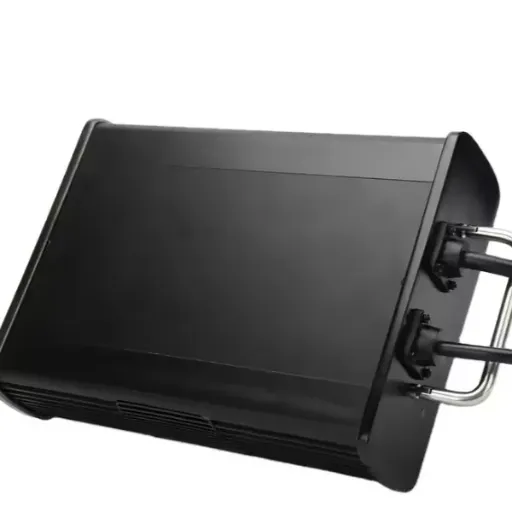
Battery energy storage systems are among the most heavily regulated energy products in the world. OEM buyers must navigate a complex landscape of safety, efficiency, and environmental standards that vary by region and application.
Safety Standards
IEC 62619: Safety requirements for lithium cells and batteries used in industrial applications, including BESS.
IEC 62477: Safety requirements for power electronic converter systems.
UL 1973: Standard for batteries for use in stationary, vehicle auxiliary power, and light electric rail applications.
UL 9540: Standard for energy storage systems and equipment — the primary U.S. safety standard for BESS installations.
UN 38.3: Transportation testing for lithium batteries — required for shipping cells and packs internationally.
Efficiency Standards
DOE Level VI: Mandatory for external power supplies and chargers sold in the U.S. Defines minimum active-mode efficiency and maximum no-load power.
ErP Tier V: European energy-related products directive covering standby and active-mode losses.
ENERGY STAR Level V: Voluntary U.S. program with stricter efficiency requirements than DOE Level VI.
Environmental Compliance
RoHS: Restriction of Hazardous Substances — limits lead, mercury, cadmium, and other substances in electrical equipment.
REACH: EU regulation on chemical substances — affects materials used in enclosures, cables, and labels.
PAHs: Polycyclic Aromatic Hydrocarbons — restricted in Germany and other EU markets for materials in contact with skin.
For OEM buyers, the certification burden falls on every component in the BESS, including the charger. A supplier who claims "CE certified" but cannot produce the actual test report with a traceable number is a liability. Verify documentation before placing production orders.
Conclusion: Specifying a BESS That Lasts
A battery energy storage system is a significant capital investment. The battery pack, inverter, and enclosure get the engineering attention they deserve. Too often, the charger is an afterthought — sourced from a generic catalog, unmatched to the cell chemistry, and unverified for the application's thermal and communication requirements.
That approach costs money. Under-specified chargers reduce usable capacity, shorten cycle life, trigger BMS faults, and create field-service expenses that dwarf any upfront savings.
The OEM buyers who get it right treat the charger as a system component, not a commodity. They verify voltage accuracy, CC-CV profile, temperature compensation, BMS communication, and certification documentation before the first production unit ships.
Key takeaways:
A battery energy storage system is an integrated platform, not a battery pack in a box. Every subsystem must be specified to work together.
LiFePO4 dominates stationary storage for its safety and cycle life, but it requires a dedicated 3.65V/cell charger. Do not substitute generic lithium-ion chargers.
Charge current, termination logic, temperature compensation, and BMS communication are non-negotiable specifications for any BESS charger.
Certification documentation must be current, traceable, and matched to the exact model number you are shipping. Old reports do not transfer to new designs.
Charger efficiency and no-load power directly affect operating cost and sustainability claims. Verify with third-party test reports.
If you are designing or sourcing a battery energy storage system and need a charger that matches your cell chemistry, voltage, and communication requirements, the next step is simple. Send us your battery specification, target charge time, and any special requirements. Our engineering team will return a proposed charge profile and sample timeline within 24 hours.
Recently Posted
-
Why Is My Fast Charger Not Charging Fast? 7 Technical Reasons Explained
June 8, 2026Last March, a product manager at a Rotterdam e-bike brand called us with a problem we see at least twice a quarter. Their new 48V Read More
 -
What Makes a Fast Charger? A Technical Guide for OEM Buyers
June 8, 2026When the Rotterdam-based e-mobility brand VoltRide switched from 2A to 5A chargers on their 48V e-bike fleet in Q3 2024, customer Read More
 -
USB-A vs USB-C Charging: What OEM Buyers Need to Know
June 8, 2026Your customers plug in a USB-A cable they have used for three years, and their new device takes six hours to charge. They switch t Read More
 -
QC3.0 vs QC4.0: What OEM Buyers Need to Know Before Specifying Fast Charging
June 6, 2026When Raj's team at a Bangalore-based smartphone accessories brand specified QC3.0 adapters for their 2024 power bank line, the Read More

Contact Us
Recommended Products
-
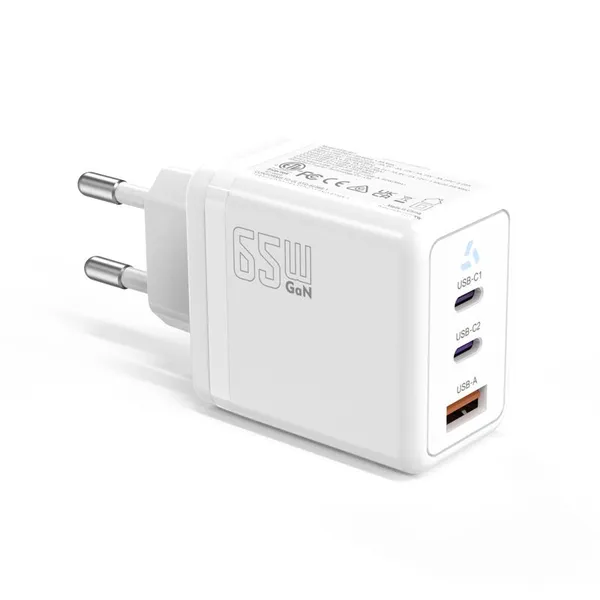
 65W USB-C GaN Wall Charger PD Fast Charging Adapter EU US Plug for Laptop Smartphone and TravelUS$ 6MOQ: 100 Pieces
 -
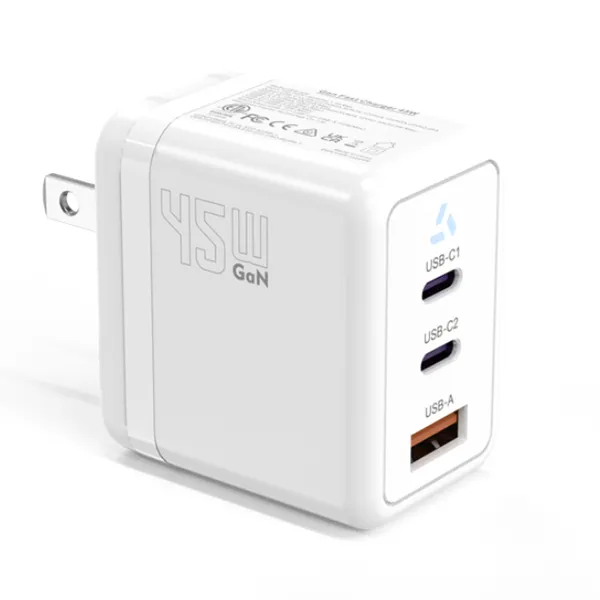
45W GaN USB-C Fast Charger JP Plug PD Wall Charging Adapter for IPhone MacBook and TabletsUS$ 8MOQ: 100 Pieces
-
QC3.0 30W USB Fast Charger With 18W Quick Charge Wall Adapter for Android and Mobile DevicesUS$ 4MOQ: 100 Pieces
-
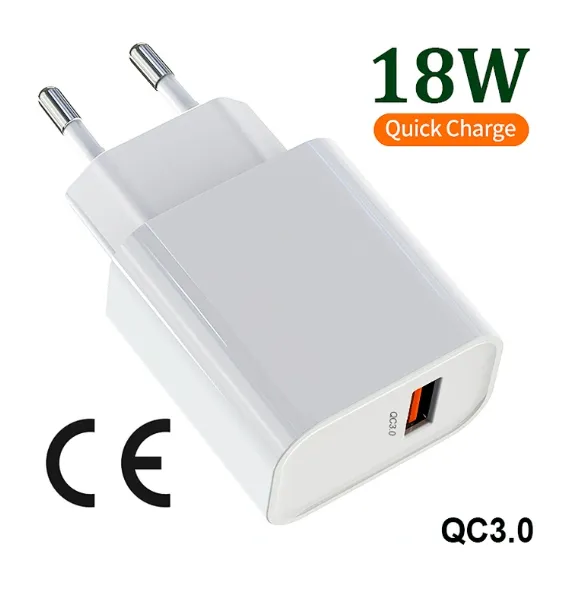
Compact 18W Quick Charge 3.0 USB Charger 30W Fast Charging Adapter EU US Plug for TravelUS$ 2MOQ: 100 Pieces
-
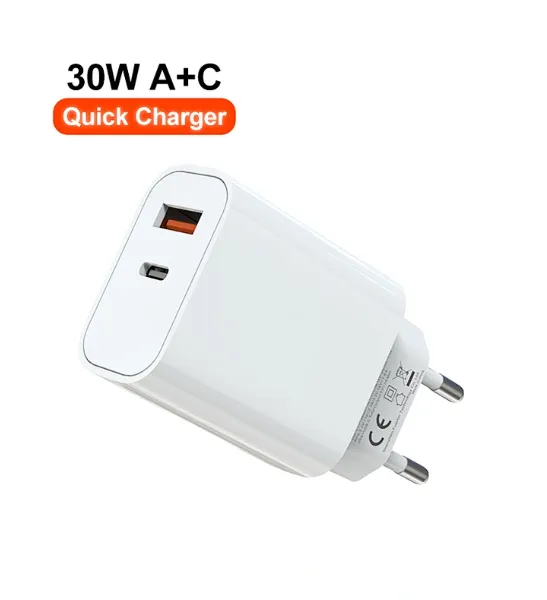
30W USB-C and USB-A PD Fast Charger Compact Wall Adapter for IPhone Samsung and IPadUS$ 3MOQ: 100 Pieces
-
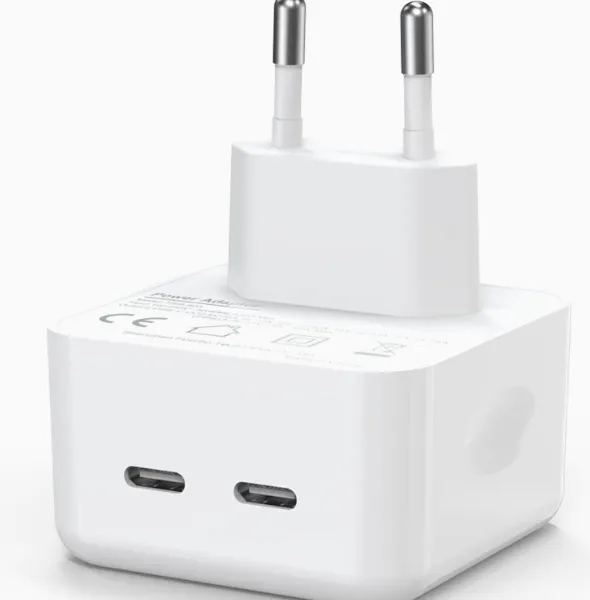
35W Dual USB-C PD Charger Fast Charging Adapter for IPhone Samsung IPad and USB-C DevicesUS$ 3MOQ: 100 Pieces
-
65W USB-C GaN Charger EU Plug Fast Charging Adapter 65W USB-C PD Fast Charge Wall Charger Power Adapter for Macbook ProUS$ 5MOQ: 100 Pieces
-
65W GaN USB-C Fast Charger PD Wall Charging Adapter for Laptop IPhone and Mobile DevicesUS$ 5MOQ: 100 Pieces
-
100W GaN USB-C Fast Charger With PD 3.0 for Laptop, MacBook, IPhone & Multi-Device ChargingUS$ 12MOQ: 100 Pieces
-
45W GaN USB-C Fast Charger EU AU PD Fast Wall Charging Adapter for IPhone Tablets With CE REACH PassedUS$ 8MOQ: 100 Pieces
-
QC3.0 65W GaN USB C Super Fast Charger With UKCA 3 Ports PD 3.0 GaN Charger for Iphone Macbook SamsungUS$ 10MOQ: 100 Pieces
-
30W USB-C and USB-A GaN QC3.0 Fast Charging Adapter PD Fast Charger Compact Wall Adapter for IPhone Samsung and IPadUS$ 3MOQ: 100 Pieces
-
45W GaN USB-C Fast Charger With Dual Type-C and USB-A Ports PD Wall Charging AdapterUS$ 8MOQ: 100 Pieces
-
Dual USB C Ports QC3.0 30W Fast Charger With EU UK AU US USB-C PD Wall Chargeer 30W PD Power AdapterUS$ 3MOQ: 100 Pieces
-
Compact 65W GaN USB-C Wall Charger With Dual USB-C Ports and USB-A Fast Charging Adapter With CE UKCA ETL SAAUS$ 10MOQ: 100 Pieces
-
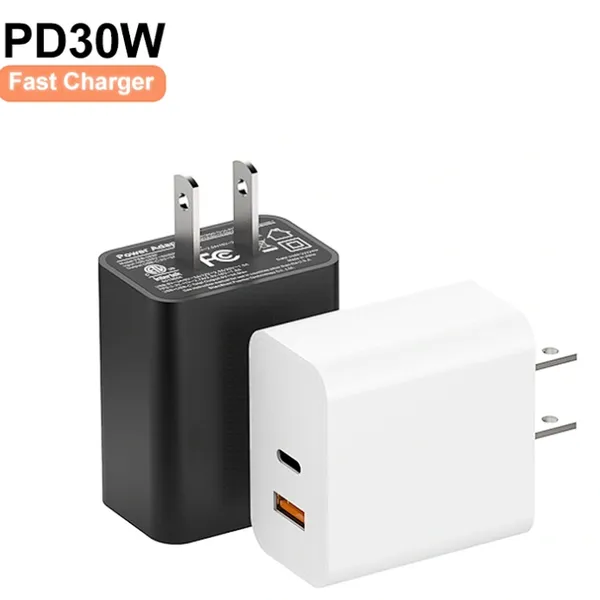
QC3.0 Fast Charging Adapter PD30W USB-C USB-A GaN PD Fast Charger PD 3.0 GaN Charger Compact Wall Adapter for IPhone Samsung and IPadUS$ 3MOQ: 100 Pieces
-
12V 5A 60W US EU AC DC Adapter LED Driver LED SMPS AC to DC Switching Power SupplyUS$ 5 - 7MOQ: 50 Pieces
-
CE FCC CUL SAA KC PSE 24Vdc 48W Switching Power Supply AdaptersUS$ 5 - 7MOQ: 50 Pieces
-
CE GS UKCA SAA CUL Qualified Waterproof Switching Power Supply Ip68 PSE UL SAA GS 12V 2AUS$ 3 - 6MOQ: 50 Pieces
-
12V 1A Factory OEM Waterproof AC Adapter for Laser Light Table Lamp ac dc Adaptor With TUV CE GS for EU MarketUS$ 5 - 7MOQ: 50 Pieces