
 Business License
LiFePO4 vs AGM Battery: An OEM Buyer's Technical Comparison
Elena Vasquez, procurement engineer at an e-mobility brand in Rotterdam, made a $180,000 mistake last year. She specified AGM batteries for a new line of delivery scooters to save $40 per unit on the BOM. Eighteen months later, warranty returns hit 12% of shipped units.
The problem wasn't the battery brand. It was the chemistry. She'd paired a high-cycle application with a battery never designed for it.
If you're specifying batteries for e-mobility, energy storage, marine, or industrial equipment, the LiFePO4 vs AGM battery decision is one of the most consequential choices you'll make. It affects product weight, charge time, cycle life, warranty exposure, and total cost of ownership across the full product lifecycle.
This article compares LiFePO4 (lithium iron phosphate battery chemistry) and AGM (absorbent glass mat) batteries on the specs that matter for OEM buyers and brand owners. It draws on field data, cell manufacturer datasheets, and the charger-design experience we've accumulated across more than two million LiFePO4 chargers shipped since 2018.
Chemistry and Construction: Why the Cells Behave Differently
AGM is a lead-acid battery variant. The chemistry is over 150 years old. Inside an AGM cell, lead plates and sulfuric acid electrolyte are separated by a fiberglass mat that absorbs the acid. There's no free liquid.
This makes AGM safer and more vibration-resistant than flooded lead-acid. But the fundamental chemistry — lead and sulfuric acid — remains unchanged.
LiFePO4 is a lithium-ion chemistry. The cathode material is lithium iron phosphate. The anode is typically graphite, and the electrolyte is a lithium salt in an organic solvent.
LiFePO4 is one of several lithium-ion chemistries. It trades some energy density (versus NMC or NCA lithium-ion) for superior thermal stability, longer cycle life, and safer failure modes.
The structural difference is stark. A 100Ah AGM battery weighs roughly 30 kg. A 100Ah LiFePO4 battery weighs roughly 12 kg. The LiFePO4 pack delivers the same usable capacity at less than half the weight because lithium ions store more energy per kilogram than lead-acid reactions, as documented in NREL battery research.
Voltage behavior differs too. A 12V AGM battery has a nominal voltage of 12V and a full-charge voltage of roughly 14.4V. A 12V LiFePO4 battery has a nominal voltage of 12.8V (4 cells at 3.2V each) and a full-charge voltage of 14.6V.
The voltage curves are different. The charge profiles are different. And critically, the chargers aren't interchangeable.
LiFePO4 vs AGM Battery Cycle Life: The Numbers That Matter
Cycle life is where the LiFePO4 vs AGM battery deep cycle comparison becomes decisive for OEM buyers.
A quality AGM deep cycle battery delivers 300–500 cycles at 50% depth of discharge (DoD), per Battery University research on lead-acid cycling. If you discharge it to 80% DoD, cycle life drops to 200–300 cycles. Discharge it to 100% DoD regularly and you may see fewer than 150 cycles.
This isn't a defect. It's the physics of lead-acid chemistry.
A quality LiFePO4 battery delivers 2,000–5,000 cycles at 80% DoD. Some cell manufacturers rate their prismatic cells at 3,000–6,000 cycles with 80% capacity retention. At 50% DoD, LiFePO4 cycle life extends even further.
What this means in practice:
| Metric | AGM Deep Cycle | LiFePO4 (LFP) |
|---|---|---|
| Cycle life at 50% DoD | 500–800 cycles | 4,000–6,000 cycles |
| Cycle life at 80% DoD | 300–500 cycles | 2,000–4,000 cycles |
| Usable capacity at 80% DoD | Not recommended | Standard operating range |
| Calendar life | 3–5 years | 8–15 years |
| Capacity fade rate | Faster | Slower |
For a daily-cycled application — an e-bike, a solar storage system, an electric forklift — the math is simple. An AGM battery needs replacement every 1–2 years. A LiFePO4 battery lasts 5–10 years.
The upfront cost difference disappears when you multiply it across the product lifecycle.
Weight, Volume, and Energy Density
Energy density matters for anything that moves or has limited installation space.
AGM batteries offer roughly 30–50 Wh/kg at the pack level. LiFePO4 batteries offer roughly 90–120 Wh/kg. That means a LiFePO4 pack stores roughly twice the energy per kilogram of an equivalent AGM pack.
For e-bike and scooter applications, weight isn't just a comfort issue. It's a range issue. Every kilogram of battery weight is a kilogram the motor must accelerate and carry.
A scooter with a 30 kg AGM battery carries 18 kg more dead weight than the same scooter with a 12 kg LiFePO4 pack. That translates directly to shorter range, slower acceleration, and higher energy consumption per kilometer.
Volume density follows the same pattern. LiFePO4 packs are roughly 60–70% smaller than AGM packs for the same usable capacity. For rack-mounted energy storage or compact equipment enclosures, that space savings can eliminate the need for a larger cabinet or secondary housing.
LiFePO4 vs AGM Charge Profiles and Charger Requirements
Here is where the LiFePO4 vs AGM battery comparison directly affects your charger sourcing decision.
AGM batteries charge in three stages: bulk (constant current), absorption (constant voltage at ~14.4V), and float (maintenance voltage at ~13.6V). A standard lead-acid charger works fine. The profile is forgiving. Voltage tolerance is wide.
Learn more about charge profile fundamentals in our guide to CC-CV charging explained.
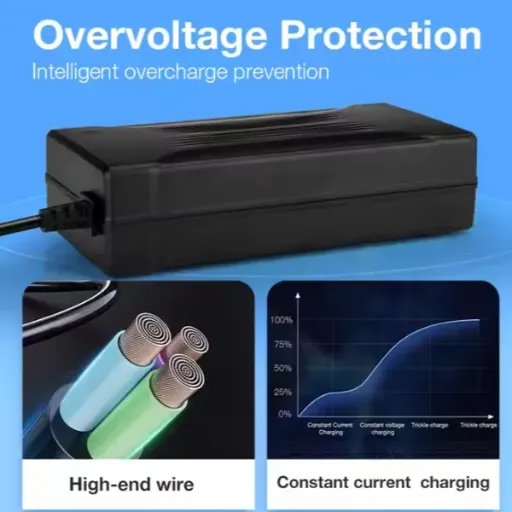
LiFePO4 batteries require a different profile. They charge with a CC-CV curve tuned to 3.65V per cell. For a 4S 12V LiFePO4 pack, that means 14.6V at full charge. The charger must hold voltage precisely. A 1% error on a 4S pack is 0.15V. That sounds small, but it shifts the state of charge by 5–10% and can shorten cycle life by 30–50% over time.
The termination current matters too. LiFePO4 chargers should terminate at roughly 0.05C. A 20Ah pack needs termination at 1A. Hold the pack at full voltage indefinitely and you add stress. Terminate too early and the pack is not fully charged.
Pro tip: Always verify the charge profile before placing a production order. A reputable charger supplier will share the CC-CV curve before you commit.
Marcus Chen, fleet manager for a last-mile delivery company in Los Angeles, learned this the hard way. His team bought 200 "universal" chargers from a generic supplier for their new LiFePO4 scooter fleet.
The chargers were labeled "12V lithium compatible" but used a 14.4V absorption voltage — correct for AGM, 0.2V low for LiFePO4. After six months, the fleet's average state of charge had drifted down by 12%. Range complaints spiked.
Marcus replaced the chargers with chemistry-matched LiFePO4 battery chargers tuned to 14.6V with proper CC-CV termination. The range stabilized. The warranty exposure disappeared.
Want to see how a chemistry-matched charger protects your packs? Explore our LiFePO4 charger range with documented CC-CV curves for every voltage class.
Total Cost of Ownership: The Spreadsheet OEMs Should Run
Upfront cost is where AGM still wins. A 100Ah AGM battery costs roughly 150–150–250. A 100Ah LiFePO4 battery costs roughly 400–400–700. The LiFePO4 pack is 2–3x more expensive at the BOM level.
But total cost of ownership tells a different story. Here is the calculation for a daily-cycled energy storage system over 10 years:
AGM path:
Initial battery: $200
Replacement every 18 months: $200 × 6 replacements = $1,200
Higher shipping cost (heavier): ~$150 premium over 10 years
Higher energy cost (lower charge efficiency, ~85% vs ~95%): ~$100 over 10 years
10-year TCO: ~$1,650
LiFePO4 path:
Initial battery: $550
No replacements needed in 10 years
Lower shipping cost (lighter): baseline
Lower energy cost (higher charge efficiency, ~95%): baseline
10-year TCO: ~550–550–650
The LiFePO4 battery pays back the upfront premium within the first replacement cycle. Over 10 years, it costs roughly one-third of the AGM equivalent.
For OEM buyers, there's another cost layer: warranty. If your product includes the battery and you warranty it for 2–3 years, an AGM pack is a ticking clock. You'll eat the replacement cost when it fails inside the warranty window. LiFePO4's longer cycle life gives you comfortable margin.
Ready to evaluate LiFePO4 for your product? Request a free sample with full test reports and a documented charge profile.
Safety, Temperature, and Field Performance
LiFePO4 is the safest lithium-ion chemistry. The iron-phosphate cathode is thermally stable. It doesn't release oxygen during thermal runaway the way NMC or LCO chemistries do. In abuse testing (nail penetration, overcharge, crush), LiFePO4 cells typically vent smoke rather than ignite.
AGM batteries are also safe under normal conditions. They're sealed and don't spill acid. But they contain lead — a toxic heavy metal — and sulfuric acid. Disposal is regulated. Recycling infrastructure exists but adds end-of-life cost.
Temperature performance differs:
AGM: Performs well in cold temperatures (down to -20°C). Capacity drops in heat but cells tolerate it. Charge acceptance drops below 0°C.
LiFePO4: Performs well in moderate temperatures (0°C to 45°C). Capacity drops in cold. Charging below 0°C can cause lithium plating and permanent damage. A BMS with low-temperature cutoff is essential for outdoor applications.
For outdoor applications in cold climates — think northern European e-mobility or Canadian solar installations — this is a genuine trade-off. LiFePO4 may need heating elements or insulated enclosures. AGM handles cold better but dies faster from cycling.
When to Choose LiFePO4 vs AGM Battery
There's no universal winner. The right chemistry depends on the application, duty cycle, budget horizon, and environmental conditions.
Choose LiFePO4 when:
The application cycles daily or multiple times per week
Weight and volume are constrained (e-mobility, portable equipment)
Total cost of ownership matters more than upfront BOM cost
You need 5+ years of service life
You can source a chemistry-matched charger with the correct CC-CV profile
Choose AGM when:
The application is standby or backup power (UPS, emergency lighting)
The battery cycles infrequently (seasonal equipment, occasional use)
Upfront cost is the overriding constraint
The product operates in extreme cold without heating support
The product will be retired or replaced within 2–3 years
The engineering team at a solar installer in Munich faced this exact decision in early 2024. Their CFO pushed for AGM in a new residential storage product to hit a $1,200 retail price point.
The engineering team ran a 10-year TCO model. It showed that the AGM option would cost the end customer $2,800 in replacements and inefficiency. The LiFePO4 option cost $1,800 upfront and $0 in replacements. The CFO approved LiFePO4.
The product launched in September 2024. It now has the lowest warranty claim rate in the company's history.
If you're weighing this decision for your own product, our recommendation is simple: run the 10-year TCO model before you decide. The spreadsheet usually decides for you.
Charging Infrastructure: What OEM Buyers Overlook
One factor many OEM buyers miss in the LiFePO4 vs AGM battery comparison is the charging ecosystem. AGM batteries charge from almost any 12V lead-acid charger. The profile is standardized, and the equipment is cheap and widely available.
LiFePO4 requires more care. The charger must:
Output the correct voltage for the series count (14.6V for 4S, 29.2V for 8S, 54.6V for 15S, etc.)
Use a CC-CV profile with accurate voltage regulation (±0.5% or better)
Terminate at the correct current threshold (typically 0.05C)
Include safety protections: OVP, OCP, SCP, OTP, reverse polarity
Match the application's connector, cable length, and ingress protection requirements
If you're building an e-bike, scooter, energy storage system, or marine product, the charger is not an afterthought. It's part of the battery system. A mismatched charger will shorten cell life, trigger warranty returns, and damage your brand.
For custom voltage, connector, or enclosure requirements, explore our OEM and ODM services. Learn more about specifying the right charger in our LiFePO4 charger buying guide. It covers the seven specifications every OEM buyer should verify before placing a production order.
Conclusion
The LiFePO4 vs AGM battery decision comes down to one question: are you optimizing for upfront cost or total cost of ownership?
AGM wins on sticker price. It's cheaper today, easier to source today, and works with generic chargers. But for any application that cycles daily, AGM is a false economy. The replacement costs, shipping weight, energy inefficiency, and warranty exposure multiply across the product lifecycle.
LiFePO4 wins on cycle life, weight, energy density, and long-term value. It demands a higher initial investment and a chemistry-matched charger. But the payback is real. For daily-cycled e-mobility, solar storage, marine, and industrial applications, LiFePO4 typically delivers 3–5x lower total cost of ownership over a 10-year horizon.
Here are the key takeaways for OEM buyers:
LiFePO4 delivers 2,000–5,000 cycles versus 300–500 for AGM at comparable DoD
LiFePO4 weighs roughly 50–60% less than AGM for the same usable capacity
Total cost of ownership favors LiFePO4 in any application cycling more than twice weekly
Charger selection is critical: LiFePO4 requires a CC-CV profile tuned to 3.65V/cell
Warranty exposure drops dramatically when you match the battery chemistry to the duty cycle
If you're sourcing batteries and chargers for e-mobility, energy storage, or industrial equipment, the next step is to validate the charge profile against your cell specification. Send us your battery chemistry, pack voltage, and target charge time. Our engineering team will return a proposed CC-CV profile and a sample timeline within 24 hours.
Recently Posted
-
GaN Charger vs Normal Charger: An OEM Buyer's Comparison
June 12, 2026Last spring, a product manager at a Berlin laptop accessory brand opened two 65W samples on his desk. One was a normal silicon cha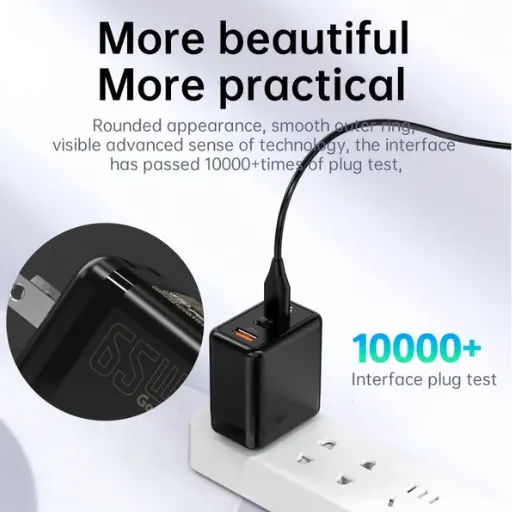 Read More
 -
What Is a GaN Charger? A Buyer’s Guide to Gallium Nitride Power Adapters
June 12, 2026In 2024, Maria Chen’s team at a Shenzhen router OEM received a blunt message from their largest U.S. distributor: shrink the power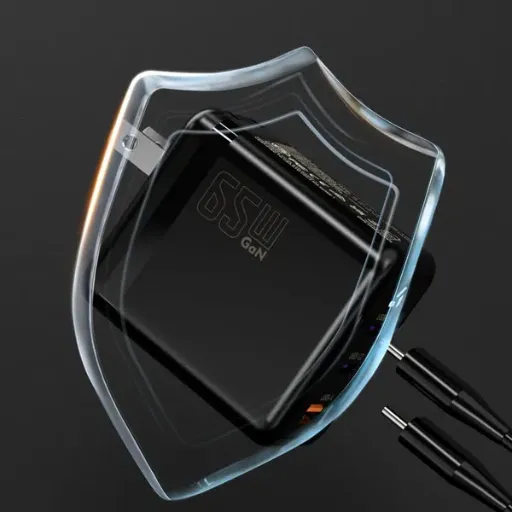 Read More
 -
What Is GaN Technology? A Manufacturer's Guide for Power Adapter Buyers
June 12, 2026Lisa, a product manager at a Rotterdam-based IoT brand, stared at the mechanical drawing for her new gateway. The enclosure was 30 Read More
 -
What Is Power Delivery? Understanding Energy Transfer in Modern Electronics
June 12, 2026When Ravi Patel, a hardware engineer at a consumer electronics firm in Mumbai, received the first production samples of his team&# Read More

Contact Us
Recommended Products
-
 65W USB-C GaN Wall Charger PD Fast Charging Adapter EU US Plug for Laptop Smartphone and TravelUS$ 6MOQ: 100 Pieces
 -
45W GaN USB-C Fast Charger JP Plug PD Wall Charging Adapter for IPhone MacBook and TabletsUS$ 8MOQ: 100 Pieces
-
QC3.0 30W USB Fast Charger With 18W Quick Charge Wall Adapter for Android and Mobile DevicesUS$ 4MOQ: 100 Pieces
-
Compact 18W Quick Charge 3.0 USB Charger 30W Fast Charging Adapter EU US Plug for TravelUS$ 2MOQ: 100 Pieces
-
30W USB-C and USB-A PD Fast Charger Compact Wall Adapter for IPhone Samsung and IPadUS$ 3MOQ: 100 Pieces
-
35W Dual USB-C PD Charger Fast Charging Adapter for IPhone Samsung IPad and USB-C DevicesUS$ 3MOQ: 100 Pieces
-
65W USB-C GaN Charger EU Plug Fast Charging Adapter 65W USB-C PD Fast Charge Wall Charger Power Adapter for Macbook ProUS$ 5MOQ: 100 Pieces
-
65W GaN USB-C Fast Charger PD Wall Charging Adapter for Laptop IPhone and Mobile DevicesUS$ 5MOQ: 100 Pieces
-
100W GaN USB-C Fast Charger With PD 3.0 for Laptop, MacBook, IPhone & Multi-Device ChargingUS$ 12MOQ: 100 Pieces
-
45W GaN USB-C Fast Charger EU AU PD Fast Wall Charging Adapter for IPhone Tablets With CE REACH PassedUS$ 8MOQ: 100 Pieces
-
QC3.0 65W GaN USB C Super Fast Charger With UKCA 3 Ports PD 3.0 GaN Charger for Iphone Macbook SamsungUS$ 10MOQ: 100 Pieces
-
30W USB-C and USB-A GaN QC3.0 Fast Charging Adapter PD Fast Charger Compact Wall Adapter for IPhone Samsung and IPadUS$ 3MOQ: 100 Pieces
-
45W GaN USB-C Fast Charger With Dual Type-C and USB-A Ports PD Wall Charging AdapterUS$ 8MOQ: 100 Pieces
-
Dual USB C Ports QC3.0 30W Fast Charger With EU UK AU US USB-C PD Wall Chargeer 30W PD Power AdapterUS$ 3MOQ: 100 Pieces
-
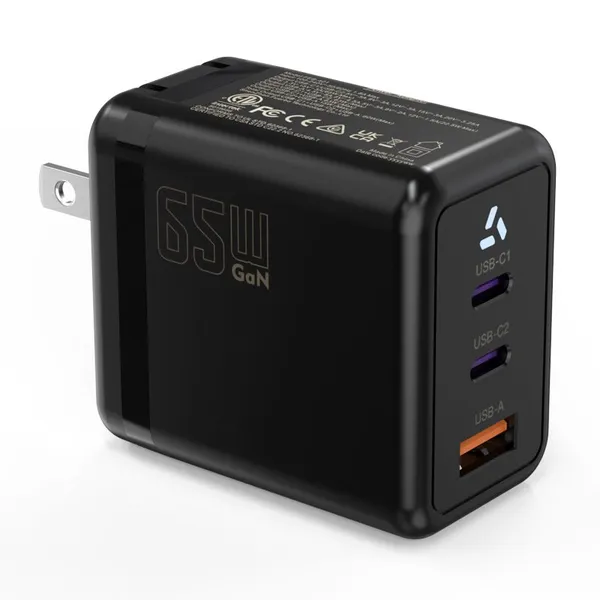
Compact 65W GaN USB-C Wall Charger With Dual USB-C Ports and USB-A Fast Charging Adapter With CE UKCA ETL SAAUS$ 10MOQ: 100 Pieces
-
QC3.0 Fast Charging Adapter PD30W USB-C USB-A GaN PD Fast Charger PD 3.0 GaN Charger Compact Wall Adapter for IPhone Samsung and IPadUS$ 3MOQ: 100 Pieces
-
12V 5A 60W US EU AC DC Adapter LED Driver LED SMPS AC to DC Switching Power SupplyUS$ 5 - 7MOQ: 50 Pieces
-
CE FCC CUL SAA KC PSE 24Vdc 48W Switching Power Supply AdaptersUS$ 5 - 7MOQ: 50 Pieces
-
CE GS UKCA SAA CUL Qualified Waterproof Switching Power Supply Ip68 PSE UL SAA GS 12V 2AUS$ 3 - 6MOQ: 50 Pieces
-
12V 1A Factory OEM Waterproof AC Adapter for Laser Light Table Lamp ac dc Adaptor With TUV CE GS for EU MarketUS$ 5 - 7MOQ: 50 Pieces