
 Business License
Lithium Battery vs Alkaline Battery: What Product Engineers Need to Know
Alkaline is not always cheaper. And lithium is not always better. The right choice depends on four specifications most product teams skip during the design phase, and those skipped specs become warranty returns, field failures, and angry customer reviews six months after launch.
If you are specifying a battery chemistry for a new product, you have probably already compared datasheets. Voltage, capacity, price per cell. But datasheet numbers and field performance diverge sharply depending on temperature, discharge rate, shelf life, and shipping regulations. This guide breaks down the engineering differences between lithium primary and alkaline cells, with the real-world numbers that matter for product design, procurement, and certification.
You will learn how voltage stability, energy density, temperature tolerance, and total cost of ownership compare across chemistries. You will also see how your battery choice ripples through charger design, shipping classification, and end-user satisfaction.
Want to validate your power design early? Send us your battery spec and voltage requirements. Our engineering team returns a proposed charger or adapter profile within 24 hours. Request a free sample.
How lithium and alkaline chemistries differ at the cell level
Alkaline cells are zinc-manganese dioxide systems. The chemistry is mature, well-understood, and manufactured at enormous scale. A standard AA alkaline cell delivers a nominal 1.5V through an electrochemical reaction between zinc powder and manganese dioxide. The theoretical energy density is around 250 Wh/kg, but practical delivered energy in real devices is typically 100 to 150 Wh/kg because alkaline efficiency drops at higher discharge rates.
Lithium primary cells, specifically lithium-iron disulfide (Li-FeS2), the most common lithium primary chemistry in AA and AAA formats, use a lithium metal anode and an iron disulfide cathode. Nominal voltage is 1.5V, matching alkaline for drop-in compatibility. But the energy density is roughly 297 Wh/kg theoretical, with practical delivered energy of 200 to 250 Wh/kg. That is roughly double the usable energy per gram.
The difference is not just total energy. It is how that energy is delivered.
Alkaline cells exhibit a sloping discharge curve. A fresh alkaline AA starts at about 1.55V, drops to 1.5V within the first few hours of use, and continues declining to roughly 1.0V before the cell is considered depleted. Devices with tight voltage tolerances may shut down early, long before the cell has delivered its full capacity.
Lithium primary cells hold voltage flat. A typical lithium primary AA maintains 1.5V plus or minus 0.1V for roughly 90% of its discharge life. That flat curve means devices operate at design voltage until the cell is nearly exhausted. For products with DC-DC converters or sensitive microcontrollers, that voltage stability translates directly to predictable runtime and fewer brownout resets.
Lithium battery vs alkaline battery: voltage and energy density comparison
Datasheet capacity ratings are measured under controlled conditions: 20 degrees C, low discharge rate (typically C/100 or lower), down to a 0.8V cutoff. Your product probably operates under none of those conditions.
At a moderate 500mA discharge rate, typical for a WiFi-enabled sensor or a GPS tracker, an alkaline AA delivers roughly 1,000 to 1,200 mAh. The same cell rated at 2,700 mAh under light load only achieves 40 to 45% of its rated capacity under realistic load. Internal resistance in alkaline chemistry rises as the cell discharges, causing voltage sag under load that forces premature shutdown.
A lithium primary AA at 500mA delivers roughly 2,500 to 2,800 mAh. That is not just more total capacity. It is more usable capacity because the voltage stays above the device's minimum input threshold for the entire discharge cycle.
The energy density advantage compounds in size-constrained designs. A product that needs 3,000 mAh of usable energy might require four alkaline AA cells in a 2S2P configuration. The same product could achieve the same runtime with two lithium AA cells in parallel. Fewer cells mean smaller enclosure, lighter weight, and simpler battery management.
For e-mobility applications, this matters even at the system level. An e-bike GPS tracker with a lithium-ion battery charger matched to its primary cell backup will see more consistent performance across temperature swings than one relying on alkaline backup cells that sag in winter.
Why the discharge curve shapes product design
The shape of the discharge curve determines how your product behaves over its runtime. Alkaline cells give users a gradual degradation: dimmer lights, slower motors, weaker signals. Some product managers see this as a benefit because it signals "time to replace" to the user.
Lithium primary cells give users full performance until they stop. That is better for mission-critical devices where degraded performance is worse than no performance. It is worse for user experience if the device gives no low-battery warning before shutdown.
The design implication is clear. If you specify lithium primary, build in an accurate battery gauge or low-voltage warning. Do not rely on the user noticing degraded performance. The cell will deliver 1.5V until it does not.
Temperature performance and field reliability
Temperature is where the two chemistries diverge most dramatically.
Alkaline cells are rated for 0 degrees C to +50 degrees C. Below freezing, electrolyte conductivity drops sharply. At -10 degrees C, capacity falls to roughly 50% of the 20 degrees C rating. At -20 degrees C, an alkaline cell is essentially a paperweight.
For any product deployed outdoors in northern Europe, North America, or at altitude, alkaline is a seasonal battery, not a year-round power source.
Lithium primary cells operate from -40 degrees C to +60 degrees C. At -20 degrees C, a lithium AA still delivers 80 to 90% of its rated capacity. At -40 degrees C, it retains roughly 60% capacity. That is why aviation, military, and outdoor industrial applications specify lithium almost exclusively.
The high-temperature boundary matters too. Alkaline cells vent and leak more readily above +50 degrees C. The potassium hydroxide electrolyte is corrosive and can damage PCB traces, connectors, and enclosures. Lithium primary cells are sealed more robustly and tolerate short-term exposure to +60 degrees C without degradation.
If your product ships to multiple climates, say, e-bike trackers in both Stockholm and Dubai, lithium primary is the safer specification. The alternative is regional SKU splits, which add inventory complexity and BOM line items that procurement does not need.
The outdoor gateway that quit in October
Marcus, a product manager at a Rotterdam-based IoT company, specified alkaline AAs for a LoRaWAN gateway deployed across Dutch parking garages. The gateways drew 200mA during transmission bursts. In September, everything worked.
By November, when outdoor temperatures dropped to 5 degrees C, alkaline capacity fell by 30%. By January, at -5 degrees C, the alkaline cells delivered less than 20% of their rated capacity. Two hundred gateways went dark. The root cause was not a firmware bug. It was chemistry.
Marcus switched the next revision to lithium primary cells. The lithium cells maintained 80%+ capacity at -20 degrees C. Field failures dropped to zero the following winter. The per-cell cost increased by 300%, but the total cost of ownership fell because his team stopped dispatching technicians to swap dead batteries every six weeks.
Cost analysis: per-cell price vs total cost of ownership
At the component level, alkaline wins decisively. A quality alkaline AA costs 0.30to0.30to0.50 in volume. A lithium primary AA costs 1.50to1.50to2.50. That 3x to 5x multiplier scares procurement teams, and for good reason. But unit cost is not the full picture.
Consider the total cost over a product's service life:
| Cost factor | Alkaline (4-cell, 2-year life) | Lithium primary (2-cell, 2-year life) |
|---|---|---|
| Cell cost | 1.20to1.20to2.00 | 3.00to3.00to5.00 |
| Replacement cycles (outdoor use) | 4 to 6 swaps | 0 to 1 swap |
| Labor per swap (estimated) | 15to15to25 | 0to0to25 |
| Shipping to field | 5to5to10 per visit | 0to0to10 |
| Warranty claim risk | Moderate to high | Low |
| 2-year TCO | 80to80to160 | 3to3to30 |
The math inverts quickly for deployed products. For a consumer device where the user buys and installs their own replacement cells, alkaline makes sense. For any product where you bear the cost of field service, IoT sensors, industrial monitors, security devices, e-mobility trackers, lithium primary typically pays back within the first replacement cycle.
There is also the inventory angle. Alkaline cells self-discharge at 2 to 3% per year. Lithium primary cells self-discharge at less than 1% per year. A lithium cell sitting in a spare-parts kit for three years still has 97%+ of its original capacity. An alkaline cell under the same conditions has lost 6 to 9%. For distributors and OEMs managing long-tail spare-parts inventory, that shelf-life difference matters.
Safety, shipping, and regulatory implications
Here is where lithium complicates the picture.
Alkaline cells are unregulated for air freight in most configurations. They ship as general cargo. There are no special labeling requirements, no dangerous goods paperwork, and no quantity limits per package. For a brand owner shipping thousands of units to distribution centers worldwide, that simplicity is valuable.
Lithium primary cells are classified as Class 9 miscellaneous dangerous goods under UN 3090 for lithium metal batteries. Shipping regulations vary by mode and quantity.
For air freight under IATA rules, strict quantity limits apply per package. Cells must be packed to prevent short-circuit and damage. Packages require lithium battery handling labels and a Shipper's Declaration for Dangerous Goods.
Ocean freight under IMDG is less restrictive than air, but still requires proper classification, packaging, and documentation. Ground freight regulations vary by country. Within the EU and U.S., smaller quantities in equipment are often exempt from full dangerous goods requirements.
For products where the battery is installed inside the device and not user-replaceable, regulations relax somewhat. A GPS tracker with an internal lithium primary cell ships under Section II of PI 970 under IATA, which reduces documentation burden but still requires labeling and training.
The regulatory overhead adds cost. It also adds lead time. Dangerous goods bookings are harder to secure, especially on passenger aircraft. If your product roadmap requires rapid global distribution, factor in an extra 2 to 3 days for lithium battery paperwork and carrier approval.
From a product safety standpoint, lithium primary cells are generally stable. The risk is thermal runaway if cells are short-circuited, crushed, or exposed to temperatures above +100 degrees C. Good product design, physical cell isolation, polarity protection, and temperature-rated enclosures, mitigates this risk effectively. Alkaline cells can vent and leak caustic electrolyte, which presents its own set of field-failure modes.
When to choose lithium vs alkaline for your product
Use this framework at your next design review.
Specify lithium primary when:
Operating temperature drops below 0 degrees C or exceeds +50 degrees C
The product is deployed in the field and replacement is expensive
Voltage stability is critical for analog sensors or precision timing
Weight and volume constraints favor higher energy density
Shelf life of 10+ years is required (smoke detectors, emergency beacons)
Discharge current exceeds 250mA regularly
Specify alkaline when:
The product is a consumer device with user-replaceable cells
Operating temperature is controlled indoor environments (+10 degrees C to +40 degrees C)
Discharge current is light (less than 100mA average)
Upfront BOM cost is the dominant decision factor
Shipping dangerous goods is impractical for your distribution model
The product has a short lifecycle (less than 2 years) and replacement is not your cost
The e-bike brand that saved $40,000 per year
In 2024, an e-bike brand owner in Los Angeles named Elena noticed her fleet management trackers were failing every four months. The trackers used alkaline AAA cells in a 3S configuration to feed a 4.5V regulator. The problem: California desert heat in summer pushed enclosure temperatures to +55 degrees C, causing alkaline cells to vent and corrode the battery contacts. Her warranty team was replacing 150 trackers per month.
Elena switched to a 2S lithium primary configuration for the next hardware revision. The lithium cells handled the temperature range without issue. Tracker reliability jumped from 70% to 98% over 12 months. The per-unit battery cost rose by $4.50, but she eliminated $40,000 in annual field-service costs and reclaimed two warranty staff for other projects.
Power supply and charger implications for your battery choice
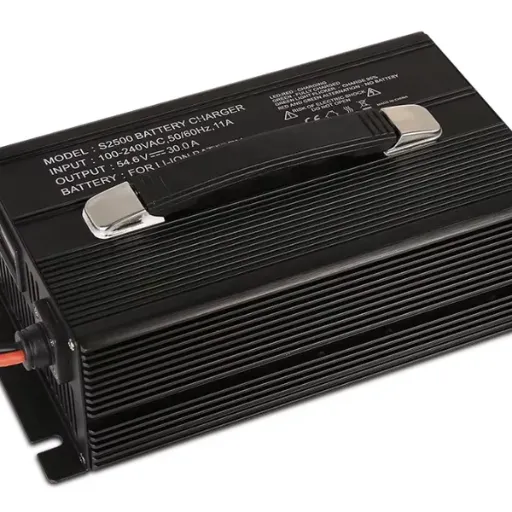
Your primary battery chemistry does not exist in isolation. It sits within a power architecture that may include AC/DC adapters, charging circuits, DC-DC converters, and battery management systems.
If your product uses rechargeable lithium-ion or LiFePO4 cells as the main energy source, with primary cells as backup, your charger specification must match the rechargeable chemistry precisely. A LiFePO4 battery charger uses a 3.65V/cell cutoff and a CC-CV profile tuned for iron-phosphate chemistry.
A lithium-ion charger targets 4.2V/cell. The chargers are not interchangeable. Specifying the wrong charger voids cell warranties and creates safety risks.
For products powered from wall power with battery backup, security cameras, routers, IoT gateways, the AC/DC power adapter must maintain regulation during both mains-present and battery-backup modes. A switching power adapter with tight output regulation and low ripple prevents the primary cells from fighting the adapter during transitions.
When lithium primary cells are used alongside rechargeable packs, isolation becomes critical. The primary cells must not back-feed into the charging circuit during mains failure. A well-designed power path management IC or a pair of Schottky diodes prevents this, but the adapter or charger must still regulate properly when the load switches between sources.
For outdoor products, the power supply itself must match the environmental envelope. An IP67-rated outdoor adapter paired with lithium primary cells makes sense for a security camera in Helsinki. An indoor-rated adapter paired with alkaline cells is fine for a desk router in Singapore.
If you are designing an OEM product and need a power supply or charger matched to your battery chemistry and voltage requirements, the specification process is straightforward. Our OEM/ODM engineering team reviews your cell datasheet, target charge profile, and enclosure constraints. We return a proposed design with voltage, current, and protection parameters documented, typically within two weeks for a custom sample.
Ready to lock in your power spec? Get an OEM quote with your battery chemistry, voltage, and current requirements. We work with 500-unit pilots and scale alongside your growth.
Conclusion
The lithium battery vs alkaline battery decision is not a consumer preference question. It is an engineering specification with direct implications for reliability, warranty cost, shipping complexity, and end-user satisfaction.
Here are the five points to take to your next design review:
Voltage stability: Lithium primary holds 1.5V flat; alkaline sags under load and temperature
Energy density: Lithium delivers roughly double the usable capacity per gram
Temperature range: Lithium operates from -40 degrees C to +60 degrees C; alkaline struggles below 0 degrees C
Total cost: Alkaline wins on unit price; lithium often wins on total cost of ownership for deployed products
Shipping: Alkaline ships as general cargo; lithium requires dangerous goods handling
Choose alkaline for low-cost, indoor, user-replaceable applications with light discharge. Choose lithium primary for outdoor, field-deployed, temperature-extreme, or high-drain products where replacement is your cost to bear.
If you are specifying power supplies or chargers alongside your battery decision, the next step is to lock in your voltage and current requirements. Send us your cell specification, charge profile target, and any enclosure or connector constraints. Our engineering team will return a proposal with sample lead times and certification status for your target markets.
Recently Posted
-
GaN Charger vs Normal Charger: An OEM Buyer's Comparison
June 12, 2026Last spring, a product manager at a Berlin laptop accessory brand opened two 65W samples on his desk. One was a normal silicon cha Read More
 -
What Is a GaN Charger? A Buyer’s Guide to Gallium Nitride Power Adapters
June 12, 2026In 2024, Maria Chen’s team at a Shenzhen router OEM received a blunt message from their largest U.S. distributor: shrink the power Read More
 -
What Is GaN Technology? A Manufacturer's Guide for Power Adapter Buyers
June 12, 2026Lisa, a product manager at a Rotterdam-based IoT brand, stared at the mechanical drawing for her new gateway. The enclosure was 30 Read More
 -
What Is Power Delivery? Understanding Energy Transfer in Modern Electronics
June 12, 2026When Ravi Patel, a hardware engineer at a consumer electronics firm in Mumbai, received the first production samples of his team&# Read More

Contact Us
Recommended Products
-
 65W USB-C GaN Wall Charger PD Fast Charging Adapter EU US Plug for Laptop Smartphone and TravelUS$ 6MOQ: 100 Pieces
 -
45W GaN USB-C Fast Charger JP Plug PD Wall Charging Adapter for IPhone MacBook and TabletsUS$ 8MOQ: 100 Pieces
-
QC3.0 30W USB Fast Charger With 18W Quick Charge Wall Adapter for Android and Mobile DevicesUS$ 4MOQ: 100 Pieces
-
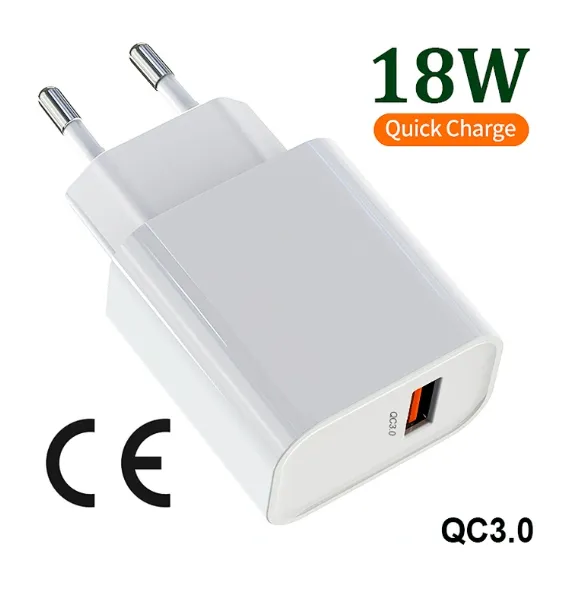
Compact 18W Quick Charge 3.0 USB Charger 30W Fast Charging Adapter EU US Plug for TravelUS$ 2MOQ: 100 Pieces
-
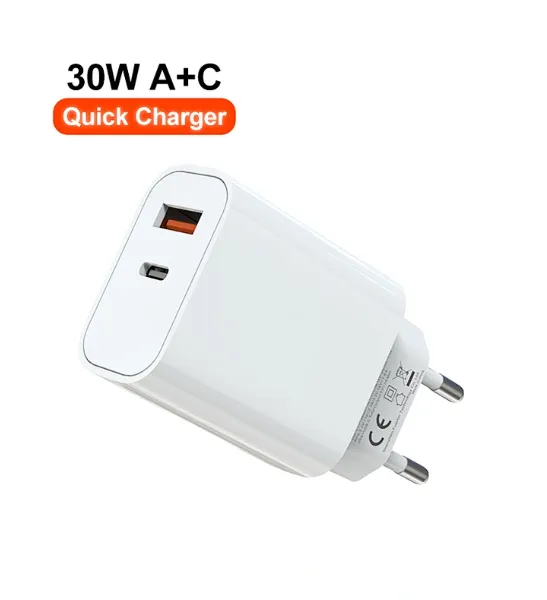
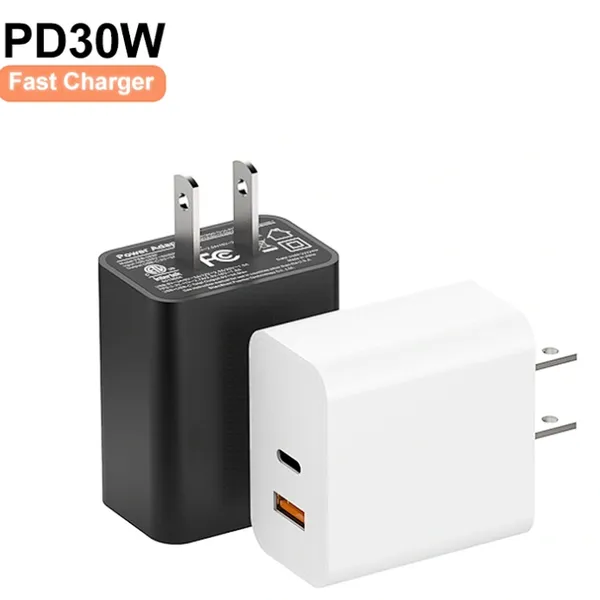
30W USB-C and USB-A PD Fast Charger Compact Wall Adapter for IPhone Samsung and IPadUS$ 3MOQ: 100 Pieces
-
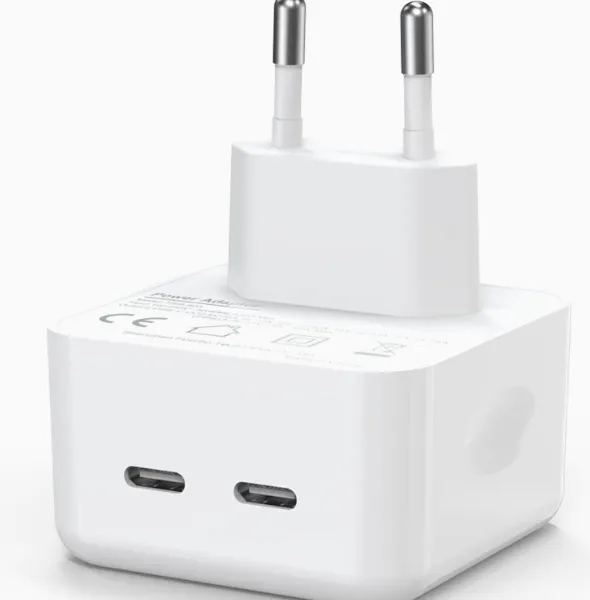
35W Dual USB-C PD Charger Fast Charging Adapter for IPhone Samsung IPad and USB-C DevicesUS$ 3MOQ: 100 Pieces
-
65W USB-C GaN Charger EU Plug Fast Charging Adapter 65W USB-C PD Fast Charge Wall Charger Power Adapter for Macbook ProUS$ 5MOQ: 100 Pieces
-
65W GaN USB-C Fast Charger PD Wall Charging Adapter for Laptop IPhone and Mobile DevicesUS$ 5MOQ: 100 Pieces
-
100W GaN USB-C Fast Charger With PD 3.0 for Laptop, MacBook, IPhone & Multi-Device ChargingUS$ 12MOQ: 100 Pieces
-
45W GaN USB-C Fast Charger EU AU PD Fast Wall Charging Adapter for IPhone Tablets With CE REACH PassedUS$ 8MOQ: 100 Pieces
-
QC3.0 65W GaN USB C Super Fast Charger With UKCA 3 Ports PD 3.0 GaN Charger for Iphone Macbook SamsungUS$ 10MOQ: 100 Pieces
-
30W USB-C and USB-A GaN QC3.0 Fast Charging Adapter PD Fast Charger Compact Wall Adapter for IPhone Samsung and IPadUS$ 3MOQ: 100 Pieces
-
45W GaN USB-C Fast Charger With Dual Type-C and USB-A Ports PD Wall Charging AdapterUS$ 8MOQ: 100 Pieces
-
Dual USB C Ports QC3.0 30W Fast Charger With EU UK AU US USB-C PD Wall Chargeer 30W PD Power AdapterUS$ 3MOQ: 100 Pieces
-
Compact 65W GaN USB-C Wall Charger With Dual USB-C Ports and USB-A Fast Charging Adapter With CE UKCA ETL SAAUS$ 10MOQ: 100 Pieces
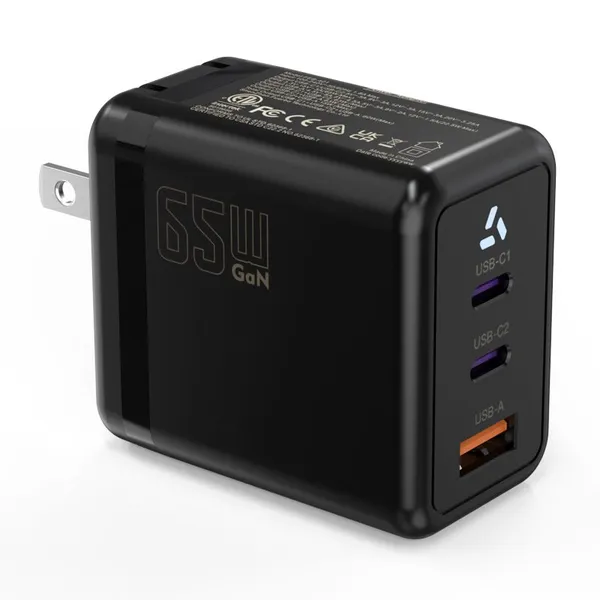
-
QC3.0 Fast Charging Adapter PD30W USB-C USB-A GaN PD Fast Charger PD 3.0 GaN Charger Compact Wall Adapter for IPhone Samsung and IPadUS$ 3MOQ: 100 Pieces
-
12V 5A 60W US EU AC DC Adapter LED Driver LED SMPS AC to DC Switching Power SupplyUS$ 5 - 7MOQ: 50 Pieces
-
CE FCC CUL SAA KC PSE 24Vdc 48W Switching Power Supply AdaptersUS$ 5 - 7MOQ: 50 Pieces
-
CE GS UKCA SAA CUL Qualified Waterproof Switching Power Supply Ip68 PSE UL SAA GS 12V 2AUS$ 3 - 6MOQ: 50 Pieces
-
12V 1A Factory OEM Waterproof AC Adapter for Laser Light Table Lamp ac dc Adaptor With TUV CE GS for EU MarketUS$ 5 - 7MOQ: 50 Pieces