
 Business License
12V LiFePO4 Charger Buying Guide for OEM Brand Owners
Last spring, a marine electronics brand in Florida shipped 2,000 portable power stations with "universal 12V chargers" bundled in the box. By August, their support queue was full of the same complaint: batteries that once ran trolling motors for eight hours now died after five.
The chargers were charging to 14.4V, perfect for lead-acid, but 0.2V short of what their 4S LiFePO4 packs needed. The packs were never reaching full state of charge. The brand recalled the chargers, replaced them with chemistry-matched 14.6V LiFePO4 chargers, and added $47,000 to their warranty budget.
That story is more common than it should be. A 12V LiFePO4 charger isn't a generic 12V charger. The voltage tolerance is tight, the charge profile is chemistry-specific, and the wrong spec quietly eats into cycle life.
This guide walks OEM brand owners and procurement engineers through what to specify when sourcing a 12V LiFePO4 charger for production. It builds on our broader LiFePO4 charger buying guide but focuses specifically on 4S packs and 14.6V systems. We cover output voltage, charge current, CC-CV profiles, safety protections, certifications, and the application-specific details that separate a reliable charger from a warranty liability. We've built more than two million LiFePO4 chargers since 2018, and every unit leaves our floor only after 100% functional and high-voltage isolation testing.
Want to validate a 12V LiFePO4 charger against your pack before you commit? Request a free engineering sample and we will share the charge curve within 24 hours.
Why 12V LiFePO4 Needs a Chemistry-Matched Charger
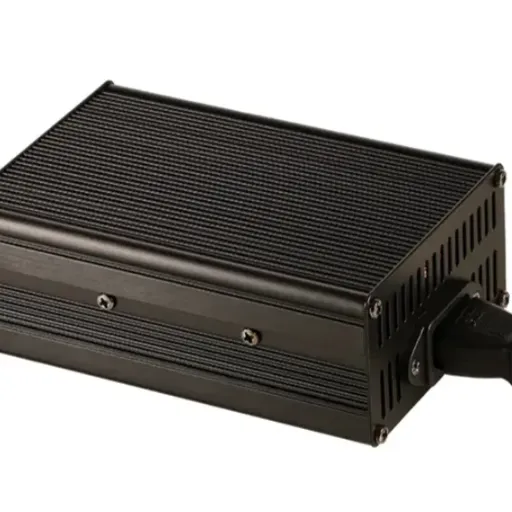
A 4S LiFePO4 pack has a nominal voltage of 12.8V and a full-charge cutoff of 14.6V. A typical 12V lead-acid charger charges to 13.8V–14.4V. A standard 12V lithium-ion charger is tuned for 3S packs and cuts off at 12.6V. Neither is correct for LiFePO4. Our complete LiFePO4 battery charger platform covers 12V through 87.6V outputs, all tuned to the right chemistry cutoff.
Use the wrong charger and one of three things happens:
Undercharging: A lead-acid or 3S Li-ion charger stops below 14.6V. The pack never reaches 100% state of charge. Capacity feels reduced, and the BMS state-of-charge estimate drifts out of sync.
BMS intervention: If the charger pushes too high, the battery management system (BMS) opens the charge path to protect cells. The charger stalls, LED indicators flicker, and the end user thinks the charger is broken.
Cell damage: In the worst case, a mismatched charge profile drives cells outside their safe voltage window. Cycle life drops by 30–50%, and warranty returns follow.
LiFePO4 cells charge with a CC-CV profile: constant current until the pack hits 14.6V, then constant voltage while current tapers to roughly 0.05C. Learn more about how this works in our CC-CV charging explained guide. That's the profile cell manufacturers recommend, and it's the profile that delivers the 2,000–5,000 cycle life LiFePO4 is known for.
The difference between 14.4V and 14.6V sounds small. On a 4S pack, it's the difference between a charger that supports your product and a charger that undermines it.
What Voltage and Current a 12V LiFePO4 Charger Should Deliver
Output Voltage: 14.6V Is the Magic Number
A 12V LiFePO4 charger should output 14.6V ± 0.1V at full charge. This matches four LiFePO4 cells in series (4S), where each cell charges to 3.65V.
| Pack Configuration | Nominal Voltage | Full-Charge Cutoff | Charger Output |
|---|---|---|---|
| 4S LiFePO4 | 12.8V | 14.6V | 14.6V |
| 3S Li-ion | 11.1V | 12.6V | 12.6V |
| 12V Lead-acid (6-cell) | 12.0V | 13.8V–14.4V | 13.8V–14.4V |
If a supplier labels a unit "12V charger" without specifying 14.6V, ask for the exact output. Many so-called universal chargers float at 13.8V, which leaves LiFePO4 packs chronically undercharged.
Charge Current: Size It to the Pack
Charge current is usually expressed as a fraction of pack capacity, or C-rate. For LiFePO4, the safe and practical range is 0.2C to 0.5C.
| Pack Capacity | 0.2C Charge Current | 0.5C Charge Current | Typical Charge Time |
|---|---|---|---|
| 20Ah | 4A | 10A | 2.5–5 hours |
| 50Ah | 10A | 25A | 2.5–5 hours |
| 100Ah | 20A | 50A | 2.5–5 hours |
| 200Ah | 40A | 100A | 2.5–5 hours |
Higher current shortens charge time but generates more heat. Most OEM buyers targeting portable power stations, RV systems, and marine applications choose 0.2C–0.3C to balance speed and cell longevity. For emergency backup or fast-turnaround fleet use, 0.5C may be acceptable if the pack thermal management can handle it.
Always confirm the current with your cell vendor. Some LiFePO4 cells are rated for 1C charging, but that doesn't mean it's the right choice for a product meant to last five years.
Key Features to Specify on a 12V LiFePO4 Charger
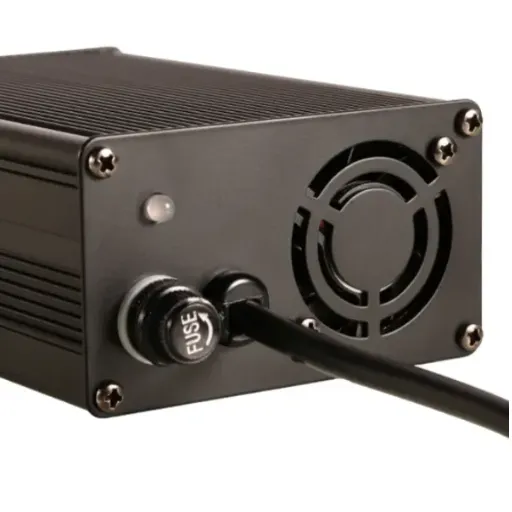
When Anenerge engineers review a 12V LiFePO4 charger request, these are the specifications we lock down first:
1. CC-CV Profile With Defined Taper Current
The charger should follow a two-stage CC-CV curve:
Constant-current stage: Deliver the rated current until the pack reaches 14.6V.
Constant-voltage stage: Hold 14.6V while current tapers down to the termination point.
Termination: Stop or enter float when current falls to roughly 0.05C.
Ask the supplier for the actual charge curve, not a generic description. A reputable manufacturer will share a voltage-versus-time graph before you order.
2. Voltage and Current Accuracy
Output voltage accuracy: ±1% or better across load and temperature.
Output current accuracy: ±3% or better during the CC stage.
A 1% voltage error on a 14.6V output is 0.15V. That translates to roughly 5% state-of-charge error. Over thousands of cycles, that error compounds into reduced capacity and shorter service life.
3. Safety Protections
A production-grade 12V LiFePO4 charger must include:
Over-voltage protection (OVP)
Over-current protection (OCP)
Short-circuit protection (SCP)
Over-temperature protection (OTP)
Reverse-polarity protection
3KVAC isolation between AC input and DC output
These are not premium add-ons. They're baseline requirements for UL, CE, and IEC 62368 compliance.
4. Temperature Monitoring and Compensation
For outdoor or enclosed applications, a smart LiFePO4 charger with NTC temperature sensing is worth specifying. Charge voltage should drop in cold conditions and rise slightly in heat to keep cells in their safe window. This matters especially for RV, marine, and solar installations where ambient temperature swings are normal.
5. Connector and Cable
Common connector choices for 12V LiFePO4 chargers include:
XLR 3-pin: Common on e-bike and scooter chargers.
Anderson SB50 or PP45: Popular in RV, marine, and solar systems.
Ring terminals: Used for permanent battery bank installations.
DC barrel jack: Found in smaller portable electronics.
Custom OEM connector: When branding and waterproofing matter.
Specify the connector current rating, wire gauge, and cable length up front. Replacing a connector after tooling is expensive.
6. Enclosure and Ingress Protection
A charger sitting in a boat cabin can use a standard desktop or wall-mount enclosure. A charger mounted near an outdoor battery bank needs IP65 or IP67 protection. Match the enclosure to the installation environment, not just the bench test.
When Marcus, a product manager at a solar startup in Arizona, specced his first 12V LiFePO4 charger, he focused only on voltage and current. Six months after launch, field units in Phoenix were overheating. The standard plastic enclosure had no UV rating and the charger lacked OTP calibration for 50°C ambient.
His team redesigned with an aluminum IP67 housing and temperature-compensated charge curve. Warranty incidents dropped by 80%, and the upgraded charger became the default SKU. The lesson: the right enclosure is part of the electrical spec.
Certifications and Compliance for Global Markets
Certification requirements depend on where the end product ships. Here is the standard stack OEM buyers should verify for a 12V LiFePO4 charger:
| Market | Required Certifications | Efficiency Standard |
|---|---|---|
| United States | UL 62368-1, FCC Part 15 | DOE Level VI |
| European Union | CE (EN 62368-1, EN 55032/35) | ErP Tier V |
| United Kingdom | UKCA (same standards as CE post-Brexit) | ErP Tier V |
| Australia | SAA / RCM | N/A |
| China | CCC | N/A |
| International | CB Scheme | N/A |
Two points deserve extra attention.
First, DOE Level VI applies to external power supplies sold in the United States. A 12V LiFePO4 charger that plugs into AC mains and supplies DC to a battery pack outside the device enclosure generally qualifies as an external power supply. If it is not Level VI compliant, U.S. Customs can detain the shipment.
Second, CE and UKCA require current test reports with traceable report numbers. A certificate from a previous design revision does not automatically cover a new SKU. Always verify the report matches the exact model number you are ordering.
Anenerge ships 12V LiFePO4 chargers with UL, CE, UKCA, FCC, SAA, and DOE Level VI documentation already in place. That means your customs paperwork moves through Long Beach, Rotterdam, and Melbourne without certification surprises.
Common Applications for 12V LiFePO4 Chargers
The 12V LiFePO4 format is one of the most versatile in the market. OEM buyers source 14.6V LiFePO4 chargers for a wide range of end products:
RV and Marine Power Systems
RV house batteries and marine trolling motor banks have moved heavily to LiFePO4 because of weight savings and cycle life. These chargers need robust enclosures, temperature compensation, and connectors suited to vibration and salt air.
Solar and Off-Grid Storage
A 12V LiFePO4 charger for solar often pairs with a charge controller. The charger tops off the battery from grid or generator power when solar input is low. Efficiency matters here because every watt lost is a watt that did not make it into storage.
Portable Power Stations
Compact 12V LiFePO4 chargers power the internal battery packs of portable power stations. These units prioritize small size, low standby draw, and quiet operation. DOE Level VI and ErP Tier V compliance are usually mandatory for retail channels.
Light Electric Vehicles
Some low-speed electric vehicles, e-bikes, and scooters use 12V auxiliary LiFePO4 packs for lighting, controllers, or accessories. Learn more about our e-bike and scooter charging solutions.
Security and Backup Power
Security panels, access control systems, and telecom backup units use 12V LiFePO4 batteries for long standby life. These chargers run 24/7 and need high reliability with low failure rates.
Mistakes OEM Buyers Make With 12V LiFePO4 Chargers
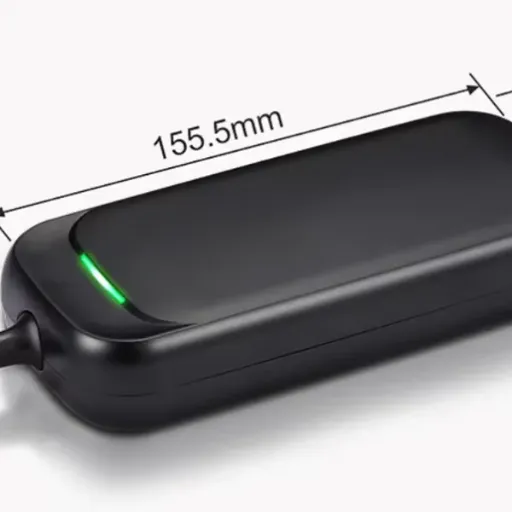
After years of building 12V LiFePO4 chargers for global brands, we see the same errors repeat:
Mistake 1: Treating "12V" as a single voltage. A 12V lead-acid charger, a 12V Li-ion charger, and a 12V LiFePO4 charger are three different products. The cutoff voltages are 13.8V–14.4V, 12.6V, and 14.6V respectively.
Mistake 2: Ignoring the taper current. A charger that holds the pack at 14.6V indefinitely without terminating at 0.05C will stress cells over time. Insist on a defined termination point.
Mistake 3: Selecting current purely for speed. A 50A charger on a 50Ah pack is 1C. That charges fast but generates heat. For products where longevity matters, 0.2C–0.3C is usually the better engineering choice.
Mistake 4: Skipping the environmental spec. A charger rated for 25°C operation will fail in an Australian summer or a Canadian winter. Specify operating temperature range, enclosure material, and IP rating for the real installation environment.
Mistake 5: Assuming certifications carry over. A new connector, a new enclosure color, or a different output cable can trigger a new certification test. Verify with your supplier before you finalize the BOM.
How Anenerge Builds 12V LiFePO4 Chargers
Our 12V LiFePO4 charger platform covers the most common OEM requirements:
Output voltage: 14.6V fixed for 4S LiFePO4.
Output current: 2A, 3A, 5A, 10A, 15A, 20A, and custom options.
Charge profile: CC-CV with programmable taper current, typically 0.02C–0.05C.
Efficiency: Meets DOE Level VI, ErP Tier V, and ENERGY STAR Level V where applicable.
Safety: OVP, OCP, SCP, OTP, reverse polarity, and 3KVAC isolation.
Enclosures: Desktop, wall-mount, and IP65/IP67 outdoor options.
Connectors: XLR, Anderson, ring terminals, DC barrel, or custom.
For every project, our process follows the same sequence:
We review your cell specification, pack design, and target application.
Our engineering team proposes a CC-CV profile and shares the charge curve.
We build engineering samples, usually within two weeks for custom designs.
You validate samples against your QA and field-test criteria.
Production runs with 100% automatic functional testing and 100% high-voltage isolation testing on every unit.
We ship with current certification documents and traceable test reports.
The result is a 12V LiFePO4 charger that matches your pack chemistry, passes certification in your target markets, and holds up in the field.
Ready to move from spec to sample? Get an OEM quote for your 12V LiFePO4 charger and we will return pricing and a sample timeline within 24 hours.
Conclusion
A 12V LiFePO4 charger is a small component with an outsized impact on product performance. The right charger delivers 14.6V with a CC-CV profile, terminates at 0.05C, and carries the certifications your target market demands. The wrong 12V LiFePO4 charger undercharges the pack, shortens cycle life, and turns into a warranty problem.
Here are the key takeaways for OEM buyers:
Specify 14.6V output for every 4S LiFePO4 pack.
Size charge current to 0.2C–0.5C of pack capacity.
Demand a documented CC-CV charge curve before placing an order.
Match the enclosure and connector to the real installation environment.
Verify certifications match the exact SKU and target market.
When Anenerge sources a 12V LiFePO4 charger with your battery spec, you get a chemistry-matched design, current test reports, and a factory that tests every unit before it ships. Send us your pack voltage, capacity, and target charge time, and our engineering team will return a proposed charge profile within one business day.
Recently Posted
-
48V LiFePO4 Charger Selection Guide for OEM Brand Owners
June 22, 2026When Elena received the first field failure report from her Rotterdam distributor in March 2024, the cause was not what she expect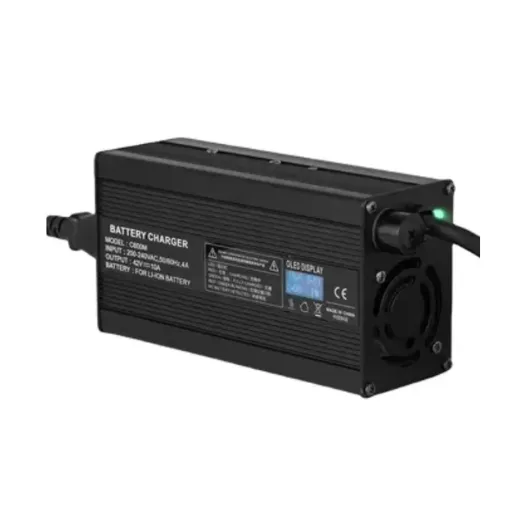 Read More
 -
LiFePO4 Battery Charger Selection Guide for OEM Brand Owners
June 22, 2026Marcus, a product manager at a Rotterdam-based e-bike brand, thought he had saved €12,000 on his first charger order. Six months l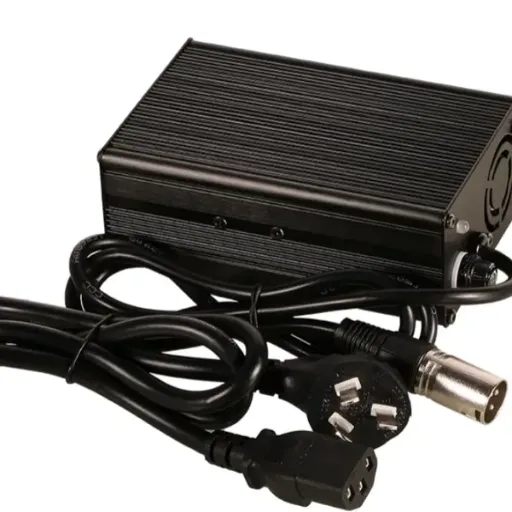 Read More
 -
Why Is My Phone Charging Slowly? Causes and Fixes
June 22, 2026At 7:45 a.m., Maya plugged her phone into the charger she grabbed from the hotel nightstand. By 8:30, the battery had climbed from Read More
 -
Fast Charging vs Normal Charging: OEM Engineering Guide
June 22, 2026Last year, a European e-bike brand shipped 5,000 units with a 4A fast charger as a premium upgrade. Six months later, their warran Read More

Contact Us
Recommended Products
-
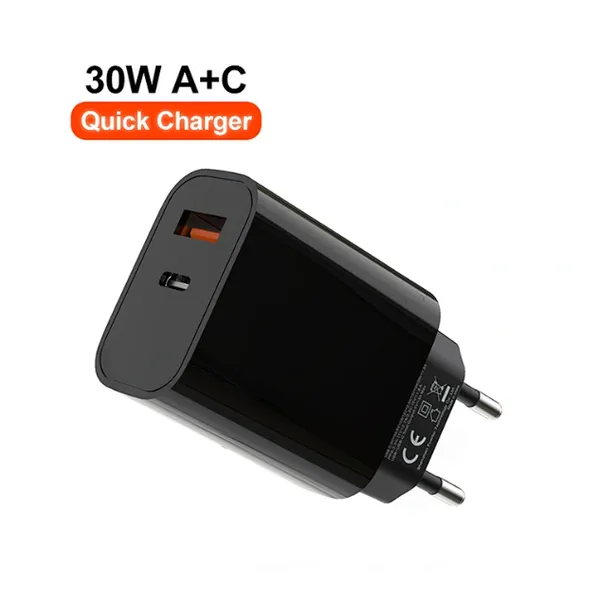
 65W USB-C GaN Wall Charger PD Fast Charging Adapter EU US Plug for Laptop Smartphone and TravelUS$ 6MOQ: 100 Pieces
 -
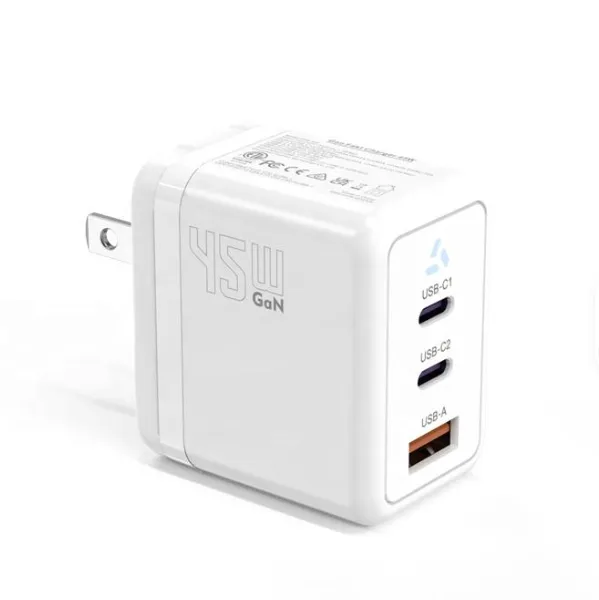
45W GaN USB-C Fast Charger JP Plug PD Wall Charging Adapter for IPhone MacBook and TabletsUS$ 8MOQ: 100 Pieces
-
QC3.0 30W USB Fast Charger With 18W Quick Charge Wall Adapter for Android and Mobile DevicesUS$ 4MOQ: 100 Pieces
-
Compact 18W Quick Charge 3.0 USB Charger 30W Fast Charging Adapter EU US Plug for TravelUS$ 2MOQ: 100 Pieces
-
30W USB-C and USB-A PD Fast Charger Compact Wall Adapter for IPhone Samsung and IPadUS$ 3MOQ: 100 Pieces
-
35W Dual USB-C PD Charger Fast Charging Adapter for IPhone Samsung IPad and USB-C DevicesUS$ 3MOQ: 100 Pieces
-
65W USB-C GaN Charger EU Plug Fast Charging Adapter 65W USB-C PD Fast Charge Wall Charger Power Adapter for Macbook ProUS$ 5MOQ: 100 Pieces
-
65W GaN USB-C Fast Charger PD Wall Charging Adapter for Laptop IPhone and Mobile DevicesUS$ 5MOQ: 100 Pieces
-
100W GaN USB-C Fast Charger With PD 3.0 for Laptop, MacBook, IPhone & Multi-Device ChargingUS$ 12MOQ: 100 Pieces
-
45W GaN USB-C Fast Charger EU AU PD Fast Wall Charging Adapter for IPhone Tablets With CE REACH PassedUS$ 8MOQ: 100 Pieces
-
QC3.0 65W GaN USB C Super Fast Charger With UKCA 3 Ports PD 3.0 GaN Charger for Iphone Macbook SamsungUS$ 10MOQ: 100 Pieces
-
30W USB-C and USB-A GaN QC3.0 Fast Charging Adapter PD Fast Charger Compact Wall Adapter for IPhone Samsung and IPadUS$ 3MOQ: 100 Pieces
-
45W GaN USB-C Fast Charger With Dual Type-C and USB-A Ports PD Wall Charging AdapterUS$ 8MOQ: 100 Pieces
-
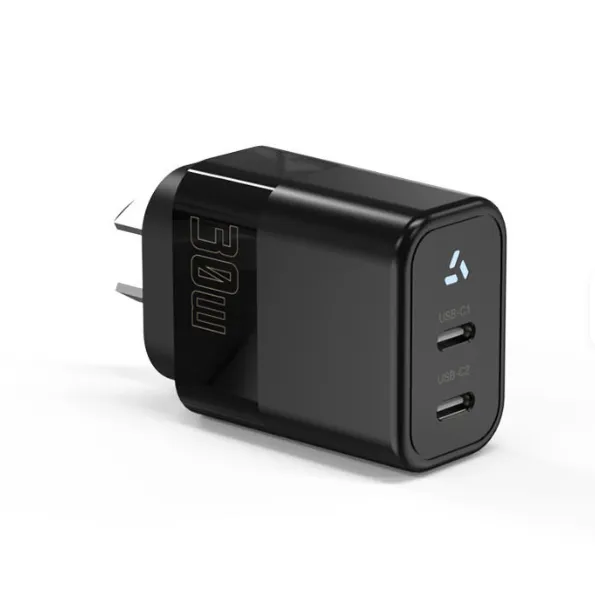
Dual USB C Ports QC3.0 30W Fast Charger With EU UK AU US USB-C PD Wall Chargeer 30W PD Power AdapterUS$ 3MOQ: 100 Pieces
-
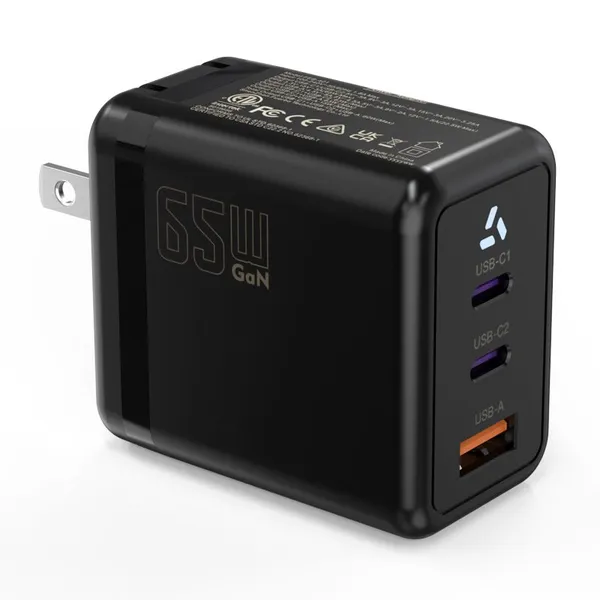
Compact 65W GaN USB-C Wall Charger With Dual USB-C Ports and USB-A Fast Charging Adapter With CE UKCA ETL SAAUS$ 10MOQ: 100 Pieces
-
QC3.0 Fast Charging Adapter PD30W USB-C USB-A GaN PD Fast Charger PD 3.0 GaN Charger Compact Wall Adapter for IPhone Samsung and IPadUS$ 3MOQ: 100 Pieces
-
12V 5A 60W US EU AC DC Adapter LED Driver LED SMPS AC to DC Switching Power SupplyUS$ 5 - 7MOQ: 50 Pieces
-
CE FCC CUL SAA KC PSE 24Vdc 48W Switching Power Supply AdaptersUS$ 5 - 7MOQ: 50 Pieces
-
CE GS UKCA SAA CUL Qualified Waterproof Switching Power Supply Ip68 PSE UL SAA GS 12V 2AUS$ 3 - 6MOQ: 50 Pieces
-
12V 1A Factory OEM Waterproof AC Adapter for Laser Light Table Lamp ac dc Adaptor With TUV CE GS for EU MarketUS$ 5 - 7MOQ: 50 Pieces