
 Business License
48V LiFePO4 Charger Selection Guide for OEM Brand Owners
When Elena received the first field failure report from her Rotterdam distributor in March 2024, the cause was not what she expected. Her new e-bike line used a 48V LiFePO4 battery pack, but the "compatible" 48V charger she had sourced from a generic trading company was cutting off at 54.0V instead of the 54.6V her 15S LiFePO4 pack needed. End users were reporting 12% less range after just three months, and her brand was absorbing the warranty cost.
You have probably seen this story before. A 48V LiFePO4 charger looks simple on the outside, but the wrong voltage tolerance, taper current, or certification stack can turn a low-cost accessory into a warranty nightmare. The good news is that the specifications are knowable, the tests are repeatable, and the right supplier will share the charge curve before you sign a purchase order.
In this guide, you will learn how to specify a 48V LiFePO4 charger that protects your pack, passes customs in your target markets, and scales with your production roadmap. We will cover voltage and current matching, CC-CV profiles, safety protections, certifications, common OEM mistakes, and what a qualified manufacturing partner should deliver.
Request a free 48V LiFePO4 charger sample and receive a proposed charge curve within 24 hours.
What "48V" Actually Means for LiFePO4 Packs
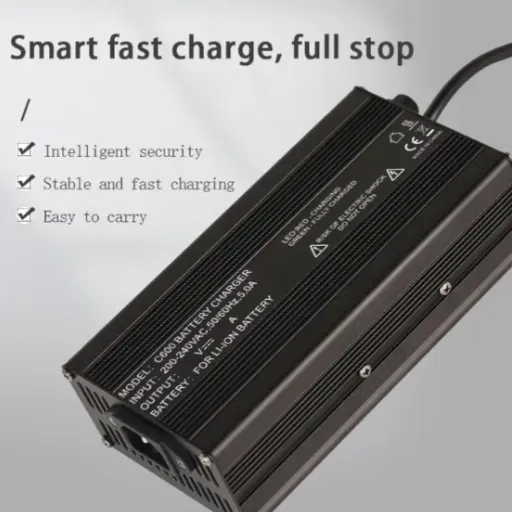
The term 48V is shorthand, and shorthand causes expensive mistakes. A 48V LiFePO4 pack is almost always a 15S configuration: 15 cells in series. Each LiFePO4 cell has a nominal voltage of 3.2V and a full-charge cutoff of 3.65V.
Do the math:
Nominal pack voltage: 3.2V × 15 = 48.0V
Full-charge cutoff: 3.65V × 15 = 54.75V (often rounded to 54.6V)
This matters because many so-called 48V chargers are actually tuned for 13S lithium-ion packs (54.6V at 4.2V/cell). The number on the label is the same, but the chemistry is wrong. A Li-ion charger pushed onto a LiFePO4 pack will either undercharge it or force the BMS to shut down early.
Rule of thumb: Always specify the full-charge voltage, not just the nominal voltage. A true 48V LiFePO4 charger should output approximately 54.6V DC at the end of the CC-CV cycle.
Common 48V LiFePO4 configurations
| Series count | Nominal voltage | Full-charge voltage | Typical applications |
|---|---|---|---|
| 15S | 48V | 54.6V | E-bikes, electric scooters, light EVs |
| 16S | 51.2V | 58.4V | Energy storage, larger e-mobility packs |
If your pack is 16S, you do not need a 48V LiFePO4 charger at all. You need a 58.4V charger. Verify the series count with your cell supplier before you source.
Why 48V LiFePO4 Chargers Dominate E-Mobility
The 48V rail has become the default for e-bikes, electric scooters, and low-speed electric vehicles for three practical reasons.
Power without excess current. At 48V, a 500W hub motor draws roughly 10A. At 24V, the same motor draws 20A, which requires heavier copper, larger connectors, and more heat management. Higher voltage keeps current, and I²R losses, lower.
Regulatory headroom. Many jurisdictions classify low-speed electric vehicles by voltage and speed. Staying near 48V keeps products in the pedal-assist or light EV category in the EU, UK, and several U.S. states, simplifying type approval.
LiFePO4 safety at scale. LiFePO4 chemistry is thermally stable, has a flat discharge curve, and delivers 2,000–5,000 cycles. Pair it with a properly tuned 48V LiFePO4 charger and the result is a pack that outlasts the vehicle it powers.
Mini-story: The team at VoltRide, a mid-sized e-bike brand in Los Angeles, switched from a generic 54.6V Li-ion charger to a chemistry-matched 48V LiFePO4 charger in Q2 2024. The change was invisible to riders, same charge port, same LED behavior, but warranty returns for "weak battery after six months" dropped 34% in the following two quarters. The only visible difference was the charge curve document their engineering team finally received from the supplier.
Key Specifications Every 48V LiFePO4 Charger Must Meet
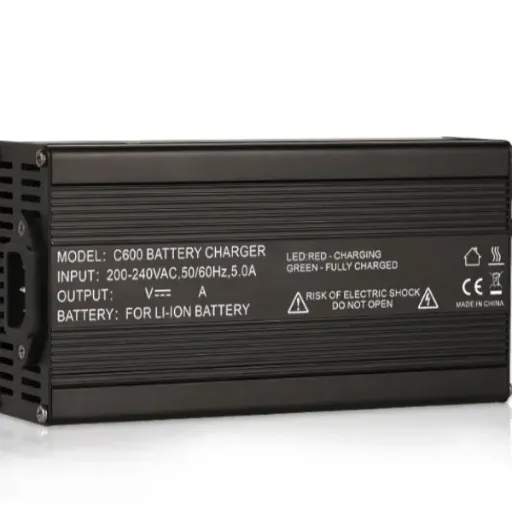
Output voltage accuracy
Target 54.6V ±0.5% or better. A 1% voltage error on a 15S pack is about 0.5V, which can shift state-of-charge by 5–10%. Over time, that translates into undercharged packs, confused BMS calculations, or accelerated cell degradation.
Charge current (CC phase)
Select current based on pack capacity and the charge time your end users expect:
| Pack capacity | 0.2C current | 0.3C current | 0.5C current |
|---|---|---|---|
| 10Ah | 2A | 3A | 5A |
| 15Ah | 3A | 4.5A | 7.5A |
| 20Ah | 4A | 6A | 10A |
Most e-bike OEMs choose 0.2C–0.3C to balance charge speed against cell longevity. A 20Ah pack at 5A charges from empty in roughly 4.5–5 hours including the CV phase.
CC-CV profile and taper current
A proper 48V LiFePO4 charger uses a two-stage CC-CV profile:
Constant-current phase: Holds the rated current while pack voltage climbs toward 54.6V.
Constant-voltage phase: Holds 54.6V while current tapers naturally.
Termination: Stops when current drops to roughly 0.05C (1A for a 20Ah pack).
Ask for the actual charge curve before you order. If the supplier cannot produce one, treat it as a red flag.
Safety protections
Production-grade chargers should include:
Over-voltage protection (OVP)
Over-current protection (OCP)
Short-circuit protection (SCP)
Over-temperature protection (OTP)
Reverse-polarity protection
3KVAC primary-to-secondary isolation
These protections are not marketing extras. They are baseline requirements for UL, CE, and IEC 62368-1 compliance.
Browse our 48V LiFePO4 charger range with pre-loaded certification stacks for the U.S., EU, UK, and Australia.
Certifications Your 48V LiFePO4 Charger Needs
Certifications determine where your product can ship and whether customs will clear it. The most common stack for a 48V LiFePO4 charger in global e-mobility:
U.S.: UL listed or recognized (UL 62368-1 or UL 1310), FCC Part 15, DOE Level VI
EU: CE marked (EN 62368-1, EN 55032, EN 55035), ErP Tier V
UK: UKCA marked (same standards as CE post-Brexit)
Australia: SAA / RCM approval
China: CCC certification
International: CB Scheme certificate for mutual recognition
Two certification mistakes we see repeatedly
Mistake 1: Assuming an old test report covers a new SKU. A different connector, enclosure, or PCB layout can invalidate the report. Demand current test reports with traceable numbers.
Mistake 2: Treating CE as a global stamp. CE covers the EU market. It does not replace UKCA for Britain, FCC for the U.S., or SAA for Australia. Each target market needs its own evidence.
According to the U.S. Department of Energy, DOE Level VI has been mandatory for external power supplies since February 2016. Non-compliant shipments can be detained at the port of entry, and civil penalties can run to several hundred dollars per unit.
Common Mistakes OEM Buyers Make With 48V LiFePO4 Chargers
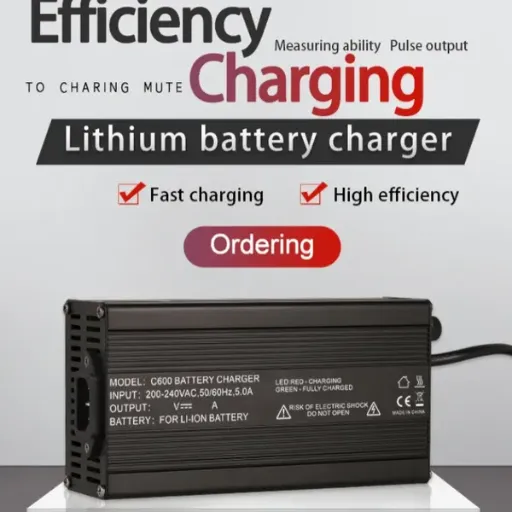
After building 48V LiFePO4 chargers for e-mobility brands since 2018, we see the same procurement errors every quarter.
Buying on unit price alone
A $3 savings per charger on a 10,000-unit order looks like $30,000 in margin. But if the cheaper charger undercharges by 2% and triggers a 5% warranty return rate, the math reverses quickly. Rework, shipping, brand damage, and replacement units erase the savings.
Skipping the charge curve review
Always request the CC-CV curve. Validate it against your cell vendor's datasheet. The curve should show:
CC current setpoint
CV voltage setpoint
Taper termination threshold
Float behavior after termination, if any
Ignoring connector and cable standards
A 48V LiFePO4 charger is only useful if it physically connects to the pack. Common e-bike and scooter connectors include XLR 3-pin, GX16, Anderson Powerpole, and proprietary OEM designs. Confirm the connector is rated for your current and available as a replacement part in your key markets.
Forgetting thermal design
A 5A charger running at 90% efficiency still dissipates roughly 30W as heat. Enclosure design, fan noise, and operating temperature range matter, especially for scooters and shared e-bikes left in direct sun.
Mini-story: Marcus, a procurement manager for a European scooter sharing operator, ordered 5,000 chargers based on price in January 2025. By July, his field team was replacing 8% of the units due to thermal shutdowns in summer heat. The chargers met the datasheet specs at 25°C, but not at the 45°C ambient his scooters experienced. The "savings" turned into a $47,000 summer retrofit and a contract review with his finance team.
How Anenerge Designs 48V LiFePO4 Chargers
We approach a 48V LiFePO4 charger project as a co-engineering exercise, not a catalog pick.
Step 1: Cell and pack review. We collect your cell specification, series count, capacity, and the charge profile recommended by your cell vendor.
Step 2: Profile proposal. Our engineering team defines the CC-CV curve, including CC current, CV voltage, taper termination, and float behavior. We share the curve before samples are built.
Step 3: Engineering sample. Standard samples ship within 7 days. Custom 48V LiFePO4 charger samples are typically ready in 2 weeks.
Step 4: Validation. You test the sample against your pack, BMS, and QA criteria. We iterate on the curve if needed.
Step 5: Production. Every unit passes 100% automatic functional testing and 100% high-voltage isolation testing. We ship with current certification documents and traceable test reports.
Our standard 48V LiFePO4 charger platform supports 54.6V outputs with current options from 2A to 10A. Custom voltage, current, connector, label, and packaging configurations are available through our OEM/ODM services.
Matching Your Charger to the Application
Not every 48V LiFePO4 charger belongs in every product. The right specification depends on how the end user charges and where the product operates.
| Application | Typical current | Connector | Special considerations |
|---|---|---|---|
| E-bike, home charger | 3A–5A | XLR, GX16, DC barrel | Quiet operation, indoor use |
| Electric scooter, fleet | 4A–8A | GX16, Anderson | Higher duty cycle, vibration resistance |
| Energy storage | 5A–10A | Anderson, terminal block | Longer cables, float mode |
| Shared mobility | 5A–8A | Proprietary | Tamper resistance, IP rating |
For outdoor or shared applications, consider an IP65 or IP67-rated enclosure. Water ingress and dust are common failure modes for chargers mounted on vehicles.
The Total Cost of Ownership Equation
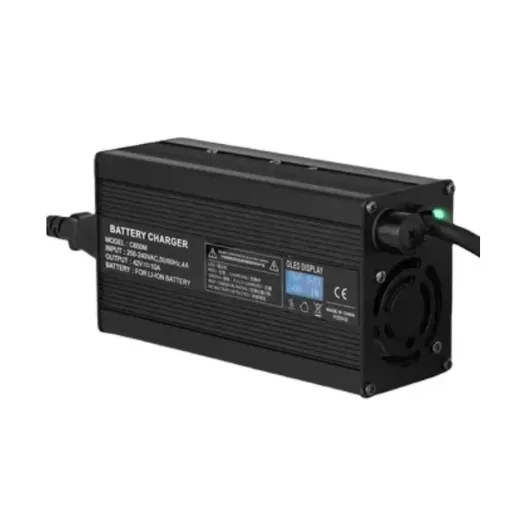
The real cost of a 48V LiFePO4 charger is not the PO price. It is the PO price plus the cost of warranty returns, customs delays, missed launches, and field replacements.
A simple checklist:
Does the charge curve match your cell vendor's recommendation?
Are certifications current and traceable?
Is the supplier's production test data available per shipment?
What is the stated operating temperature range?
What is the failure rate in the field?
If a supplier cannot answer these five questions with documents, the lowest unit price is not a bargain.
Mini-story: When Tom launched his aftermarket e-bike battery brand in Germany, he interviewed three charger suppliers. Two quoted 2–2–3 less per unit than Anenerge. He chose the higher quote because the supplier provided a documented 54.6V CC-CV curve, current CE/UKCA test reports, and a two-year field-failure rate below 0.3%. Eighteen months later, his return rate on chargers is under 0.5%, and his distributor in Hamburg just doubled the next order.
Conclusion: Specify the Charger Like You Specify the Battery
Your 48V LiFePO4 battery pack deserves a charger designed for its chemistry, voltage, and use case. The wrong charger will not announce itself on day one. It will show up months later as reduced range, swollen cells, warranty claims, and angry customers.
Here are the five takeaways:
A 48V LiFePO4 charger should output 54.6V for a 15S pack, not a generic "48V" guess.
Match charge current to pack capacity; 0.2C–0.3C is the longevity sweet spot for most e-bikes.
Demand the CC-CV charge curve and validate it against your cell datasheet.
Verify current certifications for every target market before placing a production order.
Calculate total cost of ownership, not just unit price.
If you are sourcing a 48V LiFePO4 charger for an e-bike, scooter, energy storage system, or industrial application, the next step is straightforward. Send us your cell specification, pack series count, and target charge time. Our engineering team will return a proposed CC-CV profile and sample timeline within 24 hours.
Recently Posted
-
12V LiFePO4 Charger Buying Guide for OEM Brand Owners
June 22, 2026Last spring, a marine electronics brand in Florida shipped 2,000 portable power stations with "universal 12V chargers" b Read More
 -
LiFePO4 Battery Charger Selection Guide for OEM Brand Owners
June 22, 2026Marcus, a product manager at a Rotterdam-based e-bike brand, thought he had saved €12,000 on his first charger order. Six months l Read More
 -
Why Is My Phone Charging Slowly? Causes and Fixes
June 22, 2026At 7:45 a.m., Maya plugged her phone into the charger she grabbed from the hotel nightstand. By 8:30, the battery had climbed from Read More
 -
Fast Charging vs Normal Charging: OEM Engineering Guide
June 22, 2026Last year, a European e-bike brand shipped 5,000 units with a 4A fast charger as a premium upgrade. Six months later, their warran Read More

Contact Us
Recommended Products
-
 65W USB-C GaN Wall Charger PD Fast Charging Adapter EU US Plug for Laptop Smartphone and TravelUS$ 6MOQ: 100 Pieces
 -
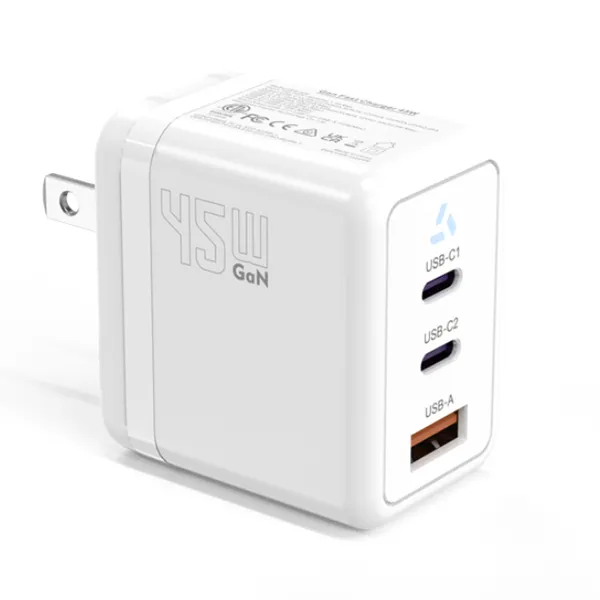
45W GaN USB-C Fast Charger JP Plug PD Wall Charging Adapter for IPhone MacBook and TabletsUS$ 8MOQ: 100 Pieces
-
QC3.0 30W USB Fast Charger With 18W Quick Charge Wall Adapter for Android and Mobile DevicesUS$ 4MOQ: 100 Pieces
-
Compact 18W Quick Charge 3.0 USB Charger 30W Fast Charging Adapter EU US Plug for TravelUS$ 2MOQ: 100 Pieces
-
30W USB-C and USB-A PD Fast Charger Compact Wall Adapter for IPhone Samsung and IPadUS$ 3MOQ: 100 Pieces
-
35W Dual USB-C PD Charger Fast Charging Adapter for IPhone Samsung IPad and USB-C DevicesUS$ 3MOQ: 100 Pieces
-
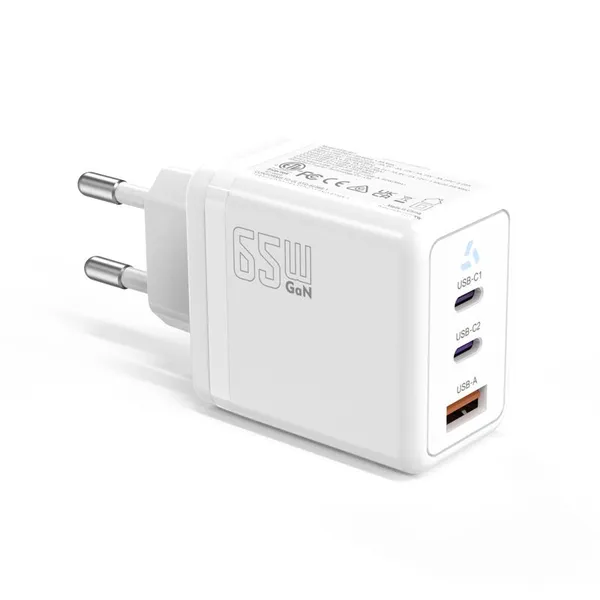
65W USB-C GaN Charger EU Plug Fast Charging Adapter 65W USB-C PD Fast Charge Wall Charger Power Adapter for Macbook ProUS$ 5MOQ: 100 Pieces
-
65W GaN USB-C Fast Charger PD Wall Charging Adapter for Laptop IPhone and Mobile DevicesUS$ 5MOQ: 100 Pieces
-
100W GaN USB-C Fast Charger With PD 3.0 for Laptop, MacBook, IPhone & Multi-Device ChargingUS$ 12MOQ: 100 Pieces
-
45W GaN USB-C Fast Charger EU AU PD Fast Wall Charging Adapter for IPhone Tablets With CE REACH PassedUS$ 8MOQ: 100 Pieces
-
QC3.0 65W GaN USB C Super Fast Charger With UKCA 3 Ports PD 3.0 GaN Charger for Iphone Macbook SamsungUS$ 10MOQ: 100 Pieces
-
30W USB-C and USB-A GaN QC3.0 Fast Charging Adapter PD Fast Charger Compact Wall Adapter for IPhone Samsung and IPadUS$ 3MOQ: 100 Pieces
-
45W GaN USB-C Fast Charger With Dual Type-C and USB-A Ports PD Wall Charging AdapterUS$ 8MOQ: 100 Pieces
-
Dual USB C Ports QC3.0 30W Fast Charger With EU UK AU US USB-C PD Wall Chargeer 30W PD Power AdapterUS$ 3MOQ: 100 Pieces
-
Compact 65W GaN USB-C Wall Charger With Dual USB-C Ports and USB-A Fast Charging Adapter With CE UKCA ETL SAAUS$ 10MOQ: 100 Pieces
-
QC3.0 Fast Charging Adapter PD30W USB-C USB-A GaN PD Fast Charger PD 3.0 GaN Charger Compact Wall Adapter for IPhone Samsung and IPadUS$ 3MOQ: 100 Pieces
-
12V 5A 60W US EU AC DC Adapter LED Driver LED SMPS AC to DC Switching Power SupplyUS$ 5 - 7MOQ: 50 Pieces
-
CE FCC CUL SAA KC PSE 24Vdc 48W Switching Power Supply AdaptersUS$ 5 - 7MOQ: 50 Pieces
-
CE GS UKCA SAA CUL Qualified Waterproof Switching Power Supply Ip68 PSE UL SAA GS 12V 2AUS$ 3 - 6MOQ: 50 Pieces
-
12V 1A Factory OEM Waterproof AC Adapter for Laser Light Table Lamp ac dc Adaptor With TUV CE GS for EU MarketUS$ 5 - 7MOQ: 50 Pieces