
 Business License
LiFePO4 Battery Charger Selection Guide for OEM Brand Owners
Marcus, a product manager at a Rotterdam-based e-bike brand, thought he had saved €12,000 on his first charger order. Six months later, warranty claims from swollen packs and shortened cycle life had cost him more than €80,000. The root cause was not the cells. It was the charger.
If you are building e-bikes, scooters, energy storage systems, or industrial equipment around LiFePO4 chemistry, the LiFePO4 battery charger you choose is not an accessory. It is a lifecycle component. The right charger extends cell life, protects your warranty reserve, and keeps customs clearance smooth. The wrong charger quietly erodes margins and brand reputation.
In this guide, you will learn how to match a LiFePO4 battery charger to your pack's voltage, current, charge profile, and target-market certifications. You will also see the specification traps that cause otherwise solid products to fail in the field.
Why LiFePO4 Chemistry Demands a Dedicated Charger
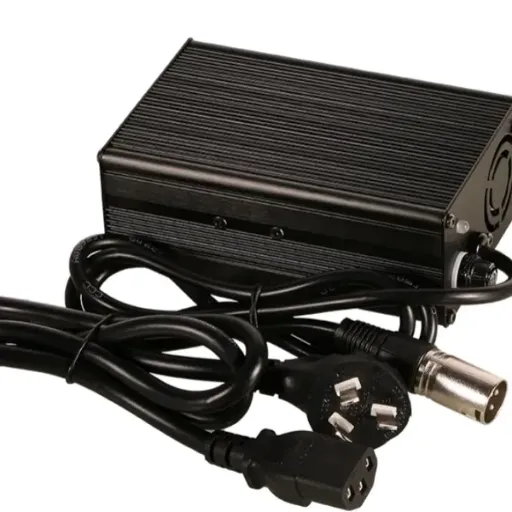
LiFePO4 cells, lithium iron phosphate, also called LFP, have fundamentally different charge requirements than standard lithium-ion or lead-acid cells. Their nominal cell voltage is 3.2V, and their full-charge cutoff is 3.65V per cell. By contrast, common Li-ion NMC or LCO cells charge to 4.2V per cell. That 0.55V gap is the difference between a safe full charge and chronic over-voltage stress.
A generic Li-ion charger pushing 4.2V/cell into a LiFePO4 pack forces the battery management system (BMS) to work overtime. In the best case, the BMS disconnects early and the pack never reaches full state of charge. In the worst case, the BMS fails or the cells sit at elevated voltage for extended periods. Either outcome reduces cycle life and increases warranty exposure.
A dedicated LiFePO4 battery charger uses a CC-CV profile tuned to 3.65V/cell and terminates at roughly 0.05C. This is the profile cell manufacturers recommend for the 2,000–5,000 cycle life LiFePO4 is known for. Chemistry-matched charging is not a marketing preference. It is a design requirement.
Engineering note: If your supplier cannot provide a charge curve for their LiFePO4 battery charger, stop the conversation. A charge curve is the minimum proof that the charger was designed for your chemistry.
How to Match Charger Voltage to Pack Series Count
The first specification to lock down is output voltage. LiFePO4 pack voltage scales linearly with series cell count. The charger cutoff must match the pack's full-charge voltage, not just its nominal voltage.
The most common production configurations are:
| Cells in Series | Nominal Voltage | Full-Charge Cutoff |
|---|---|---|
| 4S | 12.8V | 14.6V |
| 8S | 25.6V | 29.2V |
| 12S | 38.4V | 43.8V |
| 15S | 48V | 54.6V |
| 16S | 51.2V | 58.4V |
| 20S | 64V | 73.0V |
| 24S | 76.8V | 87.6V |
A 48V label alone is not enough. A 48V LiFePO4 charger for a 15S pack must cut off at 54.6V. A charger labeled "48V" that cuts at 56V or 58V is built for a different chemistry. Using it on LiFePO4 will either leave capacity on the table or push cells beyond their safe limit.
Voltage accuracy matters at the cell level. A ±1% error on a 15S pack equals roughly ±0.5V at the pack level. That error can shift state of charge by 5–10%. For this reason, production-grade LiFePO4 battery charger designs target ±0.5% or better voltage regulation across load and temperature.
Want to see how charge profile accuracy affects battery longevity? Read our deeper dive into CC-CV charging explained.
Selecting Charge Current for Your Application
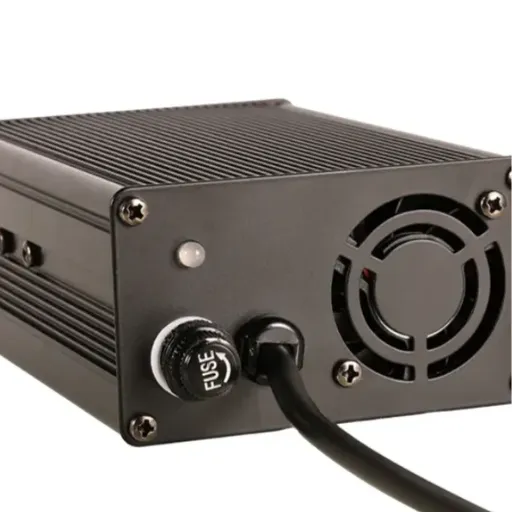
Charge current determines charge time, heat generation, and cell stress. For LiFePO4, the recommended CC current range is typically 0.2C to 0.5C of pack capacity. For a 20Ah pack, that means 4A to 10A during the constant-current phase.
Higher current shortens charge time but generates more heat. Heat accelerates calendar aging and can trigger the BMS thermal protection on warm days. Lower current is gentler on cells but may not meet end-user expectations for charge time. Most e-bike and scooter OEMs settle on 0.2C–0.3C as the practical balance.
A rough charge time estimate for LiFePO4 is:
Total charge time ≈ (Pack capacity / CC current) × 1.15
Example: A 20Ah pack charged at 5A CC current takes approximately (20 / 5) × 1.15 = 4.6 hours. The 1.15 multiplier accounts for the constant-voltage tail where current tapers.
When specifying current, also consider the connector and cable rating. A 10A charge current through an undersized connector creates voltage drop and localized heating. Match the connector series, wire gauge, and charger output to the same current target.
The CC-CV Profile and Taper Current That Protect Cells
Every LiFePO4 battery charger worth sourcing should follow a two-stage CC-CV curve:
Constant-current (CC) stage: The charger delivers the rated current while pack voltage rises toward the cutoff.
Constant-voltage (CV) stage: The charger holds voltage at the cutoff, for example, 54.6V for a 15S pack, while current naturally tapers.
The cycle terminates when current drops to the taper threshold, typically 0.05C. For a 20Ah pack, termination occurs at 1A. After termination, some chargers enter a low-current float mode. Others fully disconnect. Full disconnect is generally preferred for long-term storage because it eliminates any trickle stress on fully charged cells.
The transition from CC to CV must be smooth. A poorly designed charger may overshoot the voltage target during the transition. Even brief over-voltage events matter because LiFePO4 cells are sensitive to repeated excursions above 3.65V/cell. Quality chargers include soft-start transition logic and output overshoot clamping.
At Anenerge, every LiFePO4 battery charger design starts with the cell vendor's recommended charge profile. We document the CC-CV curve, share it before you order, and validate it against your pack samples before production.
Certifications That Unlock Your Target Markets
Certifications are not stickers. They are market-entry permissions. The certification stack your LiFePO4 battery charger carries determines where you can ship and whether customs will release your goods.
Common requirements by region include:
United States: UL listed (UL 62368-1 or UL 1310 depending on application), FCC Part 15 for EMI, and DOE Level VI for external power supplies
European Union: CE marked under EN 62368-1 and EN 55032/35, plus ErP Tier V efficiency compliance
United Kingdom: UKCA marking with standards aligned to CE post-Brexit
Australia and New Zealand: SAA / RCM approval
China: CCC certification for domestic sale
International baseline: CB Scheme certificate, which simplifies entry into many member countries
Always request current test reports with traceable report numbers. A report from 2019 may not cover the current design revision. A report for a different model number does not automatically transfer to your SKU.
Need the full certification checklist? Our LiFePO4 charger buying guide walks through the verification process in more detail.
Safety Protections Every Production Charger Needs
![lifepo4 battery voltage chart] (3)](https://img13.fr-trading.com/0/1_741_119568_512_512.jpg.webp?t=1782099418)
A LiFePO4 battery charger heading into a consumer or industrial product must include baseline protections. These are not premium add-ons. They are expected by IEC 62368 and required by UL and CE certification paths.
Essential protections include:
Over-voltage protection (OVP): Shuts output if the regulation loop fails and voltage climbs above safe limits
Over-current protection (OCP): Limits output current during fault conditions
Short-circuit protection (SCP): Survives a direct output short without fire or damage
Over-temperature protection (OTP): Derates or shuts down when internal temperature exceeds safe limits
Reverse-polarity protection: Prevents damage if the connector is wired backward
3KVAC isolation: Maintains safety separation between AC input and DC output
Some applications benefit from additional features. An NTC thermistor monitors pack temperature and reduces charge current in cold conditions. Pre-charge logic safely recovers deeply discharged packs. CAN-bus or UART communication coordinates charging with a smart BMS. These features add cost but may be necessary for energy storage, marine, or automotive applications.
Mini-Story: The €80,000 Warranty Lesson
Marcus's Rotterdam e-bike brand launched in spring 2025 with a 48V 15Ah LiFePO4 pack and a charger sourced on price alone. The supplier claimed the charger was "compatible with lithium batteries" but never provided a charge curve. By month four, customer service saw a pattern: batteries that lost 30% of their range within 200 cycles.
Root-cause analysis in Anenerge's lab later showed the charger was cutting at 57.4V, 2.8V above the 54.6V LiFePO4 cutoff. Cells were spending hours near 3.83V per cell during every charge cycle. The cumulative stress shortened cycle life by roughly 40%. The warranty reserve Marcus thought he had protected was gone in one quarter. A chemistry-matched LiFePO4 battery charger would have cost him €4 more per unit. The warranty cost was €47 per unit.
Connectors, Cables, and Field Serviceability
Connector choice is often treated as an afterthought. It should not be. The connector must carry the rated current, mate with the pack side, and be replaceable in the field. A mismatch here creates returns that have nothing to do with charger electronics.
Common connector families for e-mobility and industrial LiFePO4 chargers include:
XLR 3-pin: Common on e-bikes and mobility scooters
GX16 3-pin or 4-pin: Compact, locking option for smaller packs
Anderson Powerpole / SB series: Popular in industrial and energy storage applications
DC barrel jacks: Used for lower-current packs and portable equipment
Proprietary OEM connectors: Designed for brand-specific product ecosystems
For outdoor or marine applications, specify an IP-rated connector and cable gland. Water ingress at the connector is one of the most common field-failure modes for outdoor LiFePO4 chargers.
Cable length and gauge also affect performance. Long, thin cables create voltage drop, which makes the charger think the pack is at a lower voltage than it actually is. The result is slower charging or incomplete CV termination. Size the cable for the current and route length from the start.
Energy Efficiency and Regulatory Compliance
![lifepo4 battery voltage chart] (2)](https://img13.fr-trading.com/0/1_562_120124_512_512.jpg.webp?t=1782099418)
Energy efficiency is not only a sustainability talking point. In regulated markets, it is a legal requirement. A LiFePO4 battery charger sold as an external power supply in the United States must meet DOE Level VI efficiency standards under 10 CFR 430. The EU equivalent is ErP Tier V.
DOE Level VI requires minimum active-mode efficiency at 25%, 50%, 75%, and 100% load, plus a maximum no-load power draw. For adapters and chargers above 49W, active-mode efficiency must be at least 88% and no-load power must not exceed 0.21W.
Meeting these standards requires intentional design choices in the switching controller, transformer, and standby circuit. A charger designed without efficiency in mind may pass functional tests but fail DOE or ErP verification. That failure can block a shipment at customs or force a costly redesign.
Anenerge LiFePO4 battery chargers are engineered to meet DOE Level VI, ErP Tier V, and ENERGY STAR Level V where applicable. Efficiency is designed into the power stage, not patched on at the end.
Mini-Story: The Customs Delay That Cost a Launch Window
In late 2024, a Los Angeles-based scooter brand prepared a 5,000-unit shipment for a Black Friday launch. Their LiFePO4 battery charger supplier had provided a two-year-old CE report but no current DOE Level VI documentation. When the container arrived at Long Beach, U.S. Customs requested proof of Level VI compliance. The supplier could not produce a current report tied to the exact model number.
The shipment sat for 11 days. The brand missed its launch window and had to discount inventory by 25% to move it before year-end. The total cost of the delay, storage fees, markdowns, and lost momentum, exceeded $120,000. The charger itself was $6 cheaper than the compliant alternative. Compliance documentation is part of the unit cost.
OEM Customization: Beyond the Catalog Spec
Not every product fits a catalog charger. Voltage, current, connector, enclosure color, label, and packaging often need to match a brand's exact product design. That is where OEM and ODM services become relevant.
For OEM customization, expect to define:
Pack series count and full-charge voltage
Target charge current and charge time
Connector type, pinout, and cable length
Enclosure style, color, and labeling
Regional plug or input cord requirement
Certification stack for target markets
A responsive manufacturer returns engineering samples within two weeks and provides a documented charge curve for your approval before production. At Anenerge, OEM/ODM services include custom charge profiles, connector tooling, and branded packaging, with the certification stack already in place.
MOQ guidance is usually 500 units for standard catalog chargers and 1,000 units for OEM-customized designs. ODM co-development with new tooling typically starts at 3,000 units, though this varies by project complexity.
How to Verify a Supplier Before You Order
Supplier verification is where many buyers stumble. A good datasheet is necessary but not sufficient. Before committing to a LiFePO4 battery charger supplier, request:
The actual charge curve for your voltage and current specification
Current third-party test reports with traceable report numbers
A sample unit for your own validation or third-party test
Documentation of production test coverage, ideally 100% functional and high-voltage isolation test
Clear lead-time and MOQ terms, including peak-season capacity reservation
A warranty and field-failure analysis process
If a supplier hesitates on any of these, treat it as a signal. The cheapest quote often becomes the most expensive choice after warranty claims, customs delays, and rework are factored in.
Our certifications page lists the full mark stack available for Anenerge chargers and adapters.
Common Mistakes When Specifying a LiFePO4 Battery Charger
![what is a lifepo4 battery] (3)](https://img13.fr-trading.com/0/1_739_119798_512_512.jpg.webp?t=1782099418)
After years of working with OEM brand owners, we see the same specification errors repeat. Avoiding them saves time and money.
Mistake 1: Using a Li-ion charger on LiFePO4 cells. The 4.2V/cell cutoff is too high. Even if the BMS protects the pack, the charger is operating outside its intended chemistry.
Mistake 2: Specifying only nominal voltage. A "48V charger" could mean 54.6V, 56V, or 58.4V depending on chemistry. Always specify full-charge cutoff voltage.
Mistake 3: Ignoring taper current. A charger that never terminates or terminates too late holds the pack at full voltage indefinitely. That reduces cycle life.
Mistake 4: Choosing on unit price alone. A $2 savings per unit can turn into a $50 warranty return. Calculate total cost of ownership including certification, testing, and failure risk.
Mistake 5: Skipping the cell vendor loop. The charger maker and cell maker should agree on cutoff voltage, CC current, and taper current. Both must sign off on the profile.
Mini-Story: The Two-Week Turnaround That Saved a Season
A Seattle-based energy storage startup was two weeks away from a trade show demo when their original charger supplier missed the sample date. The pack was a 16S 51.2V LiFePO4 configuration with a custom Anderson connector and a weatherproof enclosure requirement.
They sent the cell spec, pack drawing, and target charge curve on a Monday. By Friday of the following week, they had an engineering sample in hand. The charger matched the 58.4V cutoff, delivered 5A CC current, terminated at 0.05C, and included the custom connector and IP65 enclosure. The demo ran flawlessly. The brand placed a 3,000-unit production order two months later. Speed and chemistry-matching are not mutually exclusive.
Conclusion: Match the Charger to the Chemistry
Choosing a LiFePO4 battery charger is not about finding the highest wattage or the lowest price. It is about matching the charger to your pack's chemistry, voltage, current, and market requirements.
The key takeaways are:
LiFePO4 cells need a 3.65V/cell cutoff. Generic Li-ion chargers will damage them over time.
Match charger voltage to the pack's full-charge voltage, not just the nominal voltage.
Size charge current between 0.2C and 0.5C, balancing charge time against cell longevity.
Insist on a documented CC-CV charge curve with a 0.05C termination point.
Verify certifications for every target market, and request current test reports.
Include essential protections: OVP, OCP, SCP, OTP, reverse polarity, and 3KVAC isolation.
The right LiFePO4 battery charger protects your cells, your warranty reserve, and your brand. The wrong one turns a small component decision into a large liability.
Ready to match a charger to your LiFePO4 pack? Send us your cell specification, pack series count, and target charge time. Our engineering team will return a proposed CC-CV profile and sample timeline within 24 hours. Request a free sample or get an OEM quote today.
Recently Posted
-
12V LiFePO4 Charger Buying Guide for OEM Brand Owners
June 22, 2026Last spring, a marine electronics brand in Florida shipped 2,000 portable power stations with "universal 12V chargers" b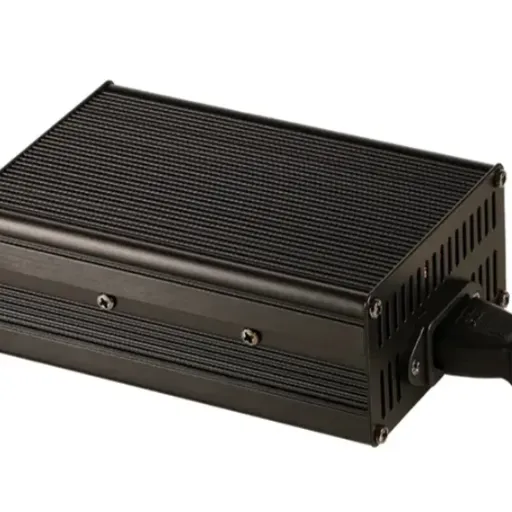 Read More
 -
48V LiFePO4 Charger Selection Guide for OEM Brand Owners
June 22, 2026When Elena received the first field failure report from her Rotterdam distributor in March 2024, the cause was not what she expect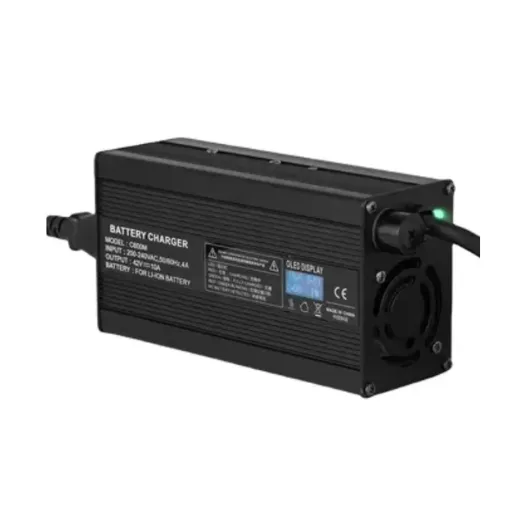 Read More
 -
Why Is My Phone Charging Slowly? Causes and Fixes
June 22, 2026At 7:45 a.m., Maya plugged her phone into the charger she grabbed from the hotel nightstand. By 8:30, the battery had climbed from Read More
 -
Fast Charging vs Normal Charging: OEM Engineering Guide
June 22, 2026Last year, a European e-bike brand shipped 5,000 units with a 4A fast charger as a premium upgrade. Six months later, their warran Read More

Contact Us
Recommended Products
-
 65W USB-C GaN Wall Charger PD Fast Charging Adapter EU US Plug for Laptop Smartphone and TravelUS$ 6MOQ: 100 Pieces
 -
45W GaN USB-C Fast Charger JP Plug PD Wall Charging Adapter for IPhone MacBook and TabletsUS$ 8MOQ: 100 Pieces
-
QC3.0 30W USB Fast Charger With 18W Quick Charge Wall Adapter for Android and Mobile DevicesUS$ 4MOQ: 100 Pieces
-
Compact 18W Quick Charge 3.0 USB Charger 30W Fast Charging Adapter EU US Plug for TravelUS$ 2MOQ: 100 Pieces
-
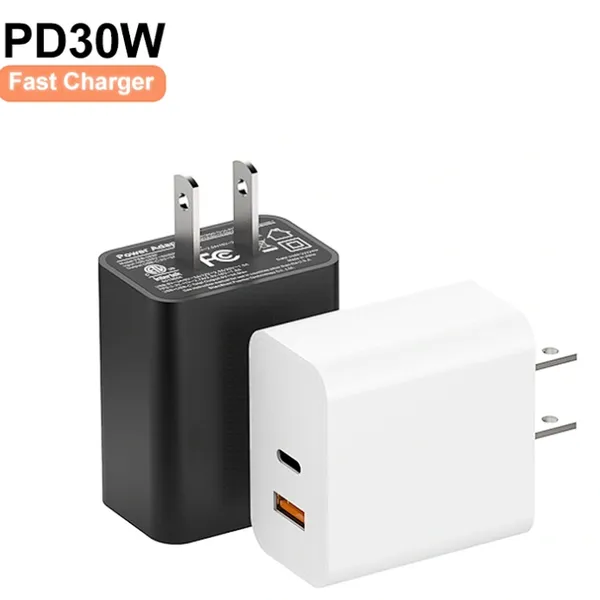
30W USB-C and USB-A PD Fast Charger Compact Wall Adapter for IPhone Samsung and IPadUS$ 3MOQ: 100 Pieces
-
35W Dual USB-C PD Charger Fast Charging Adapter for IPhone Samsung IPad and USB-C DevicesUS$ 3MOQ: 100 Pieces
-
65W USB-C GaN Charger EU Plug Fast Charging Adapter 65W USB-C PD Fast Charge Wall Charger Power Adapter for Macbook ProUS$ 5MOQ: 100 Pieces
-
65W GaN USB-C Fast Charger PD Wall Charging Adapter for Laptop IPhone and Mobile DevicesUS$ 5MOQ: 100 Pieces
-
100W GaN USB-C Fast Charger With PD 3.0 for Laptop, MacBook, IPhone & Multi-Device ChargingUS$ 12MOQ: 100 Pieces
-
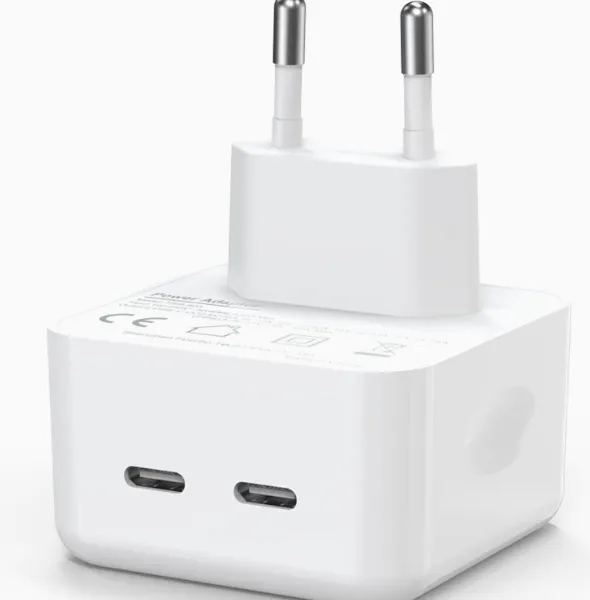
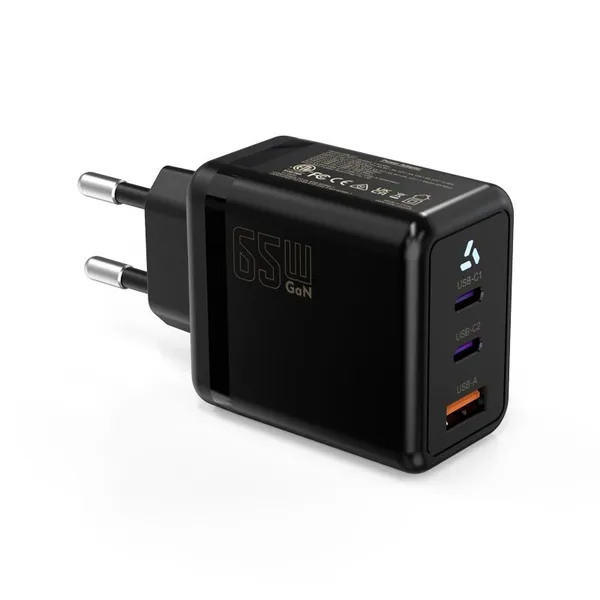
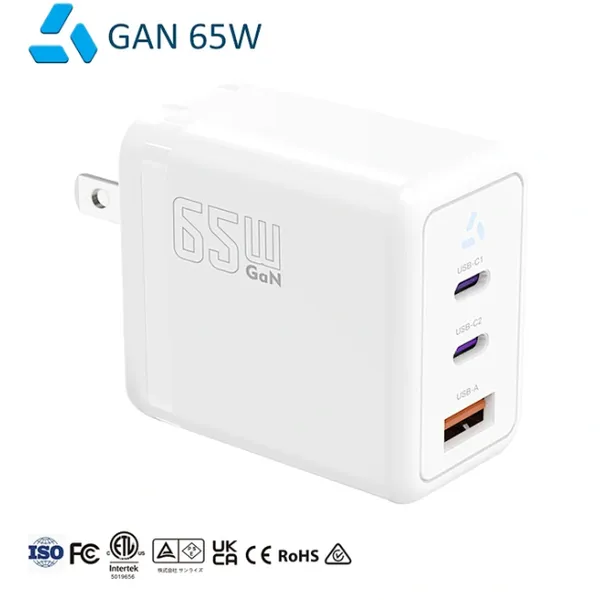
45W GaN USB-C Fast Charger EU AU PD Fast Wall Charging Adapter for IPhone Tablets With CE REACH PassedUS$ 8MOQ: 100 Pieces
-
QC3.0 65W GaN USB C Super Fast Charger With UKCA 3 Ports PD 3.0 GaN Charger for Iphone Macbook SamsungUS$ 10MOQ: 100 Pieces
-
30W USB-C and USB-A GaN QC3.0 Fast Charging Adapter PD Fast Charger Compact Wall Adapter for IPhone Samsung and IPadUS$ 3MOQ: 100 Pieces
-
45W GaN USB-C Fast Charger With Dual Type-C and USB-A Ports PD Wall Charging AdapterUS$ 8MOQ: 100 Pieces
-
Dual USB C Ports QC3.0 30W Fast Charger With EU UK AU US USB-C PD Wall Chargeer 30W PD Power AdapterUS$ 3MOQ: 100 Pieces
-
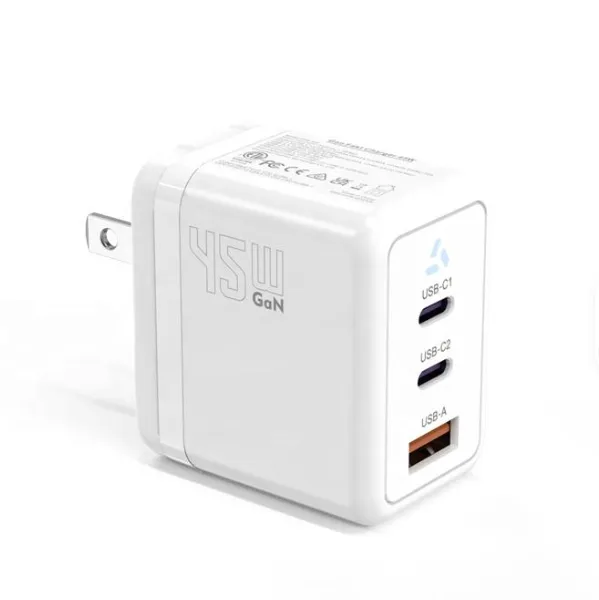
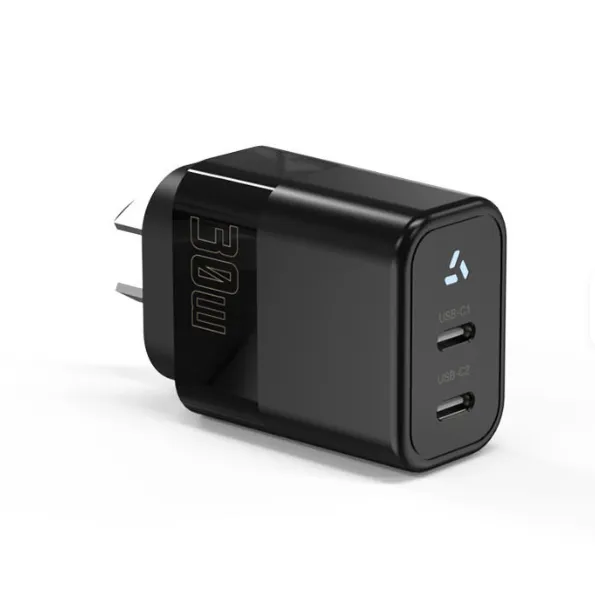
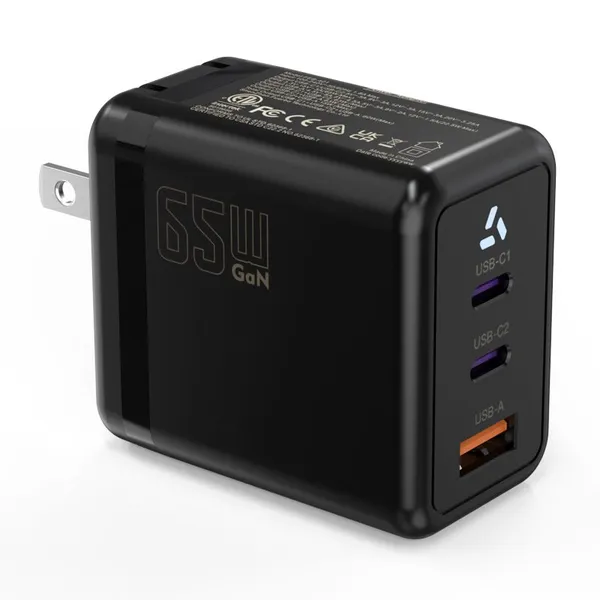
Compact 65W GaN USB-C Wall Charger With Dual USB-C Ports and USB-A Fast Charging Adapter With CE UKCA ETL SAAUS$ 10MOQ: 100 Pieces
-
QC3.0 Fast Charging Adapter PD30W USB-C USB-A GaN PD Fast Charger PD 3.0 GaN Charger Compact Wall Adapter for IPhone Samsung and IPadUS$ 3MOQ: 100 Pieces
-
12V 5A 60W US EU AC DC Adapter LED Driver LED SMPS AC to DC Switching Power SupplyUS$ 5 - 7MOQ: 50 Pieces
-
CE FCC CUL SAA KC PSE 24Vdc 48W Switching Power Supply AdaptersUS$ 5 - 7MOQ: 50 Pieces
-
CE GS UKCA SAA CUL Qualified Waterproof Switching Power Supply Ip68 PSE UL SAA GS 12V 2AUS$ 3 - 6MOQ: 50 Pieces
-
12V 1A Factory OEM Waterproof AC Adapter for Laser Light Table Lamp ac dc Adaptor With TUV CE GS for EU MarketUS$ 5 - 7MOQ: 50 Pieces