
 Business License
Lead Acid Battery vs Lithium Ion: An OEM Buyer's Guide
In January 2026, a warehouse fleet manager in Rotterdam named Jan replaced the lead-acid packs in his 24 electric pallet jacks with lithium-ion units to cut weight and extend runtime. He kept the original chargers. Within three months, 40% of the new packs showed capacity fade, two BMS units failed, and the project went EUR18,000 over budget. The batteries were not the problem. The mismatch was.
That story lands in our field-failure log every quarter, because the lead acid battery vs lithium ion decision is never a drop-in swap. The chemistries differ in voltage, energy density, cycle life, charging requirements, and total cost of ownership. This guide walks OEM brand owners and procurement engineers through what actually changes when you move between lead-acid and lithium-ion, and how to specify the right charger so the chemistry decision pays off in the field instead of the RMA queue.
You will leave with a checklist you can take into your next supplier conversation, real voltage and current numbers for each chemistry, and a clear view of where each technology wins.
The chemistry difference at a glance
Lead-acid batteries have dominated motive power and standby applications for over 150 years. The chemistry is simple: lead dioxide and sponge lead plates sit in a sulfuric acid electrolyte. During discharge, both plates convert to lead sulfate. During charge, the reaction reverses. Flooded, AGM (absorbent glass mat), and gel variants exist, but the fundamental electrochemistry has not changed since 1859.
Lithium-ion covers a family of chemistries. NMC (nickel manganese cobalt) and LCO (lithium cobalt oxide) are the most common in OEM products. Lithium ions shuttle between a graphite anode and a metal-oxide cathode through an organic electrolyte. No heavy metals, no liquid acid, and a completely different voltage platform.
Here is the side-by-side that matters for an OEM design review:
| Parameter | Lead-acid (AGM/SLA) | Lithium-ion (NMC/LCO) |
|---|---|---|
| Nominal voltage | 2.0V/cell (12V = 6S) | 3.6 to 3.7V/cell |
| Energy density | 30 to 50 Wh/kg | 150 to 270 Wh/kg |
| Cycle life (to 80% SoH) | 200 to 500 cycles | 500 to 1,500 cycles |
| Depth of discharge (recommended) | 50% | 80 to 90% |
| Self-discharge per month | 5 to 10% | 1 to 3% |
| Operating temperature | -20C to +50C | 0C to +45C |
| Charge efficiency | 70 to 85% | 95 to 99% |
| Relative cell cost (2026) | Lower | Higher |
| Weight per kWh | ~25 to 35 kg | ~4 to 7 kg |
Sources include cell manufacturer datasheets and field data referenced by Battery University.
The headline difference for a buyer: lithium-ion packs 5 to 7 times more energy per kilogram, lasts 2 to 4 times longer, and charges faster. Lead-acid wins on upfront cost, cold-temperature tolerance, and repairability.
Want our engineering team to validate your charger spec against both chemistries? Request a free comparison sample and we will return a charge curve for each option within two weeks.
Energy density, weight, and pack design
Weight matters. A 48V 100Ah lead-acid bank weighs roughly 65 to 80 kg. The same capacity in lithium-ion weighs 12 to 18 kg. For an e-bike or handheld device, that gap is the difference between a rideable product and a paperweight. For a stationary telecom backup cabinet, the weight penalty is acceptable if the budget is tight.
Pack voltage also scales differently. A 48V lead-acid string uses 24 cells in series (24S x 2.0V = 48V). A 48V lithium-ion pack uses 13 or 14 cells in series (13S x 3.7V = 48.1V, 14S x 3.6V = 50.4V). The cell counts differ by nearly half, which changes BMS complexity, connector pin counts, and protection thresholds.
Volumetric density tells a similar story. A 1 kWh lead-acid bank occupies roughly 40 to 50 liters. The same 1 kWh in lithium-ion occupies 6 to 10 liters. If your enclosure tooling is already locked for lead-acid dimensions, a lithium retrofit will not drop in without mechanical changes. Plan the chemistry decision before the industrial design freeze, not after.
Voltage sag under load
Lead-acid cells exhibit pronounced voltage sag under heavy discharge. A 12V AGM pack can droop to 10.5V during a 1C load, which can trigger low-voltage cutoffs in sensitive electronics. Lithium-ion maintains a flatter discharge curve, holding nominal voltage until the final 10 to 15% of capacity. For applications with motor-start surges or inverter loads, the lithium voltage stability reduces nuisance trips and lets you spec smaller conductors.
Cycle life, depth of discharge, and longevity
Cycle life is where lithium-ion pulls away. A quality AGM lead-acid battery delivers 200 to 500 cycles at 50% depth of discharge. A quality NMC lithium-ion pack delivers 500 to 1,500 cycles at 80% depth of discharge. The math is stark: lithium-ion gives you 3 to 5 times more usable cycles, and you can use more of the capacity each cycle.
Depth of discharge is the hidden variable most buyers miss. Lead-acid manufacturers rate cycle life at 50% DoD. Drain to 80% and cycle life collapses to 100 to 200 cycles. Lithium-ion manufacturers rate cycle life at 80% DoD. That means a 100Ah lithium pack gives you 80 usable amp-hours per cycle for 1,000+ cycles. A 100Ah lead-acid pack gives you 50 usable amp-hours per cycle for 300 to 500 cycles. The lithium pack delivers roughly 5 times more total energy over its life.
Maria runs a solar installation company in Barcelona. In 2024, she specced lead-acid deep-cycle batteries for an off-grid cabin because the upfront cost was EUR1,200 lower than lithium. Two years later, the client called with complaints that the storage bank was delivering only 60% of its original capacity. Maria had sized the bank at 50% DoD to preserve life, but the client routinely drained to 80%. With lithium, she could have sized for 80% DoD, delivered a smaller footprint, and avoided the replacement conversation.
Calendar life
Lead-acid batteries sulfate when left in a partial state of charge. Even with perfect cycling, a lead-acid pack in float service degrades in 3 to 5 years. Lithium-ion calendar life runs 8 to 15 years, depending on chemistry and temperature. For products with 10-year service life targets, lithium is the safer bet.
Charging: why lead-acid and lithium-ion chargers differ
This is the section that costs OEMs real money when ignored. A lead-acid charger and a lithium-ion charger are not interchangeable, even at the same nominal system voltage. The differences run deep.
Charge profile shape: Lead-acid uses a bulk-absorption-float three-stage profile. The charger hits the battery with constant current until the absorption voltage (roughly 14.4V to 14.8V for a 12V AGM pack), then holds that voltage while current tapers, then drops to a maintenance float (13.2V to 13.8V). Lithium-ion uses CC-CV (constant current, constant voltage). The charger delivers constant current until the cell cutoff (4.2V per cell for NMC), then holds that voltage while current tapers to a termination point (usually 0.05C to 0.1C). No float stage. A float voltage held on a lithium-ion cell causes plating and capacity loss.
Voltage accuracy: Lead-acid tolerates a wide voltage window. An absorption voltage of 14.4V versus 14.8V changes charge time and gassing, but the battery survives. Lithium-ion is unforgiving. A 50 mV over-voltage per cell (0.65V on a 13S pack) accelerates degradation. A 100 mV over-voltage risks safety events. Lithium chargers need tighter voltage regulation, usually +/-0.5% or better.
Temperature compensation: Lead-acid chargers routinely include temperature compensation (-3 mV/C per cell) because lead-acid voltage requirements shift with temperature. Lithium-ion chargers need NTC monitoring and cold-weather cutoff. Charging lithium below 0C without temperature management causes lithium plating, which creates dendrites and internal shorts.
Charge rate: Lead-acid accepts 0.1C to 0.3C comfortably. Push 1C into an AGM pack and you generate heat, gas, and shortened life. Lithium-ion accepts 0.5C to 1.0C routinely, and some NMC cells tolerate 2C. A lithium pack charges in 1 to 2 hours. A lead-acid pack of the same capacity needs 6 to 10 hours.
Use a lead-acid charger on a lithium pack and the float stage will overcharge the cells. The BMS may catch it, or it may not. Use a lithium charger on a lead-acid pack and you will never reach a proper absorption stage, the pack will sulfate, and capacity will drop within months.
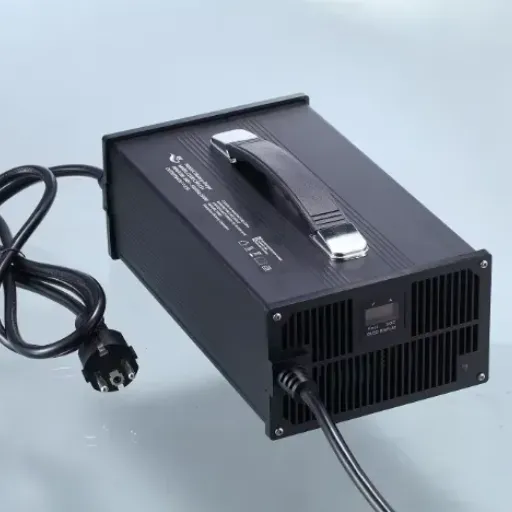
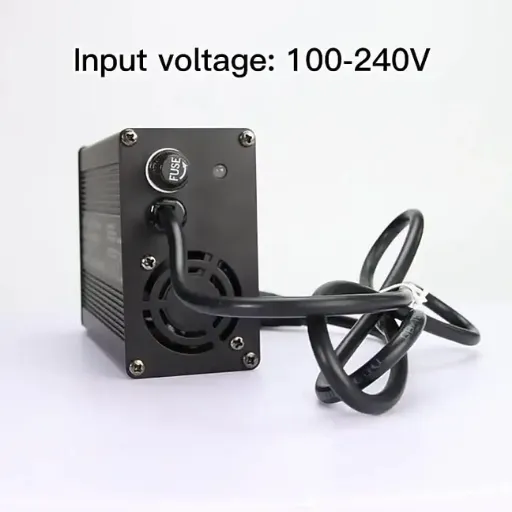
The fix is straightforward: match the charger to the cell chemistry, voltage, and pack design from the start. Our lithium-ion battery charger range covers 4.2V through 84V outputs with +/-0.5% voltage accuracy, and our lead-acid charger range delivers proper bulk-absorption-float profiles for 12V through 72V systems. Both lines ship with documented charge curves and NTC options.
The full mechanics of why the profile matters are covered in our companion article on CC-CV charging fundamentals.
Lead-acid vs lithium-ion cost analysis and total cost of ownership
Cell cost is one variable; total landed cost is another. Here is what to factor in.
Upfront pack cost
As of early 2026, a 48V 100Ah lead-acid AGM bank costs roughly $400 to $600 at distributor pricing. The same capacity in NMC lithium-ion costs $800 to $1,200. The lithium pack is 2 to 3 times more expensive on day one.
Charger cost
Lead-acid chargers are simpler circuits. A 48V 10A lead-acid charger costs less to manufacture than a 48V 10A lithium-ion charger with CC-CV control, tight voltage accuracy, and BMS communication. The gap is not huge at equivalent power ratings, but it exists.
Installation and shipping
Lead-acid packs weigh 3 to 5 times more than lithium packs. Shipping 50 kg of batteries costs more than shipping 15 kg. Installation labor for heavy lead-acid banks is higher. For mobile applications, the chassis and suspension may need reinforcement for lead-acid loads.
Total cost of ownership
For applications with daily cycling, lithium almost always wins on TCO. Here is a simplified 5-year comparison for a 48V 100Ah solar storage bank cycled once per day:
| Cost item | Lead-acid (AGM) | Lithium-ion (NMC) |
|---|---|---|
| Initial pack cost | $500 | $1,000 |
| Charger cost | $80 | $120 |
| Replacement packs (5 years) | 2 ($1,000) | 0 |
| Shipping + installation | $300 | $150 |
| Energy cost (charge efficiency) | $730 | $620 |
| 5-year TCO | $2,610 | $1,890 |
When Kevin, an e-mobility brand owner in Austin, ran total cost of ownership math on his delivery scooter fleet last year, he found that switching from lead-acid to lithium added 85pervehicleupfrontbutsaved85pervehicleupfrontbutsaved340 per scooter over three years because of fewer pack replacements and shorter charge times. The chemistry decision became obvious once the cycle-life math was in the spreadsheet.
For shallow-cycle applications (backup power that rarely discharges, consumer electronics), lead-acid's lower upfront cost usually wins because cycle life never enters the equation.
Safety, thermal behavior, and environmental impact

Lead-acid batteries contain sulfuric acid and lead. They vent hydrogen during charging. In enclosed spaces without ventilation, hydrogen accumulation creates explosion risk. Lead is toxic, and end-of-life recycling is regulated in most jurisdictions. The upside: lead-acid thermal runaway is rare. Overcharging generates heat and gas, but the chemistry does not enter the self-heating cascade seen in lithium failures.
Lithium-ion thermal runaway threshold is roughly 150C to 200C for NMC. A short circuit, mechanical puncture, or charger over-voltage can trigger a cascading reaction. BMS protection, fuse isolation, and charger voltage accuracy are non-negotiable. The upside: lithium cells do not vent hydrogen, contain no acid, and present no lead exposure risk.
Cold weather behavior
Lead-acid performs poorly in cold. At -10C, capacity drops 30 to 50%. Lithium-ion also loses capacity in cold, but NMC retains 70 to 80% at -10C if discharge rates are moderate. Charging below 0C is a different story. Lead-acid can charge slowly in cold with voltage compensation. Lithium-ion must not charge below 0C without a heating element or managed pre-warm cycle. Our engineering team builds NTC-monitored chargers with temperature-compensated cutoffs as a standard option for both chemistries.
Recycling and regulations
Lead-acid recycling infrastructure is mature. 95%+ of lead-acid batteries are recycled in North America and Europe. Lithium-ion recycling is growing but less developed. For OEMs building sustainability stories, lithium's longer life reduces material throughput, but end-of-life handling requires planning.
Application fit: when to choose which chemistry
A quick decision matrix based on what we see across our OEM customer base:
Choose lead-acid when:
Upfront cost is the primary constraint
The application is shallow-cycle (backup, standby, infrequent use)
Weight and volume are not critical (stationary, marine, industrial)
Operating temperatures include extreme cold without heating elements
The buyer values field repairability (add distilled water, replace individual cells)
The product ships to regions with limited lithium charger availability
Choose lithium-ion when:
Daily cycling is required (e-bike, scooter, solar storage, delivery fleet)
Weight and volume constraints are tight (portable, handheld, airborne)
Long service life (5+ years) is specified
Fast charging (1 to 2 hours) is a selling point
Energy efficiency and lower operating cost matter more than upfront price
The product ships to markets with strict energy efficiency regulations [DOE Level VI for chargers, for example)
Hybrid product lines
A few OEMs run both chemistries across a product line. A budget-tier electric scooter might use lead-acid for the price point, while a premium-tier model uses lithium for the longer service life. Charger SKUs differ between tiers, but both can ship from the same supplier with the same certification stack. Plan the charger SKU split at the product roadmap stage.
Common OEM mistakes (and how to avoid them)
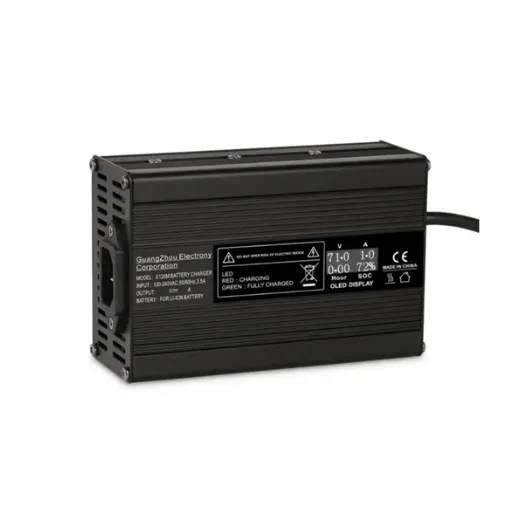
Field data from our factory and customer service team consistently surfaces the same handful of mistakes:
Mistake 1: Treating the chemistry swap as drop-in
In 2024, a Polish mobility brand switched from lead-acid to lithium packs to chase a lighter product story. The engineering team kept the same charger SKU, the same BMS pinout, and the same enclosure. Within six months, 25% of the fleet had degraded packs, and the warranty cost erased two years of margin gain. The fix took three months and a tooling change. The right move would have been to spec the charger and BMS at the same time as the cells.
Mistake 2: Using catalog chargers without curve validation
A datasheet that says "48V lithium charger" is not enough. The exact cutoff voltage, taper current, and termination threshold matter for cycle life. Always request the charge curve from the supplier, and have your cell vendor validate it against their recommended profile. Reputable suppliers share curves without hesitation.
Mistake 3: Ignoring float voltage on lithium
Lead-acid chargers drop to a float stage after absorption. Connect that to a lithium pack and the cells sit at 13.8V on a 12V equivalent system, which is 3.45V per cell on a 4S lithium pack. That is above the resting voltage and below the danger zone, but held for weeks it causes calendar fade and lithium plating. Use a charger with a hard termination and no float, or a BMS that opens the charge FET at 100% state of charge.
Mistake 4: Locking enclosure tooling before chemistry decision
Lithium packs are smaller and lighter than lead-acid packs at the same capacity. If you tool the enclosure first, the chemistry options shrink. Make the chemistry decision before industrial design freeze, or design the enclosure with margin for either.
Mistake 5: Skipping the temperature compensation
Outdoor products see real temperature swings. A charger without NTC monitoring and temperature-compensated cutoffs will accelerate cell degradation in summer heat and risk safety events in winter cold.
How to specify the right lead-acid or lithium-ion charger
For OEM brand owners approaching this decision, the workflow we recommend:
Define the duty cycle: Cycles per week, depth of discharge, ambient temperature range, expected calendar life. These numbers drive the chemistry choice.
Calculate weight and volume targets: Maximum pack mass and enclosure volume. These constrain the chemistry choice from the design side.
Lock the cell vendor and chemistry first: Get the cell datasheet and recommended charge profile in writing.
Spec the charger to match: Voltage, current, charge profile, taper, termination, temperature compensation. The charger should match the cell vendor's recommendation, not a generic catalog default.
Validate with engineering samples: Build one pack, charge it with the proposed charger, measure cell-level voltages and temperatures across the full charge cycle.
Lock the certification stack: DOE Level VI, ErP Tier V, UKCA, CE, UL, CCC, SAA as required by your target markets. Verify the charger model number matches the test report exactly.
Plan for production volume and lead time: Standard catalog chargers ship in 25 to 35 days; custom OEM units in 35 to 45 days. Budget the engineering sample phase accordingly.
Our OEM/ODM service supports each step of this process, from chemistry consultation through production lead time planning.
If you are also weighing LiFePO4 against standard Li-ion, read our companion comparison on LiFePO4 battery vs lithium ion to complete the picture.
Conclusion: the chemistry decision is also a charger decision
The lead acid battery vs lithium ion debate is rarely about which chemistry is "better" in isolation. It is about matching chemistry to duty cycle, weight budget, safety requirements, and total cost of ownership, then specifying a charger that actually delivers the cycle life and safety the chemistry promises.
To summarize the main takeaways for OEM buyers:
Lithium-ion wins on energy density (150 to 270 Wh/kg), cycle life (500 to 1,500 cycles), depth of discharge (80 to 90%), charge speed (1 to 2 hours), and long-term total cost of ownership for daily-cycle applications
Lead-acid wins on upfront cost, cold-temperature discharge tolerance, field repairability, and shallow-cycle standby applications
Chargers are not interchangeable between chemistries; charge profile, voltage accuracy, float behavior, and temperature compensation differ
Total cost of ownership favors lithium for fleet, scooter, solar, and storage applications where pack replacement frequency dominates the math
Certification stack is identical at the charger level; both chemistries need properly certified chargers for DOE Level VI, ErP Tier V, UKCA, CE, UL, CCC, and SAA as appropriate
The next step for any OEM weighing this decision is concrete: spec the duty cycle, get the chemistry recommendation from your cell vendor, and request a chemistry-matched charger sample before you lock the enclosure tooling.
Request a free engineering sample of either a lead-acid or lithium-ion charger tuned to your cell vendor's recommended curve, or get an OEM quote for a custom-profile production run. Our engineering team will return a proposed charge curve and sample timeline within 24 hours, with current certification documents attached.
The right chemistry, matched to the right charger, paired with the right certification stack, ships your product on time and keeps it out of the RMA queue. That is the partnership we have built across 15 million units a year since 2008.
Recently Posted
-
Global 100W Multi-Port GaN Charger with USB-C PD and QC3.0 Output
May 19, 2026Global 100W Multi-Port GaN Charger with USB-C PD and QC3.0 OutputThe global charging market is rapidly adopting GaN fast charging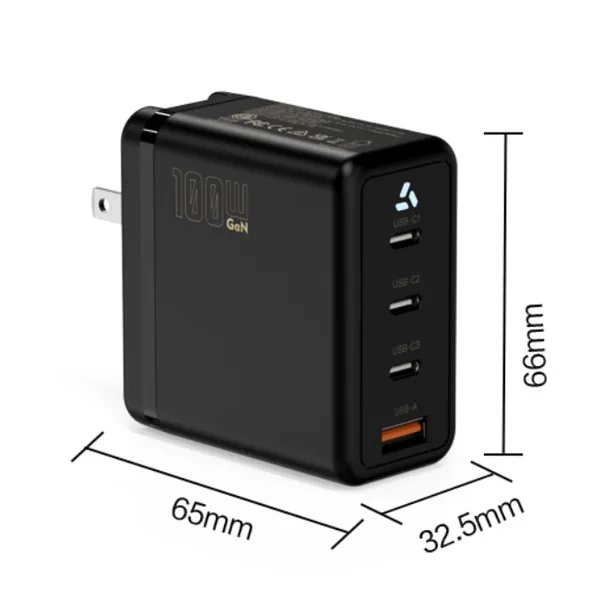 Read More
 -
Why 100W GaN Chargers Are the Future of USB-C Fast Charging?
May 19, 2026Why 100W GaN Chargers Are the Future of USB-C Fast Charging?As laptops and high-power USB-C devices become more common, demand for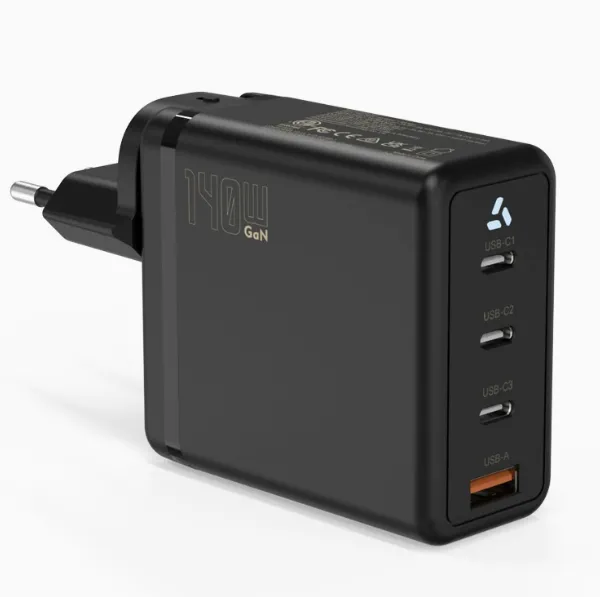 Read More
 -
100W GaN Fast Charger for Laptop, Tablet and Multi-Device Charging
May 19, 2026100W GaN Fast Charger for Laptop, Tablet and Multi-Device ChargingThe 100W GaN charger is designed for high-performance charging a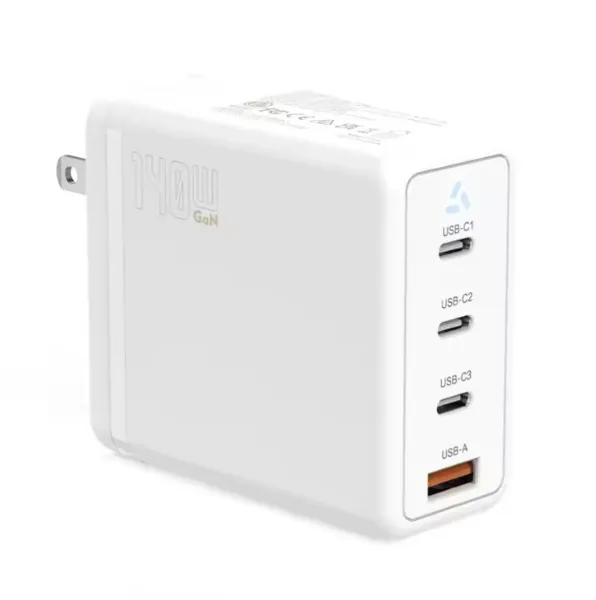 Read More
 -
Multi-Port 65W GaN Wall Charger for Global Fast Charging Applications
May 18, 2026Multi-Port 65W GaN Wall Charger for Global Fast Charging ApplicationsThe demand for compact high-power chargers continues to incre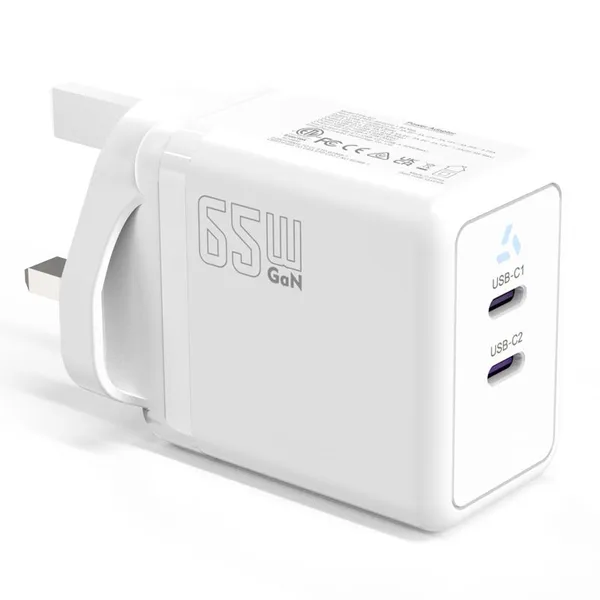 Read More

Contact Us
Recommended Products
-
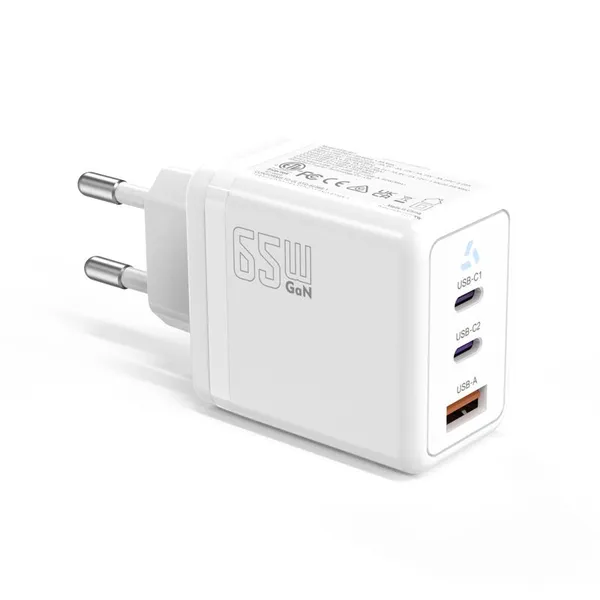
 65W USB-C GaN Wall Charger PD Fast Charging Adapter EU US Plug for Laptop Smartphone and TravelUS$ 6MOQ: 100 Pieces
 -
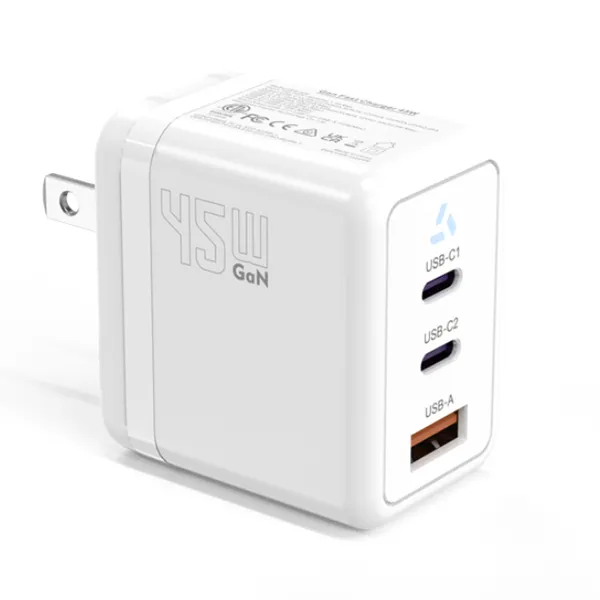
45W GaN USB-C Fast Charger JP Plug PD Wall Charging Adapter for IPhone MacBook and TabletsUS$ 8MOQ: 100 Pieces
-
QC3.0 30W USB Fast Charger With 18W Quick Charge Wall Adapter for Android and Mobile DevicesUS$ 4MOQ: 100 Pieces
-
Compact 18W Quick Charge 3.0 USB Charger 30W Fast Charging Adapter EU US Plug for TravelUS$ 2MOQ: 100 Pieces
-
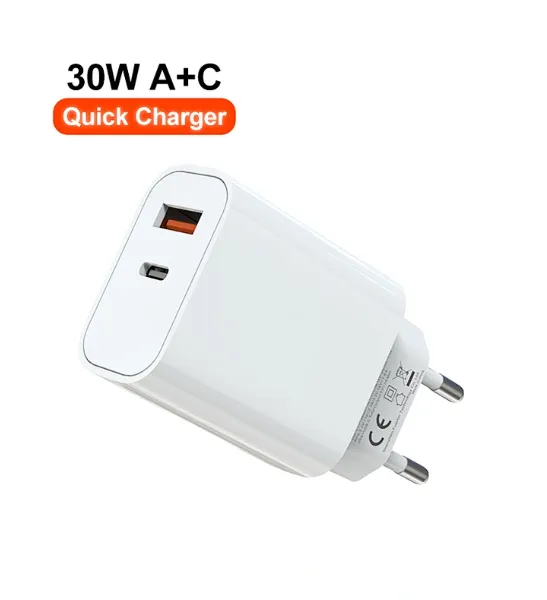
30W USB-C and USB-A PD Fast Charger Compact Wall Adapter for IPhone Samsung and IPadUS$ 3MOQ: 100 Pieces
-
35W Dual USB-C PD Charger Fast Charging Adapter for IPhone Samsung IPad and USB-C DevicesUS$ 3MOQ: 100 Pieces
-
65W USB-C GaN Charger EU Plug Fast Charging Adapter 65W USB-C PD Fast Charge Wall Charger Power Adapter for Macbook ProUS$ 5MOQ: 100 Pieces
-
65W GaN USB-C Fast Charger PD Wall Charging Adapter for Laptop IPhone and Mobile DevicesUS$ 5MOQ: 100 Pieces
-
100W GaN USB-C Fast Charger With PD 3.0 for Laptop, MacBook, IPhone & Multi-Device ChargingUS$ 12MOQ: 100 Pieces
-
45W GaN USB-C Fast Charger EU AU PD Fast Wall Charging Adapter for IPhone Tablets With CE REACH PassedUS$ 8MOQ: 100 Pieces
-
QC3.0 65W GaN USB C Super Fast Charger With UKCA 3 Ports PD 3.0 GaN Charger for Iphone Macbook SamsungUS$ 10MOQ: 100 Pieces
-
30W USB-C and USB-A GaN QC3.0 Fast Charging Adapter PD Fast Charger Compact Wall Adapter for IPhone Samsung and IPadUS$ 3MOQ: 100 Pieces
-
45W GaN USB-C Fast Charger With Dual Type-C and USB-A Ports PD Wall Charging AdapterUS$ 8MOQ: 100 Pieces
-
Dual USB C Ports QC3.0 30W Fast Charger With EU UK AU US USB-C PD Wall Chargeer 30W PD Power AdapterUS$ 3MOQ: 100 Pieces
-
Compact 65W GaN USB-C Wall Charger With Dual USB-C Ports and USB-A Fast Charging Adapter With CE UKCA ETL SAAUS$ 10MOQ: 100 Pieces
-
QC3.0 Fast Charging Adapter PD30W USB-C USB-A GaN PD Fast Charger PD 3.0 GaN Charger Compact Wall Adapter for IPhone Samsung and IPadUS$ 3MOQ: 100 Pieces
-
12V 5A 60W US EU AC DC Adapter LED Driver LED SMPS AC to DC Switching Power SupplyUS$ 5 - 7MOQ: 50 Pieces
-
CE FCC CUL SAA KC PSE 24Vdc 48W Switching Power Supply AdaptersUS$ 5 - 7MOQ: 50 Pieces
-
CE GS UKCA SAA CUL Qualified Waterproof Switching Power Supply Ip68 PSE UL SAA GS 12V 2AUS$ 3 - 6MOQ: 50 Pieces
-
12V 1A Factory OEM Waterproof AC Adapter for Laser Light Table Lamp ac dc Adaptor With TUV CE GS for EU MarketUS$ 5 - 7MOQ: 50 Pieces