
 Business License
What Is a LiFePO4 Battery? An Engineer's Guide for OEM Buyers
Last March, a scooter brand owner in Rotterdam shipped 4,200 units to a European distributor before realizing the cells inside were not what the bill of materials promised. The pack label said "LiFePO4." The cells were a generic NMC blend. Six months in, warranty returns started arriving with swollen cells and melted connectors, costing the brand more than 180,000 euros in replacement units and reputation damage.
That single sourcing mistake is why this guide exists. If you are specifying a battery pack for an e-bike, scooter, energy storage system, or industrial device, you need to know exactly what a LiFePO4 battery is, how it differs from other lithium chemistries, and why the wrong charger will quietly destroy it. This article walks through the chemistry, the specifications, the real applications, and the procurement questions you should ask before signing any purchase order.
A LiFePO4 battery is a lithium-ion battery that uses lithium iron phosphate (LiFePO4) as the cathode material. It runs at 3.2V per cell nominal, charges to 3.65V per cell, and delivers 2,000 to 5,000 charge cycles when paired with the right LiFePO4 battery charger. The rest of this guide explains why those numbers matter.
What "LiFePO4" actually stands for and why the chemistry matters
![what is a lifepo4 battery] (2)](https://img11.fr-trading.com/0/1_566_120562_512_512.jpg.webp?t=1779069550)
LiFePO4 is the chemical formula for lithium iron phosphate, a cathode material first commercialized for batteries in the late 1990s. The full molecular name is lithium ferrophosphate. You will also see it written as LFP, which is the abbreviation most cell manufacturers use on datasheets and which we use interchangeably with LiFePO4 throughout this article.
The cathode chemistry is the part of a lithium-ion cell that defines almost everything else: voltage, energy density, cycle life, thermal stability, and cost. A LiFePO4 battery is still technically a lithium-ion battery, but the iron-phosphate cathode behaves very differently from the cobalt and nickel-based cathodes used in laptop and smartphone batteries.
Three properties make LiFePO4 distinct:
Lower nominal voltage: 3.2V per cell versus 3.6 to 3.7V for NMC and LCO chemistries
Higher thermal stability: LFP releases oxygen at roughly 270°C, far above the 150 to 200°C threshold of NMC, which translates to lower thermal-runaway risk
Longer cycle life: 2,000 to 5,000 full discharge cycles versus 500 to 1,500 for typical NMC
In practice, that means a LiFePO4 battery is heavier and bulkier per kilowatt-hour than an NMC pack, but it lasts three to five times longer and is significantly less prone to thermal events. For e-mobility, energy storage, and any application where safety and service life matter more than absolute energy density, LFP is now the dominant choice.
How a LiFePO4 battery compares to other lithium chemistries
![what is a lifepo4 battery] (3)](https://img11.fr-trading.com/0/1_739_119798_512_512.jpg.webp?t=1779069550)
Buyers often arrive at our engineering desk asking, "Should we go LFP or NMC?" The answer depends on what the end product needs. Here is the practical comparison we share with brand owners during a charger specification call.
| Property | LiFePO4 (LFP) | NMC (Nickel Manganese Cobalt) | LCO (Lithium Cobalt Oxide) |
|---|---|---|---|
| Nominal cell voltage | 3.2V | 3.7V | 3.7V |
| Full-charge cutoff | 3.65V | 4.2V | 4.2V |
| Energy density | 90 to 160 Wh/kg | 150 to 250 Wh/kg | 150 to 200 Wh/kg |
| Cycle life | 2,000 to 5,000 | 500 to 1,500 | 500 to 1,000 |
| Thermal runaway temperature | ~270°C | ~210°C | ~150°C |
| Typical application | E-bikes, scooters, ESS, solar | Laptops, EVs, power tools | Smartphones, tablets |
LFP wins on cycle life and safety. NMC wins on weight and volume. LCO is mostly legacy consumer electronics. If your end product sits outdoors, gets charged daily, and needs to survive five years of operation, LFP is almost always the right call. If your end product is a flagship laptop where every gram counts, NMC still has the edge.
Pro tip: Some suppliers in Shenzhen quietly substitute NMC cells into "LFP-marked" packs to save weight and cost. Always ask for cell datasheets with manufacturer name and exact part number, and inspect a sample before signing. The Rotterdam scooter brand learned this the expensive way.
The chemistry difference also drives the charger choice. A 4.2V-per-cell Li-ion charger will either stall on a LiFePO4 pack or, worse, damage the cells. We cover that in detail later, and our Li-ion vs LiFePO4 charger comparison goes deeper for engineers who need the full breakdown.
The seven specifications that define a LiFePO4 cell
When you receive a LiFePO4 cell datasheet from a vendor, seven numbers tell you almost everything you need to know about the pack you can build with it. Skip any of these during sourcing and you will pay for it during warranty season.
1. Nominal voltage and full-charge cutoff
Every LFP cell sits at 3.2V nominal and 3.65V at full charge. Series them up and you get the standard pack voltages used in production today:
4S: 12.8V nominal, 14.6V full charge (replaces lead-acid 12V)
8S: 25.6V nominal, 29.2V full charge (small e-bike, marine)
12S: 38.4V nominal, 43.8V full charge (mid-range scooter)
15S: 48V nominal, 54.6V full charge (the e-bike industry standard)
16S: 51.2V nominal, 58.4V full charge (energy storage)
20S: 64V nominal, 73V full charge (high-power scooter)
24S: 76.8V nominal, 87.6V full charge (light electric vehicles)
The cutoff voltage is the single most important number for charger matching. A charger that cuts at 56V instead of 54.6V will overcharge a 15S LFP pack on every cycle.
2. Capacity (Ah)
LFP cell capacity ranges from 1Ah for small cylindrical cells up to 300Ah for large prismatic cells used in stationary storage. Pack capacity is determined by series and parallel cell counts: a 15S4P pack of 25Ah cells gives 48V at 100Ah.
3. Continuous discharge current (C-rate)
Most LFP cells handle 1C to 3C continuous discharge. A 20Ah cell at 1C delivers 20A continuously. High-performance LFP cells can handle 5C to 10C pulse discharge for short-duration loads like scooter acceleration.
4. Cycle life
Datasheets typically quote cycle life "to 80% capacity remaining at 0.5C discharge depth and 25°C ambient." Real-world cycle life depends heavily on operating temperature, depth of discharge, and charge current. We see field cycle life in the 2,500 to 3,500 range on properly specified e-bike packs.
5. Operating temperature range
Charge: 0°C to 45°C typical. Discharge: -20°C to 60°C typical. Charging an LFP pack below freezing is the fastest way to kill it, which is why outdoor applications need either heated packs or a low-temperature cutoff in the BMS.
6. Internal resistance
A healthy LFP cell sits in the 0.5 to 5 milliohm range, depending on capacity and form factor. Rising internal resistance over time is the leading indicator of cell aging. Anenerge's lab measures internal resistance on incoming cell lots before integration into our charger validation testing.
7. BMS requirements
A LiFePO4 battery is never just cells. It is cells plus a battery management system. The BMS handles cell balancing, over-voltage cutoff, over-current cutoff, temperature monitoring, and state-of-charge calculation. Spec the BMS as carefully as you spec the cells.
Ready to validate a LiFePO4 pack and charger combination for your product? Request a free engineering sample and our team will pair a charger to your cell datasheet within 48 hours.
Where LiFePO4 batteries are being used in production today
![what is a lifepo4 battery] (1)](https://img11.fr-trading.com/0/1_147_120638_512_512.jpg.webp?t=1779069550)
LFP started in narrow industrial niches and is now the default choice across a growing list of applications. These are the categories where we ship the highest volumes of matched LiFePO4 chargers every month.
Light electric vehicles and e-mobility
E-bikes, electric scooters, electric mopeds, and low-speed electric cars have largely migrated to LFP in the last five years. The cycle life advantage matters enormously for a product that gets charged 300 to 500 times per year. A 15S 20Ah LFP pack on a delivery scooter in Madrid will outlast the scooter itself when paired with a chemistry-matched 54.6V charger.
Stationary energy storage
Solar home batteries, telecom backup, off-grid cabins, and commercial peak-shaving systems are almost entirely LFP today. The thermal stability is non-negotiable when a battery sits in an unattended cabinet for ten years. The Tesla Megapack switch from NMC to LFP in 2024 effectively ended the chemistry debate for grid storage.
Marine and RV
12V LFP packs are replacing lead-acid in boats and recreational vehicles at a rapid pace. A 4S LFP pack at 12.8V nominal drops directly into a lead-acid slot, weighs roughly one third as much, and delivers four to five times the cycle life. The catch: lead-acid chargers run at 14.4V to 14.7V, which is too high for a 4S LFP pack that needs 14.6V exactly. The wrong charger turns a "drop-in replacement" into a warranty disaster.
Power tools and outdoor equipment
Cordless lawnmowers, leaf blowers, and professional-grade power tools have shifted to LFP for the cycle life and the lower fire risk in storage sheds and contractor vans.
Industrial and medical equipment
Statistical instruments, mobile carts, and 24/7 monitoring systems use LFP for its predictable behavior over long service intervals. We supply chargers into all of these segments with the same CC-CV platform.
Engineering insight: When a brand owner from a German solar startup contacted us last August, they had built a 48V 100Ah home storage pack but were sourcing a generic Li-ion charger that pushed 58V at full charge. The pack had been losing capacity at roughly 4% per month, and they could not understand why. We supplied a 54.6V LFP-tuned charger with a documented CC-CV curve, and the capacity loss rate dropped to under 0.3% per month within the next quarter. Same cells. Different charger. Five-year-pack instead of a six-month pack.
Why LiFePO4 batteries demand a dedicated charger
Every section so far has hinted at this point. Now it gets concrete: a LiFePO4 battery requires a charger built for LFP chemistry. A generic Li-ion charger is not a substitute, and a lead-acid charger is even worse.
The reason is the constant-current, constant-voltage (CC-CV) charge profile, which we cover in depth in our CC-CV charging explainer. A LiFePO4 charger does three things a generic charger does not:
Cuts at 3.65V per cell instead of 4.2V (a 13% difference that protects every cell)
Terminates at roughly 0.05C instead of holding the pack at full voltage indefinitely
Includes a low-temperature cutoff so the pack will not charge below 0°C and plate the anode
Use the wrong charger and one of three things happens. The BMS shuts the pack off at 3.65V per cell and the charger sits in a permanent stall. The BMS fails or is undersized, and cells take damage that cuts cycle life by 30 to 50 percent. In the worst case, individual cells vent or degrade rapidly enough to trigger field replacements.
Per Battery University's published LFP charge data, maintaining the correct CC-CV cutoff is the single biggest factor in achieving the cycle life quoted on the cell datasheet. Voltage accuracy of ±0.5% across load and temperature is what separates a production-grade charger from a knockoff.
Anenerge tests every LFP charger to 100% functional and high-voltage isolation, with output voltage held within ±0.5% across the full load range. We have built more than two million LFP chargers since 2018, and the charge curve documentation ships with every order.
Common questions OEM buyers ask about LiFePO4 batteries
![what is a lifepo4 battery]](https://img11.fr-trading.com/0/1_687_120460_512_512.jpg.webp?t=1779069550)
These are the questions we hear most often during sample requests and engineering calls. Short, direct answers.
Is a LiFePO4 battery the same as a lithium-ion battery?
Technically yes. LiFePO4 is one of several lithium-ion chemistries. Practically, when people say "lithium-ion" they usually mean NMC or LCO chemistry, which behave very differently from LFP. Always clarify the cathode chemistry on cell datasheets.
Can I charge a LiFePO4 battery with a regular lithium charger?
No. A standard Li-ion charger targets 4.2V per cell, which is too high for LFP cells that cutoff at 3.65V. Either the charger stalls or the pack takes cumulative damage.
How long does a LiFePO4 battery last?
In cycles: 2,000 to 5,000. In years: typically 8 to 15 years for properly specified packs in moderate operating conditions. Calendar aging is slower for LFP than for NMC.
Are LiFePO4 batteries safe?
LFP is the safest mainstream lithium chemistry. Thermal runaway threshold is around 270°C versus 150 to 210°C for other lithium chemistries. They still need a proper BMS and a chemistry-matched charger, but they are categorically less prone to fire than NMC or LCO.
How much does a LiFePO4 battery cost?
Cell-level pricing varies with capacity and form factor, but at the pack level a 48V 20Ah LFP pack typically lands at 1.5 to 2 times the cost of an equivalent lead-acid pack. The lifecycle math still favors LFP because of the cycle life multiplier.
What certifications should a LiFePO4 battery carry?
For cells: IEC 62133, UN 38.3 (transportation), and UL 1642. For packs: IEC 62619 or UL 1973 depending on application. For the charger: UL 62368-1, CE, UKCA, FCC, and DOE Level VI efficiency for the U.S. market.
Bringing it together: what every OEM buyer should specify
A LiFePO4 battery is a lithium iron phosphate cell, running at 3.2V nominal and 3.65V at full charge, delivering 2,000 to 5,000 cycles when paired with the right CC-CV charger. The chemistry is safer and longer-lasting than NMC, slightly heavier per kilowatt-hour, and increasingly the default choice for e-mobility, energy storage, marine, RV, and industrial applications.
The five takeaways for any brand owner sourcing an LFP pack and charger:
Verify the chemistry on the cell datasheet, not just the pack label
Match the charger cutoff voltage exactly to your pack series count (54.6V for 15S, not 56V)
Spec a BMS that handles cell balancing, over-voltage, over-current, and temperature
Demand a documented CC-CV charge curve from your charger supplier before signing a PO
Confirm the certification stack covers every market you plan to ship into
If you are designing an e-bike, scooter, energy storage, marine, or industrial product around a LiFePO4 battery, the charger is the part that decides whether the pack lasts five years or six months. Send us your cell specification and pack configuration. Our engineering team will return a proposed CC-CV curve and an engineering sample within two weeks.
Request a free LiFePO4 charger sample or contact our engineering team with your application requirements. Built right, a LiFePO4 battery is the longest-lasting, safest lithium chemistry on the market. Built wrong, it is the most expensive lesson in your warranty budget.
Recently Posted
-
45W GaN Fast Charger with Dual USB-C and QC3.0 USB Output
May 15, 202645W GaN Fast Charger with Dual USB-C and QC3.0 USB OutputThe 45W GaN charger combines compact size with powerful charging performa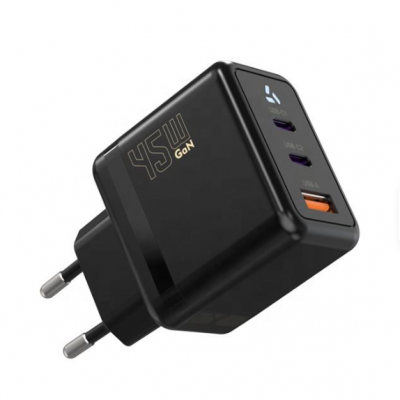 Read More
 -
Global USB-C Charging Trend Drives PD30W Fast Charger Demand
May 15, 2026Global USB-C Charging Trend Drives PD30W Fast Charger DemandAs USB-C charging becomes the international standard, PD30W chargers a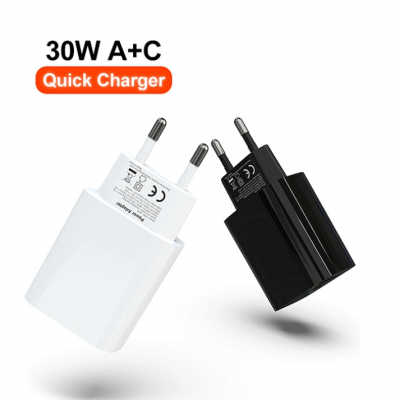 Read More
 -
Compact PD30W Charger with QC3.0 USB Fast Charging
May 15, 2026Compact PD30W Charger with QC3.0 USB Fast ChargingConsumers today need compact and efficient charging solutions. The PD30W fast ch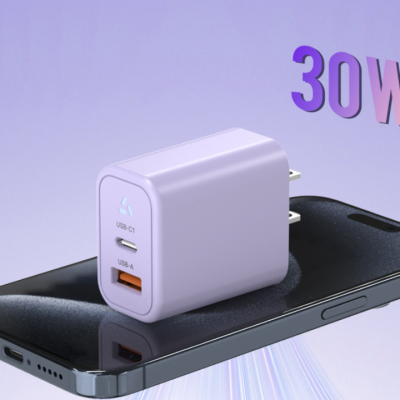 Read More
 -
How Long Do LiFePO4 Batteries Last? A Brand Owner's Lifespan Guide
May 15, 2026Ask ten suppliers how long a LiFePO4 pack will last and you will hear ten different numbers. One spec sheet promises 2,000 cycles.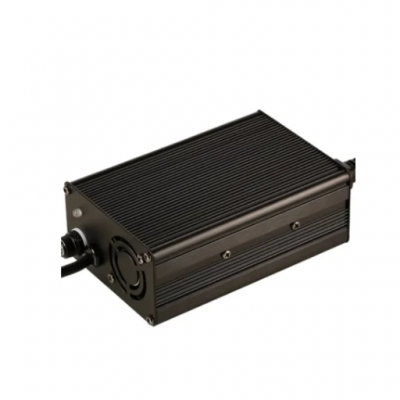 Read More

Contact Us
Recommended Products
-
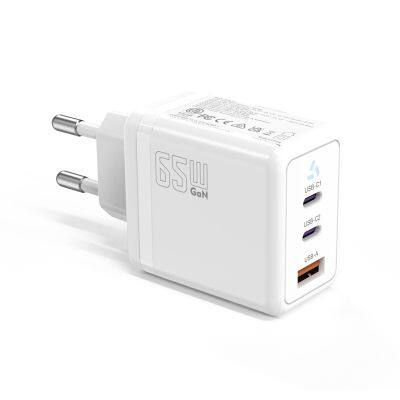
 65W USB-C GaN Wall Charger PD Fast Charging Adapter EU US Plug for Laptop Smartphone and TravelUS$ 6MOQ: 100 Pieces
 -
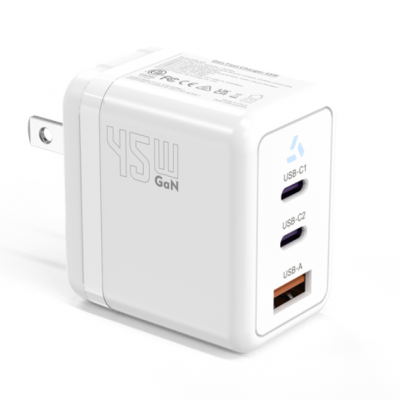
45W GaN USB-C Fast Charger JP Plug PD Wall Charging Adapter for IPhone MacBook and TabletsUS$ 8MOQ: 100 Pieces
-
QC3.0 30W USB Fast Charger With 18W Quick Charge Wall Adapter for Android and Mobile DevicesUS$ 4MOQ: 100 Pieces
-
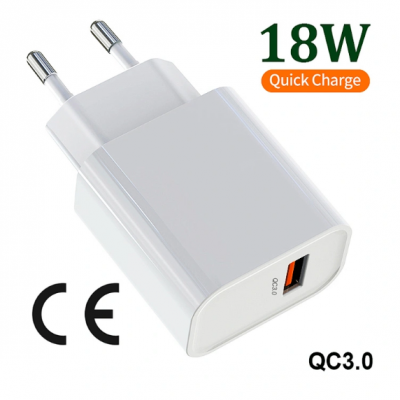
Compact 18W Quick Charge 3.0 USB Charger 30W Fast Charging Adapter EU US Plug for TravelUS$ 2MOQ: 100 Pieces
-
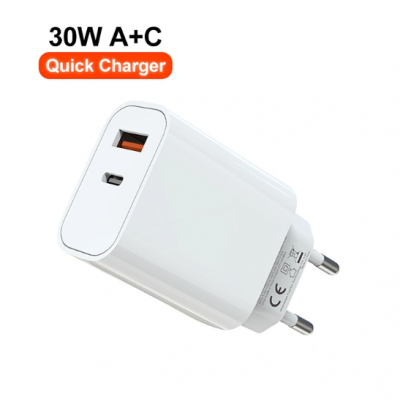
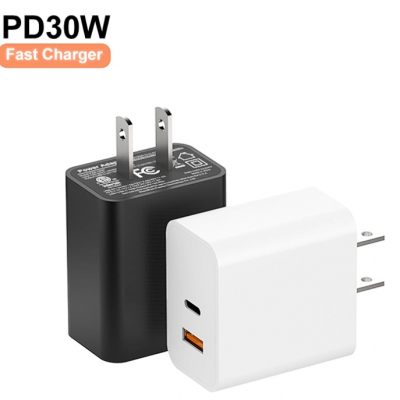
30W USB-C and USB-A PD Fast Charger Compact Wall Adapter for IPhone Samsung and IPadUS$ 3MOQ: 100 Pieces
-
35W Dual USB-C PD Charger Fast Charging Adapter for IPhone Samsung IPad and USB-C DevicesUS$ 3MOQ: 100 Pieces
-
65W USB-C GaN Charger EU Plug Fast Charging Adapter 65W USB-C PD Fast Charge Wall Charger Power Adapter for Macbook ProUS$ 5MOQ: 100 Pieces
-
65W GaN USB-C Fast Charger PD Wall Charging Adapter for Laptop IPhone and Mobile DevicesUS$ 5MOQ: 100 Pieces
-
100W GaN USB-C Fast Charger With PD 3.0 for Laptop, MacBook, IPhone & Multi-Device ChargingUS$ 12MOQ: 100 Pieces
-
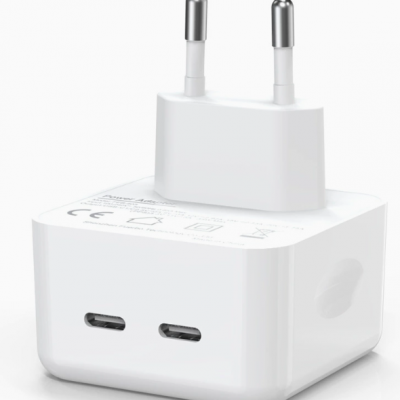
45W GaN USB-C Fast Charger EU AU PD Fast Wall Charging Adapter for IPhone Tablets With CE REACH PassedUS$ 8MOQ: 100 Pieces
-
QC3.0 65W GaN USB C Super Fast Charger With UKCA 3 Ports PD 3.0 GaN Charger for Iphone Macbook SamsungUS$ 10MOQ: 100 Pieces
-
30W USB-C and USB-A GaN QC3.0 Fast Charging Adapter PD Fast Charger Compact Wall Adapter for IPhone Samsung and IPadUS$ 3MOQ: 100 Pieces
-
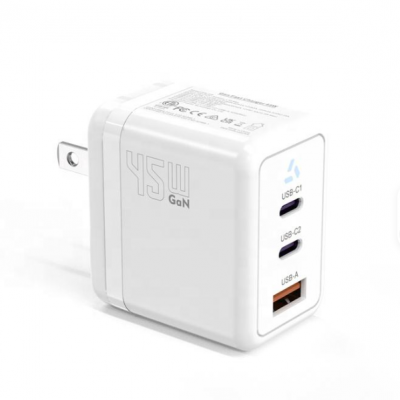
45W GaN USB-C Fast Charger With Dual Type-C and USB-A Ports PD Wall Charging AdapterUS$ 8MOQ: 100 Pieces
-
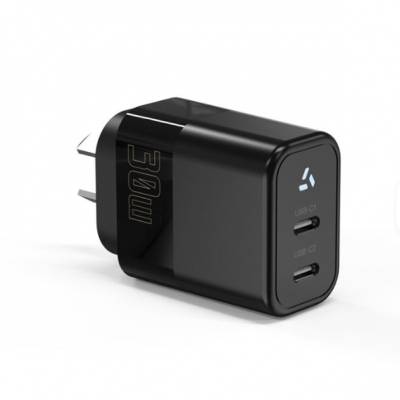
Dual USB C Ports QC3.0 30W Fast Charger With EU UK AU US USB-C PD Wall Chargeer 30W PD Power AdapterUS$ 3MOQ: 100 Pieces
-
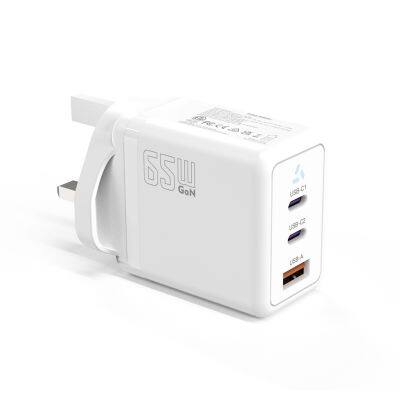
Compact 65W GaN USB-C Wall Charger With Dual USB-C Ports and USB-A Fast Charging Adapter With CE UKCA ETL SAAUS$ 10MOQ: 100 Pieces
-
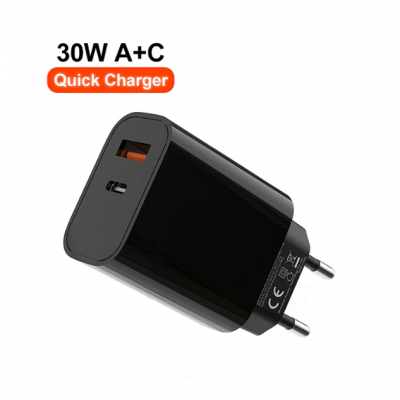
QC3.0 Fast Charging Adapter PD30W USB-C USB-A GaN PD Fast Charger PD 3.0 GaN Charger Compact Wall Adapter for IPhone Samsung and IPadUS$ 3MOQ: 100 Pieces
-
12V 5A 60W US EU AC DC Adapter LED Driver LED SMPS AC to DC Switching Power SupplyUS$ 5 - 7MOQ: 50 Pieces
-
CE FCC CUL SAA KC PSE 24Vdc 48W Switching Power Supply AdaptersUS$ 5 - 7MOQ: 50 Pieces
-
CE GS UKCA SAA CUL Qualified Waterproof Switching Power Supply Ip68 PSE UL SAA GS 12V 2AUS$ 3 - 6MOQ: 50 Pieces
-
12V 1A Factory OEM Waterproof AC Adapter for Laser Light Table Lamp ac dc Adaptor With TUV CE GS for EU MarketUS$ 5 - 7MOQ: 50 Pieces