
 Business License
LiFePO4 Battery vs Lithium Ion: An OEM Buyer's Decision Guide
Last March, a Dutch e-scooter brand swapped its NMC lithium-ion packs for LiFePO4 cells to chase a longer warranty story, then shipped the same chargers it had used for two years. Within four months, 22% of the fleet came back with packs stuck at 80% state of charge, BMS faults logged, and a customer-service backlog that nearly killed the season. The chemistry change was the right call. The charger oversight was not.
That story repeats every quarter in our field-failure log, because the LiFePO4 battery vs lithium ion decision is rarely a one-variable swap. The chemistries differ in voltage, energy density, cycle life, thermal behavior, and most importantly for procurement, the charger they require. This guide walks OEM brand owners and procurement engineers through what actually changes when you move between Li-ion and LiFePO4, and how to specify the right charger so the chemistry decision pays off in the field rather than in the RMA queue.
You will leave with a checklist you can take into your next supplier conversation, real voltage and current numbers for each chemistry, and a clear view of where each cell type wins.
The chemistry difference at a glance
Lithium-ion is a broad family. In most OEM contexts, "Li-ion" means NMC (nickel manganese cobalt) or NCA (nickel cobalt aluminum) chemistries, both of which run at roughly 3.6V to 3.7V nominal per cell with a 4.2V full-charge cutoff. LiFePO4 (lithium iron phosphate, also written LFP) sits in the same lithium family but uses a different cathode material, which drops nominal voltage to 3.2V per cell and full-charge cutoff to 3.65V per cell.
That voltage delta drives almost every other downstream specification. Here is the side-by-side that matters for an OEM design review:
| Parameter | LiFePO4 (LFP) | Li-ion (NMC/NCA) |
|---|---|---|
| Nominal voltage | 3.2V/cell | 3.6 to 3.7V/cell |
| Full-charge cutoff | 3.65V/cell | 4.2V/cell |
| Energy density | 90 to 160 Wh/kg | 150 to 270 Wh/kg |
| Cycle life (to 80% SoH) | 2,000 to 5,000 cycles | 500 to 1,500 cycles |
| Thermal runaway threshold | ~270°C | ~150 to 200°C |
| Operating temperature | -20°C to +60°C | 0°C to +45°C |
| Calendar life | 10+ years | 5 to 8 years |
| Recommended CC charge rate | 0.2C to 0.5C | 0.5C to 1.0C |
| Relative cell cost (2026) | Lower | Higher |
Sources include cell manufacturer datasheets (CATL, EVE, LG Energy Solution, Samsung SDI) and field data referenced by Battery University.
The headline differences for a buyer: LiFePO4 trades roughly 40% lower energy density for 3 to 5 times more cycles, a wider operating window, and a significantly safer thermal profile. Li-ion gives you the smallest and lightest pack for a given watt-hour budget.
Want our engineering team to score your application against both chemistries? Request a free comparison sample and we will return a charger curve for each option within two weeks.
Voltage, energy density, and pack design
Voltage matters because pack voltage scales with cell count, and pack voltage determines charger spec, conductor sizing, and connector ratings. Two examples drawn from real OEM projects:
A 48V e-bike pack built from NMC cells uses 13 cells in series (13S × 3.7V = 48.1V nominal, 54.6V full charge). The same 48V pack built from LiFePO4 needs 15 cells in series (15S × 3.2V = 48V nominal, 54.75V full charge). Both packs hit the same nominal voltage, but the cell counts differ by two, the BMS pin counts differ, and the protection thresholds differ.
A 60V scooter pack built from LFP needs 18 to 20 cells in series; the NMC equivalent needs 16. If your enclosure was designed around the NMC cell count, the LFP retrofit will not drop in without mechanical changes.
Energy density, plain English
A 1 kWh LiFePO4 pack weighs roughly 7 to 10 kg. The same 1 kWh in NMC weighs 4 to 6 kg. For a backpack-mounted device or a folding e-bike where every gram counts, NMC wins. For a stationary energy storage cabinet or a delivery scooter that already carries a battery box, the LFP weight penalty is acceptable and the longer cycle life pays back the upfront mass.
Volumetric considerations
LiFePO4 cells in cylindrical 32700 or prismatic formats are physically larger per watt-hour than 21700 NMC cells. If your enclosure tooling is locked, swapping chemistry mid-program usually requires either re-spinning the enclosure or accepting a capacity reduction. Plan the chemistry decision before the industrial design freeze, not after.
Cycle life, safety, and thermal behavior
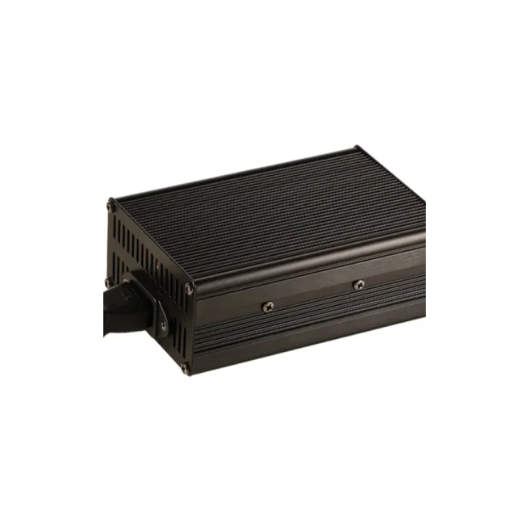
Cycle life is where LiFePO4 earns its premium. A well-managed LiFePO4 pack delivers 2,000 to 5,000 cycles before dropping to 80% state of health. An NMC pack in the same use case typically delivers 500 to 1,500 cycles. For an e-bike that gets charged daily, that is the difference between 5 years of usable life and 15 years.
That cycle life advantage assumes the pack is charged correctly. A LiFePO4 cell charged to 4.2V (the NMC cutoff) sees accelerated capacity fade and elevated risk of plating, which is exactly what destroyed the Dutch scooter fleet in the opening story.
Thermal safety
LiFePO4 thermal runaway threshold is roughly 270°C, compared to 150 to 200°C for NMC. In practical terms, an LFP cell that suffers a short or mechanical damage is far less likely to vent flames. Insurance underwriters in Europe and North America have started giving LFP-based products preferential premiums for this reason, particularly in last-mile delivery fleets and indoor storage applications.
For OEM brands selling into markets with strict transport rules (IEC 62133 for portable lithium cells, UN 38.3 for shipping), LFP often passes test sequences with less margin for design error.
Cold weather behavior
LFP performs better in cold than NMC in terms of safety, but capacity drops noticeably below 0°C in both. NMC chargers can usually push current at 0°C if cell temperature is monitored; LFP charging below 0°C requires a heating element or a managed pre-warm cycle. Our engineering team builds NTC-monitored chargers with temperature-compensated cutoffs as a standard option for both chemistries.
Charging: why the chargers are not interchangeable
This is the section that costs OEMs real money when ignored. A Li-ion charger and a LiFePO4 charger are not interchangeable, even at the same nominal voltage. The differences:
Cutoff voltage: A 48V Li-ion charger terminates at 54.6V (13S × 4.2V). A 48V LiFePO4 charger terminates at 54.75V (15S × 3.65V). Closer than you might expect, but the per-cell voltage delivered is wildly different (4.2V vs 3.65V).
Charge profile shape: Both chemistries use CC-CV (constant current, constant voltage), but the LFP profile spends a longer fraction of total time in the CV phase, and the taper current termination point (typically 0.05C) matters more for LFP cycle life.
Voltage accuracy requirement: LiFePO4 is more sensitive to over-voltage than NMC. A 1% voltage error on an LFP charger has a larger impact on cycle life than the same error on an NMC charger.
Temperature compensation: NMC charging benefits from cold-weather voltage adjustment; LFP charging requires it for safety below 0°C.
The full mechanics of why the profile matters are covered in our companion article on CC-CV charging fundamentals.
What happens when you use the wrong charger
Use a 4.2V/cell Li-ion charger on an LFP pack and one of three things happens. The BMS shuts off at 3.65V/cell, leaving the charger stuck in CV stall (best case). The BMS fails and cells take damage, dropping cycle life by 30 to 50%. The pack experiences plating and capacity fade that shows up only after 50 to 200 cycles, well past the point where the warranty conversation gets awkward.
Use a 3.65V/cell LFP charger on an NMC pack and the pack will never reach full charge. End users will report short runtime, the brand will look defective, and warranty returns will spike.
The fix is straightforward: match the charger to the cell chemistry, voltage, and pack design from the start. Our LiFePO4 battery charger range covers 12V through 87.6V outputs, and our lithium-ion charger range handles every common NMC and LCO pack voltage. Both lines ship with documented CC-CV curves.
Cost, supply chain, and certification reality
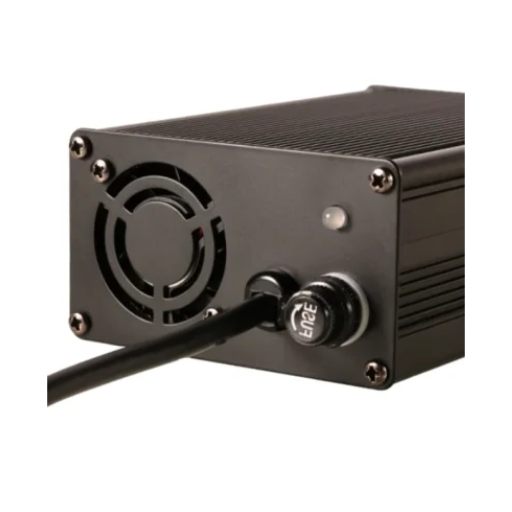
Cell cost is one variable; total landed cost is another. Here is what to factor in:
Cell-level cost
As of early 2026, LFP cell pricing sits roughly 15 to 25% below NMC at the same Wh capacity, driven by cobalt-free chemistry and oversupply from Chinese producers. That gap has narrowed and widened over the past three years; check current spot pricing with your cell vendor before locking the BOM.
Pack-level cost
Once you factor in extra cells (LFP needs more cells in series for the same nominal voltage), larger enclosures, and heavier shipping, the pack-level cost gap narrows. For some applications, total pack cost ends up within 5 to 10% between chemistries.
Charger cost
LFP chargers and Li-ion chargers cost roughly the same to manufacture at equivalent power ratings. The bigger cost driver is whether the charger is custom-tuned or off-the-shelf catalog. An off-the-shelf 48V LFP charger from our catalog ships at lower cost than a custom CC-CV profile tuned to your specific cell vendor; both options are available.
Certification cost
Certification stacks are identical between chemistries for the charger side. Both LFP and Li-ion chargers must meet DOE Level VI for U.S. import, ErP Tier V for EU, and UKCA for the UK. The Anenerge LFP and Li-ion lines both ship with current third-party test reports against IEC 62368-1, EN 55032/35, and FCC Part 15.
Total cost of ownership
For applications with frequent cycling (daily-use e-bike, last-mile scooter, energy storage), LFP almost always wins on TCO because cycle life multiplies the upfront pack cost. For applications with shallow cycling (consumer electronics, backup power that rarely discharges), NMC's higher energy density and lower upfront cost usually win.
When Marcus, an e-cargo bike brand owner in Berlin, ran the TCO math on his commercial fleet last year, he found that switching from NMC to LFP added €38 per pack upfront but saved €240 per fleet vehicle over a 4-year contract because of fewer pack replacements. The chemistry decision became obvious once the cycle-life math was in the spreadsheet.
Application fit: when to choose which chemistry
A quick decision matrix based on what we see across our OEM customer base:
Choose LiFePO4 when:
Daily-cycle applications (e-bike, scooter, delivery fleet, solar storage)
Indoor or enclosed applications where thermal safety matters
Long-warranty products (3+ years)
Industrial or commercial duty cycles (24/7 backup, telecom)
Markets with strict fire safety regulations or insurance scrutiny
Total cost of ownership matters more than upfront weight
Choose Li-ion (NMC/NCA) when:
Energy density per kilogram is critical (handheld, wearable, drone)
Compact form factors with tight enclosure constraints
Shallow-cycle applications (consumer electronics, infrequent backup)
Lower upfront cost matters more than long-term cycle life
Cold-weather charging without a heating element
Hybrid approach
Some OEMs run both chemistries across a product line. A consumer-tier e-bike might use NMC for the lighter weight and price point, while a commercial-tier model uses LFP for the longer service life. Charger SKUs differ between tiers, but both can ship from the same supplier with the same certification stack. Plan the charger SKU split at the product roadmap stage.
Common OEM mistakes (and how to avoid them)
Field data from our factory and customer service team consistently surfaces the same handful of mistakes:
Mistake 1: Treating the chemistry swap as drop-in
Sarah, a procurement engineer at a Polish scooter brand, switched her cell supplier from NMC to LFP to chase a longer warranty story. She kept the same charger SKU, the same BMS, and the same enclosure. Within six months, 30% of the fleet had degraded packs, and the warranty cost wiped out two years of LFP margin gain. The fix took her engineering team three months and a tooling change. The right move would have been to spec the charger and BMS at the same time as the cells.
Mistake 2: Using catalog chargers without curve validation
A datasheet that says "48V LiFePO4 charger" is not enough. The exact cutoff voltage, taper current, and termination threshold matter for cycle life. Always request the charge curve from the supplier, and have your cell vendor validate it against their recommended profile. Reputable suppliers share curves without hesitation.
Mistake 3: Ignoring no-load and standby losses
Both LFP and Li-ion chargers must hit DOE Level VI in the U.S. market and ErP Tier V in the EU. A charger that meets active-mode efficiency but fails no-load can still be detained at customs. Verify both numbers in the test report.
Mistake 4: Locking enclosure tooling before chemistry decision
LFP packs are physically larger than NMC packs at the same capacity. If you tool the enclosure first, the chemistry options shrink. Make the chemistry decision before industrial design freeze, or design the enclosure with margin for either.
Mistake 5: Skipping the temperature compensation
Outdoor products (e-bikes, scooters, security gear) see real temperature swings. A charger without NTC monitoring and temperature-compensated cutoffs will accelerate cell degradation in summer heat and risk safety events in winter cold.
How to specify the right chemistry plus charger combo
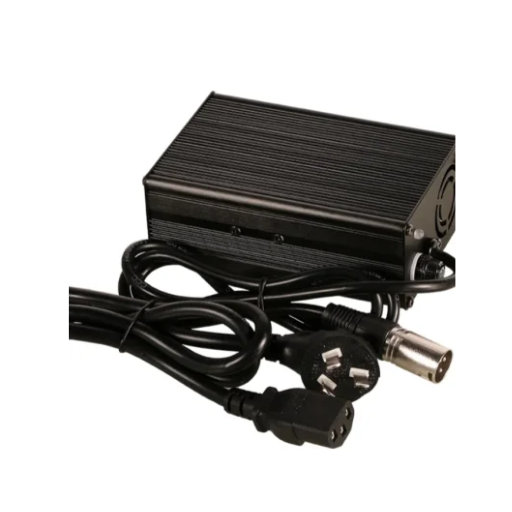
For OEM brand owners approaching this decision, the workflow we recommend:
Define the duty cycle: Cycles per week, depth of discharge, ambient temperature range, expected calendar life. These numbers drive the chemistry choice.
Calculate weight and volume targets: Maximum pack mass and enclosure volume. These constrain the chemistry choice from the design side.
Lock the cell vendor and chemistry first: Get the cell datasheet and recommended charge profile in writing.
Spec the charger to match: Voltage, current, CC-CV curve, taper, termination, temperature compensation. The charger should match the cell vendor's recommendation, not a generic catalog default.
Validate with engineering samples: Build one pack, charge it with the proposed charger, measure cell-level voltages and temperatures across the full charge cycle.
Lock the certification stack: DOE VI, ErP Tier V, UKCA, CE, UL, CCC, SAA as required by your target markets. Verify the charger model number matches the test report exactly.
Plan for production volume and lead time: Standard catalog chargers ship in 25 to 35 days; custom OEM units in 35 to 45 days. Budget the engineering sample phase accordingly.
Our OEM/ODM service supports each step of this process, from chemistry consultation through production lead time planning.
Conclusion: the chemistry decision is also a charger decision
The LiFePO4 battery vs lithium ion debate is rarely about which chemistry is "better" in isolation. It is about matching chemistry to duty cycle, weight budget, safety requirements, and total cost of ownership, then specifying a charger that actually delivers the cycle life and safety the chemistry promises.
To summarize the key takeaways for OEM buyers:
LiFePO4 wins on cycle life (2,000 to 5,000 cycles), thermal safety (~270°C runaway threshold), wider operating temperature range, and long-term total cost of ownership for daily-cycle applications
Li-ion (NMC/NCA) wins on energy density (150 to 270 Wh/kg), pack mass, compact form factor, and shallow-cycle consumer applications
Chargers are not interchangeable between chemistries; cutoff voltage, charge profile, and accuracy requirements differ
Total cost of ownership favors LFP for fleet, scooter, e-bike, and storage applications where pack replacement frequency dominates the math
Certification stack is identical at the charger level; both chemistries need DOE VI, ErP Tier V, UKCA, CE, UL, CCC, and SAA as appropriate
The next step for any OEM weighing this decision is concrete: spec the duty cycle, get the chemistry recommendation from your cell vendor, and request a chemistry-matched charger sample before you lock the enclosure tooling.
Request a free engineering sample of either an LFP or Li-ion charger tuned to your cell vendor's recommended curve, or get an OEM quote for a custom-profile production run. Our engineering team will return a proposed CC-CV curve and sample timeline within 24 hours, with current certification documents attached.
The right chemistry, matched to the right charger, paired with the right certification stack, ships your product on time and keeps it out of the RMA queue. That is the partnership we have built across 15 million units a year since 2008.
Recently Posted
-
45W GaN Fast Charger with Dual USB-C and QC3.0 USB Output
May 15, 202645W GaN Fast Charger with Dual USB-C and QC3.0 USB OutputThe 45W GaN charger combines compact size with powerful charging performa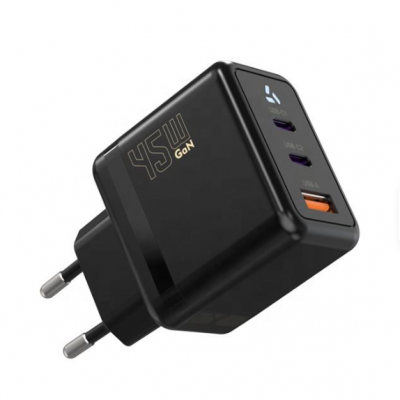 Read More
 -
Global USB-C Charging Trend Drives PD30W Fast Charger Demand
May 15, 2026Global USB-C Charging Trend Drives PD30W Fast Charger DemandAs USB-C charging becomes the international standard, PD30W chargers a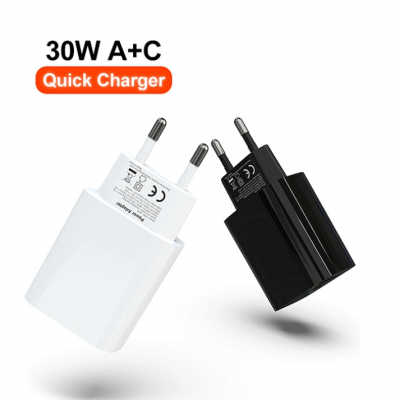 Read More
 -
Compact PD30W Charger with QC3.0 USB Fast Charging
May 15, 2026Compact PD30W Charger with QC3.0 USB Fast ChargingConsumers today need compact and efficient charging solutions. The PD30W fast ch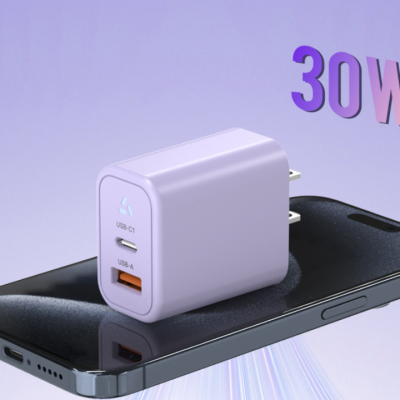 Read More
 -
How Long Do LiFePO4 Batteries Last? A Brand Owner's Lifespan Guide
May 15, 2026Ask ten suppliers how long a LiFePO4 pack will last and you will hear ten different numbers. One spec sheet promises 2,000 cycles.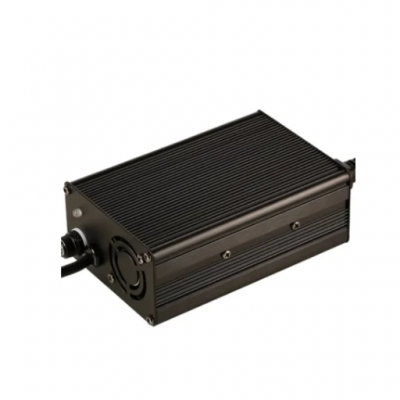 Read More

Contact Us
Recommended Products
-
 65W USB-C GaN Wall Charger PD Fast Charging Adapter EU US Plug for Laptop Smartphone and TravelUS$ 6MOQ: 100 Pieces
 -
45W GaN USB-C Fast Charger JP Plug PD Wall Charging Adapter for IPhone MacBook and TabletsUS$ 8MOQ: 100 Pieces
-
QC3.0 30W USB Fast Charger With 18W Quick Charge Wall Adapter for Android and Mobile DevicesUS$ 4MOQ: 100 Pieces
-
Compact 18W Quick Charge 3.0 USB Charger 30W Fast Charging Adapter EU US Plug for TravelUS$ 2MOQ: 100 Pieces
-
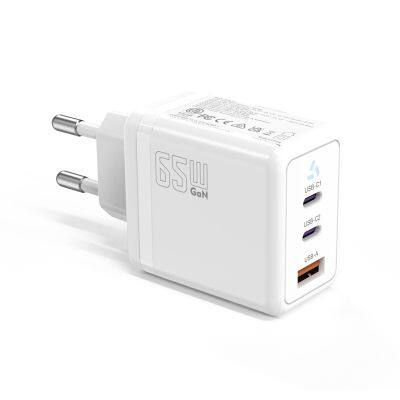
30W USB-C and USB-A PD Fast Charger Compact Wall Adapter for IPhone Samsung and IPadUS$ 3MOQ: 100 Pieces
-
35W Dual USB-C PD Charger Fast Charging Adapter for IPhone Samsung IPad and USB-C DevicesUS$ 3MOQ: 100 Pieces
-
65W USB-C GaN Charger EU Plug Fast Charging Adapter 65W USB-C PD Fast Charge Wall Charger Power Adapter for Macbook ProUS$ 5MOQ: 100 Pieces
-
65W GaN USB-C Fast Charger PD Wall Charging Adapter for Laptop IPhone and Mobile DevicesUS$ 5MOQ: 100 Pieces
-
100W GaN USB-C Fast Charger With PD 3.0 for Laptop, MacBook, IPhone & Multi-Device ChargingUS$ 12MOQ: 100 Pieces
-
45W GaN USB-C Fast Charger EU AU PD Fast Wall Charging Adapter for IPhone Tablets With CE REACH PassedUS$ 8MOQ: 100 Pieces
-
QC3.0 65W GaN USB C Super Fast Charger With UKCA 3 Ports PD 3.0 GaN Charger for Iphone Macbook SamsungUS$ 10MOQ: 100 Pieces
-
30W USB-C and USB-A GaN QC3.0 Fast Charging Adapter PD Fast Charger Compact Wall Adapter for IPhone Samsung and IPadUS$ 3MOQ: 100 Pieces
-
45W GaN USB-C Fast Charger With Dual Type-C and USB-A Ports PD Wall Charging AdapterUS$ 8MOQ: 100 Pieces
-
Dual USB C Ports QC3.0 30W Fast Charger With EU UK AU US USB-C PD Wall Chargeer 30W PD Power AdapterUS$ 3MOQ: 100 Pieces
-
Compact 65W GaN USB-C Wall Charger With Dual USB-C Ports and USB-A Fast Charging Adapter With CE UKCA ETL SAAUS$ 10MOQ: 100 Pieces
-
QC3.0 Fast Charging Adapter PD30W USB-C USB-A GaN PD Fast Charger PD 3.0 GaN Charger Compact Wall Adapter for IPhone Samsung and IPadUS$ 3MOQ: 100 Pieces
-
12V 5A 60W US EU AC DC Adapter LED Driver LED SMPS AC to DC Switching Power SupplyUS$ 5 - 7MOQ: 50 Pieces
-
CE FCC CUL SAA KC PSE 24Vdc 48W Switching Power Supply AdaptersUS$ 5 - 7MOQ: 50 Pieces
-
CE GS UKCA SAA CUL Qualified Waterproof Switching Power Supply Ip68 PSE UL SAA GS 12V 2AUS$ 3 - 6MOQ: 50 Pieces
-
12V 1A Factory OEM Waterproof AC Adapter for Laser Light Table Lamp ac dc Adaptor With TUV CE GS for EU MarketUS$ 5 - 7MOQ: 50 Pieces